


Nautical Table Lighting
Nautical table lighting brings maritime history indoors through ship lanterns, gimbal lamps and lighthouse forms that illuminate period interiors.
Nautical Table Lighting
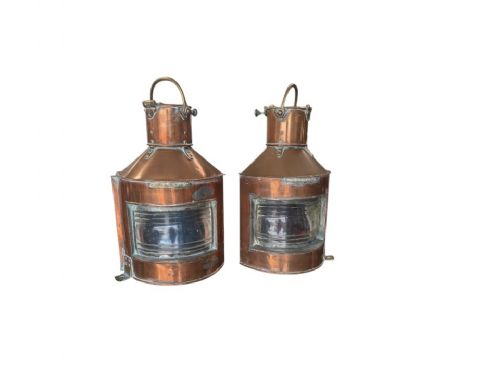
Nautical table lighting encompasses functional maritime items adapted for interior use, alongside dedicated decorative pieces from the early twentieth century. Buyers seeking nautical table lighting encounter copper ship lanterns, brass gimbal lamps and lighthouse figures constructed during the Edwardian period and the 1910s, 1920s and 1940s.
Materials and construction
Maker workshops utilised durable metals including brass, copper, nickel-plated brass and black enamelled iron to build robust lighting fixtures for marine environments. Glass components protect the interior flame or bulb, while gimbal mechanisms allow lamps to swing and remain upright despite movement.
Makers also employed solid oak for lighthouse forms and incorporated fabric and textile elements for lamp shades. Workshops such as Alderson & Gyde Ltd and William McGeoch & Co produced these functional items using specialist metalworking techniques.
Materials utilised across the collection include brass, copper, nickel-plated brass, enamelled iron, glass, solid oak and textiles.
Distinctions in quality
Quality varies according to the precision of the metalwork, the integrity of the plating and the sophistication of the design. Examples featuring nickel plating or complex gimbal mechanisms demonstrate higher manufacturing standards than simpler iron-based alternatives.
Attribution to documented makers such as William McGeoch & Co or Alderson & Gyde Ltd elevates the standing of a piece. The sculptural refinement of figural elements, such as Art Deco seagull and wave motifs or sail yacht shapes, further distinguishes superior examples.
Alderson & Gyde Ltd·William McGeoch & Co
The Nautical Table Lighting Glossary
- Gimbal
- A pivoted support that allows a lamp to remain level on a rolling ship. This mechanical assembly is typical of marine lighting.
- Port and Starboard
- The nautical terms for the left and right sides of a vessel. Lanterns designed for these positions often feature specific colour codes.
- Art Deco
- A design style from the interwar period characterised by streamlined forms and geometric patterns. This aesthetic influences several lamps in the collection.
- Edwardian
- The period spanning the reign of King Edward VII until the First World War. Pieces from this era often display classic maritime proportions.
Nautical Table Lighting: Frequently Asked Questions
What is a gimbal lamp?
A gimbal lamp uses a pivoted ring system designed to keep the light source level regardless of the motion of a ship or train. This engineering allowed illumination to remain steady in rough conditions.
Today, these pivoting brass and nickel-plated fixtures are prized on desks and tables for their industrial marine aesthetic and mechanical movement.
How old are these lamps?
The lighting fixtures in this category date from the Edwardian era through the 1910s, 1920s and 1940s. This timeframe captures both working maritime equipment and decorative Art Deco interpretations.
Earlier pieces often reflect strict naval specifications, whereas interwar pieces lean towards stylised sail yacht and seagull motifs.
Where were ship lanterns used?
Ship lanterns were mounted on naval vessels and commercial ships to signal position and navigate safely during night voyages. Port and starboard lanterns identified the left and right sides of the vessel.
These working copper and iron lanterns were subsequently adapted into table lamps for domestic interiors.
How do I style nautical lighting?
Nautical table lighting suits studies, libraries and rooms with maritime or industrial design themes. Pairing a polished brass or nickel gimbal lamp with dark wood furniture highlights the metallic finishes.
Solid oak lighthouse lamps and sail yacht designs also function well as standalone decorative focal points on sideboards.