




Natural Ruby Jewellery
Natural ruby jewellery brings together deep crimson corundum and bright diamonds set in gold, silver, and platinum from the Victorian period to the mid-twentieth century.
Natural Ruby Jewellery
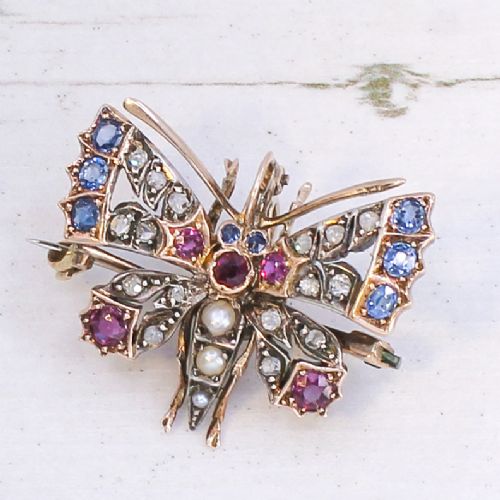
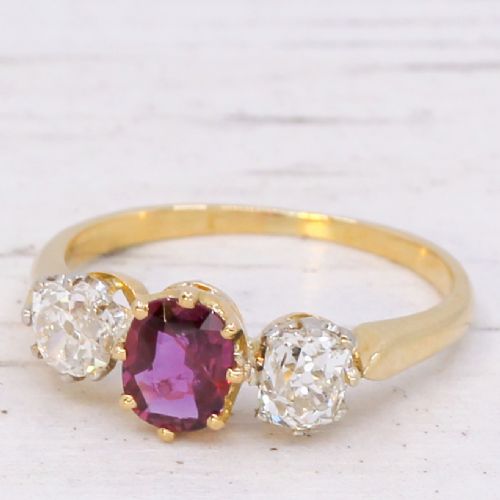
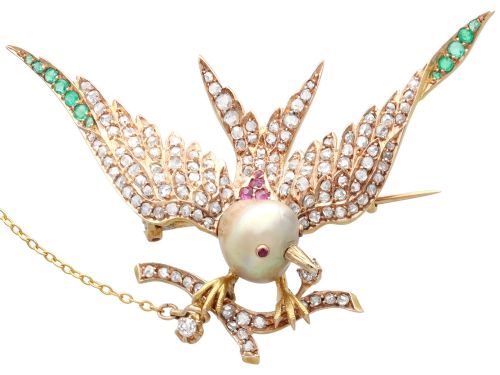
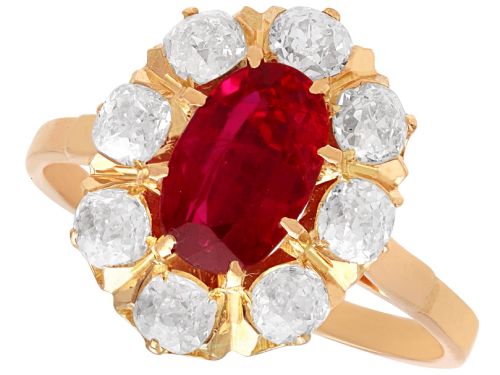
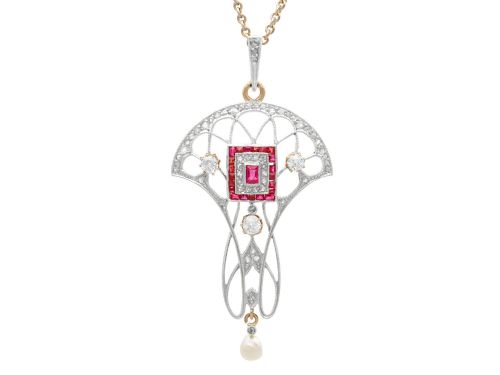
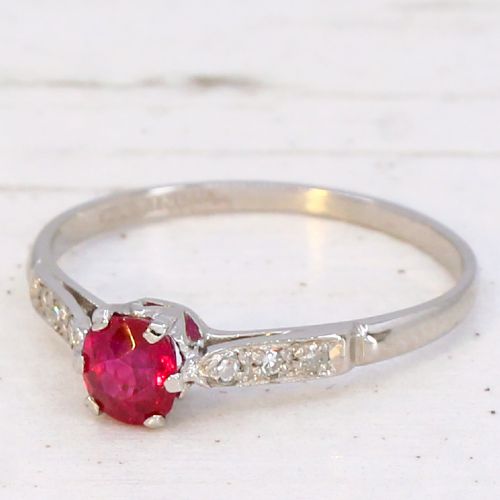
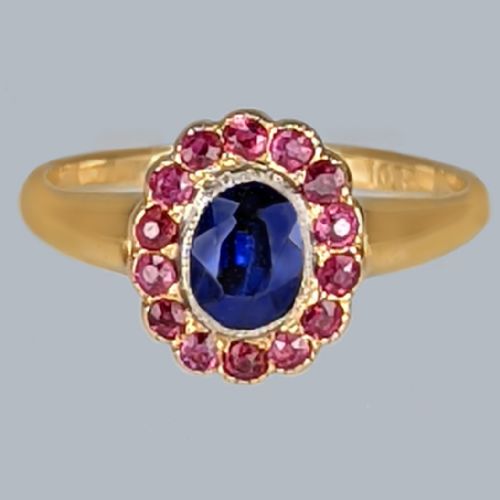
When you search for natural ruby jewellery, you encounter rings, brooches, pendants, and drop earrings spanning the Victorian, Edwardian, Art Deco, and Retro Modern periods. These pieces showcase crimson corundum paired predominantly with diamonds, pearls, and occasionally emeralds or sapphires.
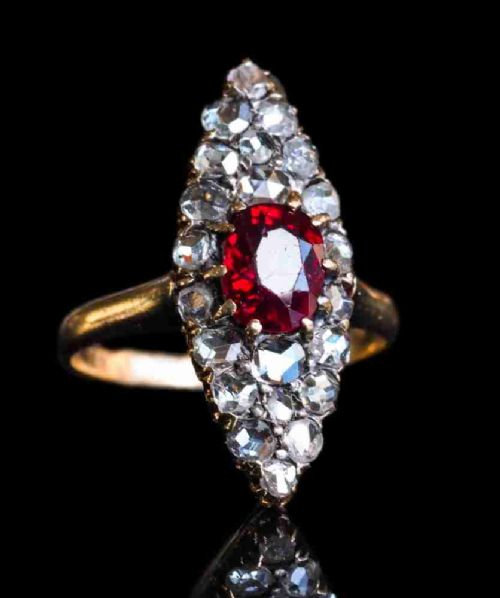
The most common formats on this page are cluster rings, navette rings, and three-stone rings alongside intricate figurative brooches and pendants shaped like butterflies, birds, snakes, and insects. Gold in various carats, silver-topped gold, and platinum serve as the primary structural metals for these creations.
Materials and Construction
Goldsmiths and jewellers combined natural rubies with old-cut diamonds, rose-cut diamonds, and natural pearls, mounting them in 18ct yellow gold, rose gold, 9ct gold, silver, and platinum. Many Edwardian and Victorian pieces employ silver set over gold to enhance the brilliance of the stones.
Techniques range from delicate millegrain edges and pierced gallery work in Art Deco cluster and marquis rings to substantial cast and constructed settings in Retro Modern tank cocktail rings and drop earrings.
Natural Ruby Jewellery Retail Price Guide 2026
Typical asking prices for natural ruby jewellery among the pieces listed under this phrase on Sellingantiques today, from the lower quarter to the upper quarter. They describe what is for sale here now, not the wider market.
Victorian makers occasionally turned serpents and beetles into sparkling guardians of the lapel, proving that insects look rather splendid in diamonds and rubies.
Evaluating Quality
Quality rests on the origin and treatment status of the corundum, with unheated Burmese stones commanding distinct attention alongside certified gem reports. The weight, cut consistency, and age-appropriate matching of supporting old-cut diamonds further separate standard work from exceptional examples.
The integrity of the original metalwork, from hand-pierced platinum and gold settings to intact millegrain borders and secure claw or bezel placements, dictates the overall standard of survival and craftsmanship.
The Natural Ruby Jewellery Glossary
- Navette
- A boat-shaped ring setting that tapers to points at either end. This elongated silhouette sits horizontally across the finger.
- Millegrain
- A decorative technique featuring a fine border of tiny raised metal beads along the edges of a setting. It was widely utilised during the Edwardian and Art Deco periods.
- Old-cut diamond
- A hand-faceted diamond cut before the standardisation of modern round brilliants, possessing a smaller table and a higher crown. These stones display distinctive warm light dispersion under candlelight.
- Cluster ring
- A ring design featuring a central gemstone surrounded by a border of smaller stones, typically diamonds. This arrangement maximises visual impact on the hand.
- Rose-cut diamond
- A vintage diamond cut characterised by a flat base and a domed crown covered in triangular facets. It resembles an unopened rosebud.
Natural Ruby Jewellery: Frequently Asked Questions
What periods do these pieces span?
The inventory covers late nineteenth-century Victorian work through Edwardian, Art Deco, and up to Retro Modern designs from the mid-twentieth century.
Each era brings distinct metal choices and mounting styles, from silver-topped gold insect brooches to geometric platinum and gold cluster rings.
How do I care for antique ruby jewellery?
These items require gentle handling due to their age and delicate settings like claw-mounted stones or natural pearls. Professional cleaning without harsh ultrasonic chemicals preserves both the gold or platinum structure and the integrity of the gems.
Store pieces individually in soft pouches to prevent diamond facets from scratching softer surrounding metals or gems.
Are the rubies heat treated?
Many listings specify unheated stones, often originating from Mogok in Burma, while some pieces are accompanied by independent gemological reports.
Checking individual descriptions clarifies whether a stone retains its natural state or possesses certification verifying its origin and treatment status.
What metals were used in these pieces?
Goldsmiths utilised 18ct yellow gold, 18ct rose gold, 9ct gold, silver, and platinum across the various eras. Edwardian and Victorian makers frequently employed silver set over gold for brooches and pendants.
Art Deco and later pieces often integrated platinum with yellow gold to provide durable, bright settings for diamonds and rubies.