


Natural Pearl Ring
A natural pearl ring carries the quiet lustre of the organic sea into precious metals of past centuries.
Natural Pearl Ring
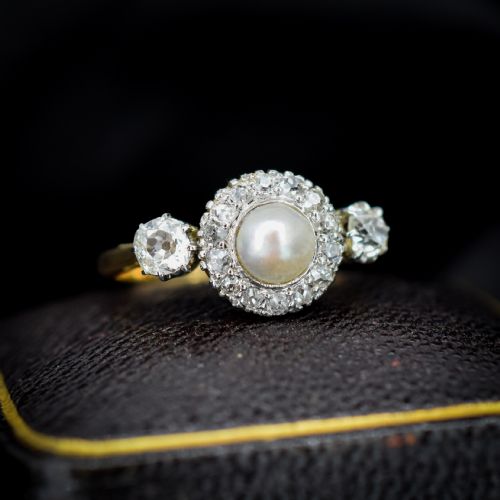
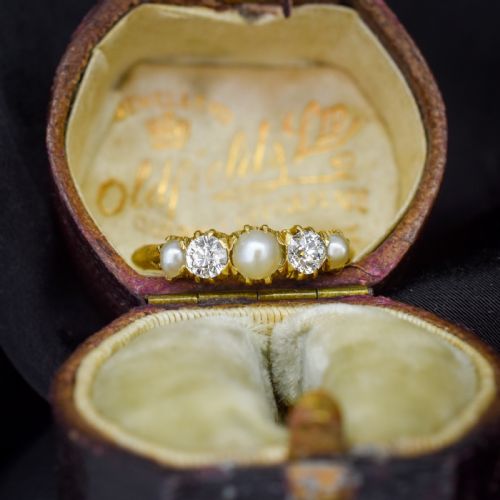
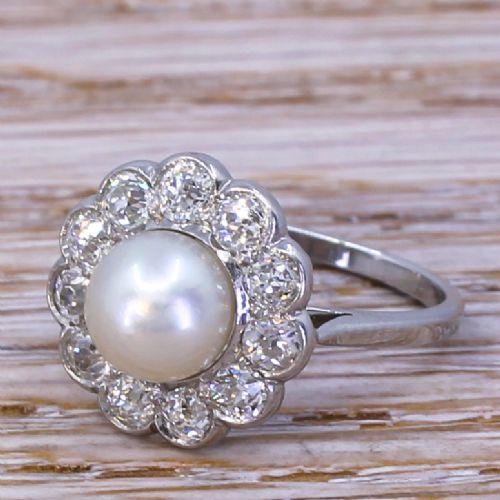
A natural pearl ring brings together organic gems formed without human intervention and metalwork spanning the Victorian, Edwardian, Art Deco, and mid-century periods. When searching for a natural pearl ring, buyers encounter cluster forms, crossover designs, and traditional trilogy settings.
Edwardian and Belle Epoque examples frequently pair natural pearls with old-cut diamonds in mountings of platinum and yellow gold. Victorian variants often incorporate seed pearls alongside garnets, turquoises, or peridots set in eighteen-carat yellow gold.
Art Deco iterations introduce geometric platinum frameworks surrounding central pearls and diamonds. Mid-century pieces continue the tradition with clean, modernist lines framing solitaire and cluster designs.
Materials and construction
Jewellers shaped these rings using eighteen-carat yellow gold, white gold, and platinum, often combining gold bands with platinum settings to highlight white diamonds. Natural pearls were secured within bezel, prong, or cluster arrangements alongside old-cut and rose-cut diamonds.
Late nineteenth and early twentieth-century workshops utilised hand-fabrication and casting techniques, soldering delicate galleries and pierced baskets beneath the gems. Platinum gained favour during the Edwardian era for its strength in delicate openwork.
Listings feature natural pearl ring examples spanning the Victorian, Edwardian, Art Deco, and mid-century periods, utilising platinum and yellow gold.
Distinctions in craftsmanship
Quality rests in the matching and orientation of the pearls, the symmetry of the surrounding diamond cluster, and the integrity of the metalwork. Superior pieces display smooth pearl surfaces with consistent orient and secure, even settings that show minimal wear.
Heavier gauge shanks and crisp hand-piercing distinguish finer workshops from simpler commercial output. The harmony between the central pearl and flanking stones dictates the visual balance of the finished ring.
Cartier Paris·Bentley and Skinner
The Natural Pearl Ring Glossary
- Natural pearl
- A pearl formed entirely by wild molluscs without human seeding. These gems display organic growth layers visible under magnification.
- Old-cut diamond
- A hand-faceted diamond cut before modern machine standards were established. These stones feature smaller tables and higher crowns.
- Crossover ring
- A ring design where two distinct elements curve to meet or cross over the finger. This style is also known by the French term Toi et Moi.
- Cluster ring
- A central gemstone surrounded by a ring of smaller stones, typically diamonds. This arrangement maximises surface brilliance.
- Belle Epoque
- A French design period spanning the late nineteenth century to the First World War. It is characterised by garland motifs and platinum filigree.
Natural Pearl Ring: Frequently Asked Questions
How do I care for a natural pearl ring?
Natural pearls are organic gems that require gentle handling to preserve their surface lustre and nacre. Avoid exposing them to harsh chemicals, cosmetics, perfumes, or ultrasonic cleaners.
Clean the ring using a soft, damp cloth after wearing and store it separately from harder gemstones to prevent scratching.
Can I wear a natural pearl ring daily?
While many historic rings were built for regular wear, pearls have a lower hardness rating than diamonds and precious metals. Daily wear exposes the pearl to impacts and abrasive surfaces that can dull the nacre over time.
Reserve the ring for careful daily use or special occasions, and remove it during manual tasks.
How are natural pearls distinguished from cultured pearls?
Natural pearls form spontaneously in wild molluscs, whereas cultured pearls begin with a human-inserted bead nucleus. Gemmological testing through X-radiography reveals the internal growth structure characteristic of natural formation.
Historic pieces from the Edwardian and Victorian eras predominantly feature natural pearls before cultured varieties became widespread.
What metal is most common in antique pearl rings?
Eighteen-carat yellow gold predominates in Victorian examples, often paired with silver or gold settings for the gems. Edwardian and Art Deco pieces frequently utilise platinum or white gold to complement white diamonds.
Combinations of yellow gold shanks with platinum heads appear regularly in Edwardian crossover designs.