


Natural Opal Gold Jewellery
Natural opal gold jewellery brings together fiery play-of-colour stones and warm precious metal in rings, pendants and brooches.
Natural Opal Gold Jewellery
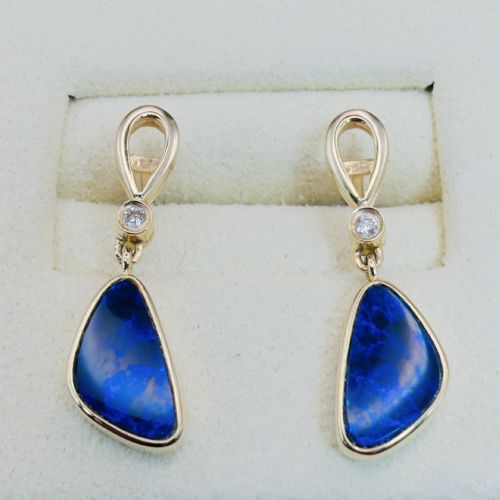
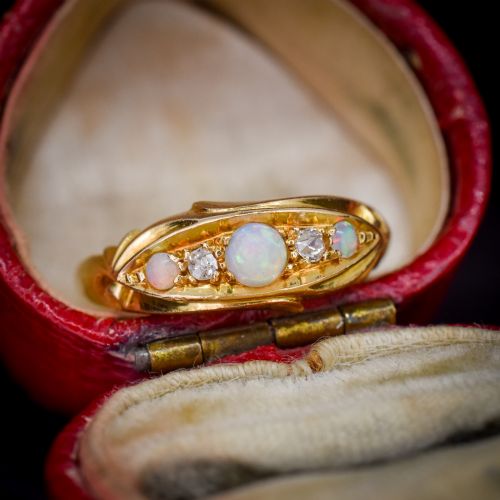
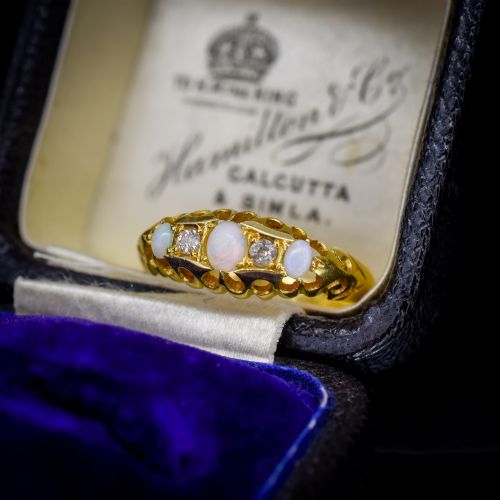
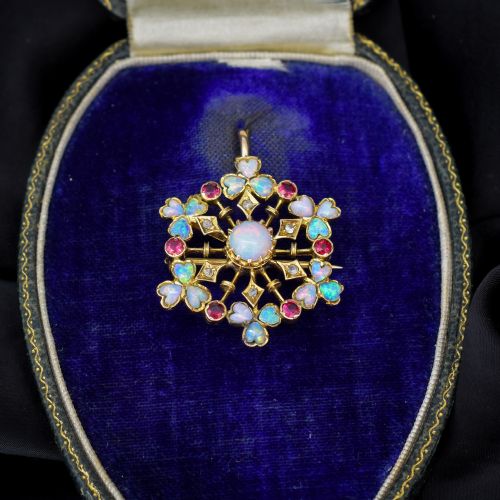
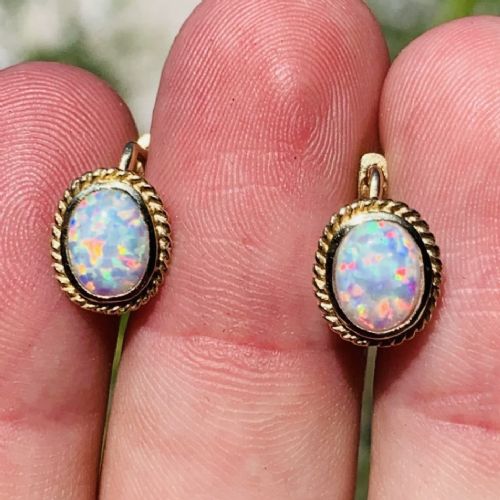
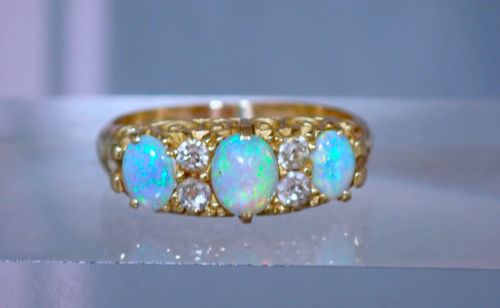
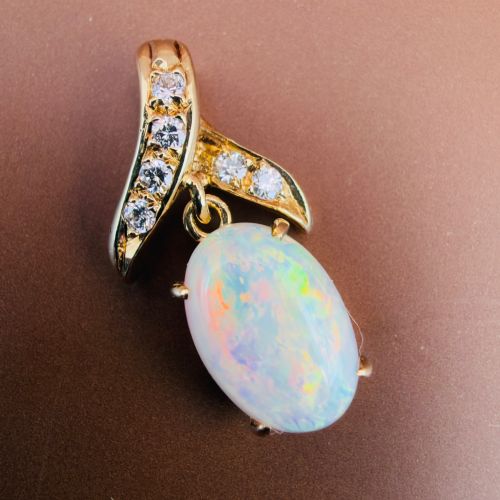
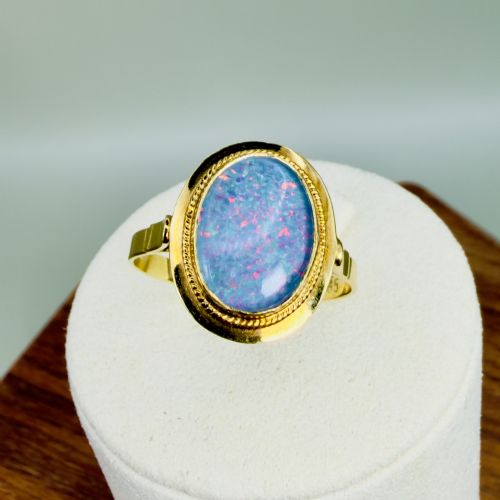
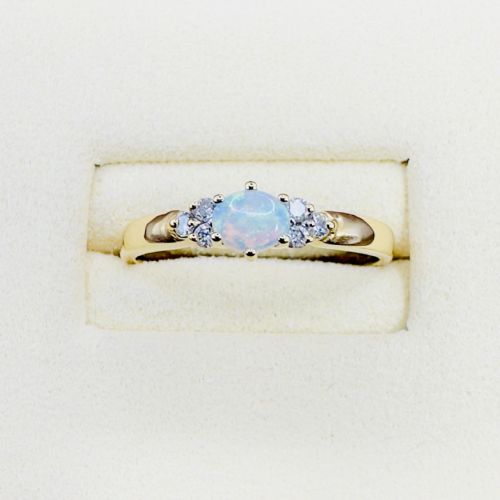
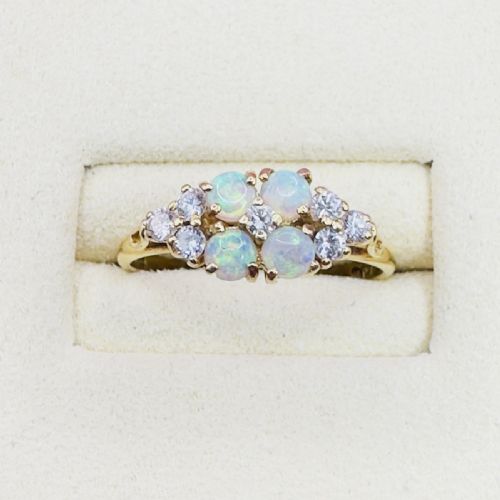
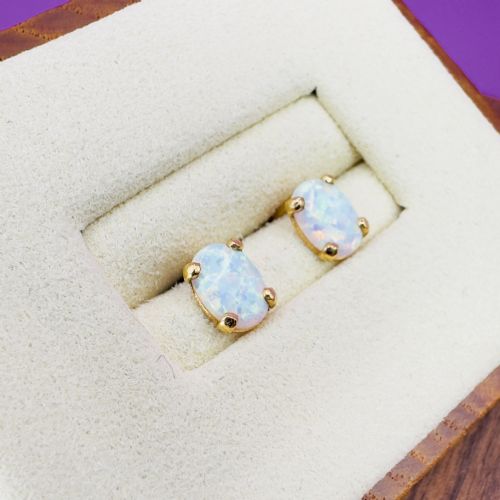
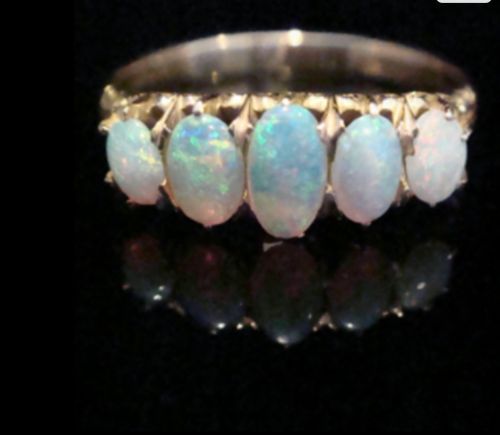
The assortment on this page relies heavily on rings and earrings, supplemented by pendants, brooches and bracelets. Boat rings and cluster settings appear frequently alongside drop earrings and convertible brooch-pendants.
Origins stretch from nineteenth-century workshops to the mid-twentieth century, capturing periods such as 1900, 1910, 1950 and 1960. Buyers find both antique British hallmarked pieces and vintage items featuring black boulder opals and solid Australian stones.
Materials and Techniques
Goldsmiths utilised 18ct yellow gold, 15ct yellow gold, 14ct gold and 9ct gold or rose gold to fabricate mounts that secure the stones. Settings incorporate claw mounts, flush settings and cluster arrangements designed to display the play-of-colour in cabochon and oval cut stones.
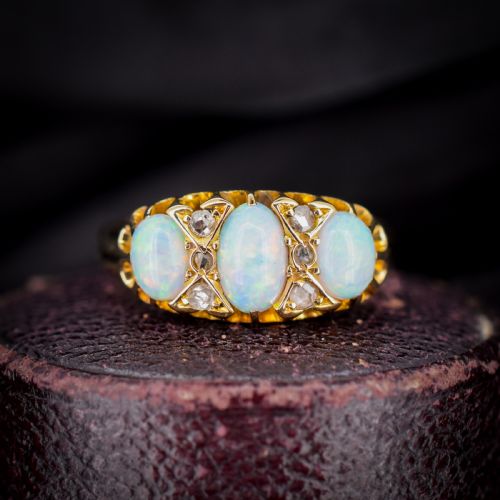
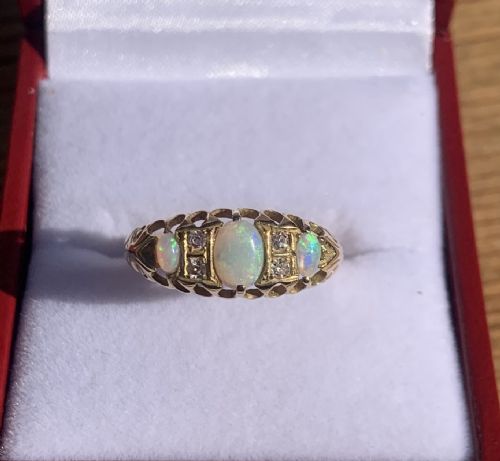
Diamonds and rubies frequently serve as secondary accent stones, framing central opals in boat rings, flower brooches and cluster pendants. Solid opals, black boulder opals and doublets are integrated into heavy gold structures using traditional bench-working methods.
Object forms include boat rings, solitaire rings, cluster rings, drop earrings, stud earrings, flower brooches, pendant necklaces and lovers knot bracelets.
Assessing Quality and Execution
Quality rests upon the optical play-of-colour within the opal itself, where broad flashes of spectral hues distinguish superior stones from muted examples. The depth of the colour play and the stability of the natural stone dictate the tier of the piece.
Execution involves the weight and integrity of the gold mount, from solid 18ct yellow gold settings to substantial bracelet links and heavy pendant galleries. Finer examples maintain crisp claw work and secure integration of accent diamonds without compromising the balance of the design.
The Natural Opal Gold Jewellery Glossary
- Cabochon
- A gem cut with a smooth, rounded, convex top and a flat or slightly curved base rather than facets. This style of cutting is utilised to display the internal play-of-colour in opals.
- Boat ring
- A ring featuring a curved, boat-shaped setting that typically holds a row of stones tapering towards the ends. This silhouette is common in Victorian and Edwardian cluster designs.
- Boulder opal
- An opal that is left attached to its natural ironstone matrix by nature. This type provides a dark backing that enhances the brilliance of the opal colours.
- Trilogy
- A ring or pendant set with three principal stones, often symbolising past, present and future. In these listings, trilogy pieces pair central opals with flanking diamonds.
- Play-of-colour
- The optical phenomenon where a stone displays flashes of shifting spectral hues when rotated under light. This visual property determines the primary appeal of natural opal.
Natural Opal Gold Jewellery: Frequently Asked Questions
How do I care for antique opal jewellery?
Opals contain water within their structure and possess a lower relative hardness than diamonds. Avoid exposing them to harsh chemicals, ultrasonic cleaners, and sudden temperature fluctuations.
Store them separately in a fabric-lined box to prevent scratching from harder gems. Gentle cleaning with a soft, damp cloth preserves the surface polish without damaging the mount.
What is the difference between solid opal and boulder opal?
Solid opals consist entirely of precious opal material, whether cut from white opal crystal or black opal rough. They display colour across the body of the stone without underlying rock.
Boulder opals remain embedded in the natural ironstone host rock where they formed. The remaining ironstone backing provides natural reinforcement and deep contrast for the opal layer.
Can a brooch be worn as a pendant?
Many Victorian and Edwardian pieces were fabricated as convertible brooch-pendants. These items feature a secure pin mechanism alongside a hidden or fold-down loop for a chain.
This dual functionality allowed wearers to adapt the ornament to different garments. Checking the reverse side reveals the hinge, pin, and suspension loop arrangement.