




Natural Elm Table
A natural elm table brings an unpretentious, grained surface and solid weight into a room.
Natural Elm Table
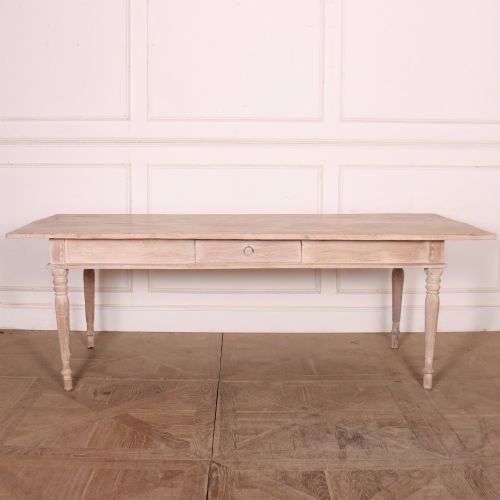
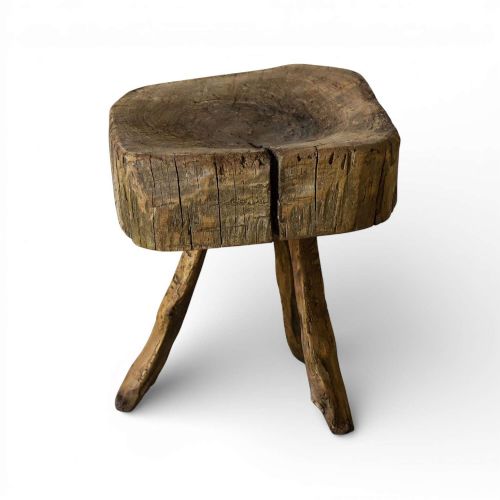
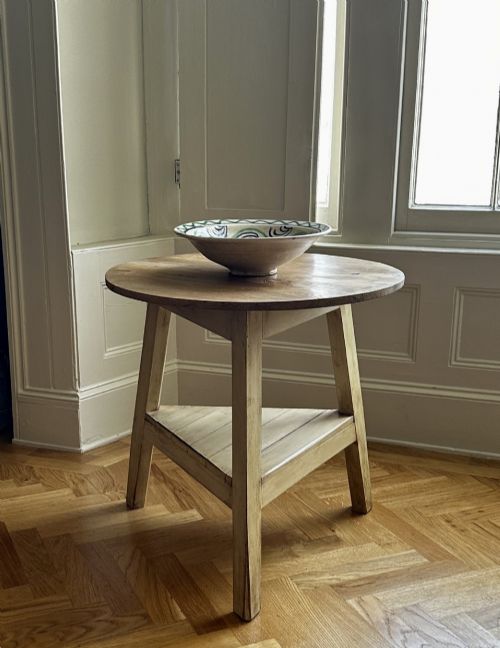
A natural elm table encompasses robust dining boards, kitchen chopping blocks, and low coffee tables shaped from durable timber. These pieces span the nineteenth century, drawing from English, French, Spanish, and Chinese vernacular traditions.
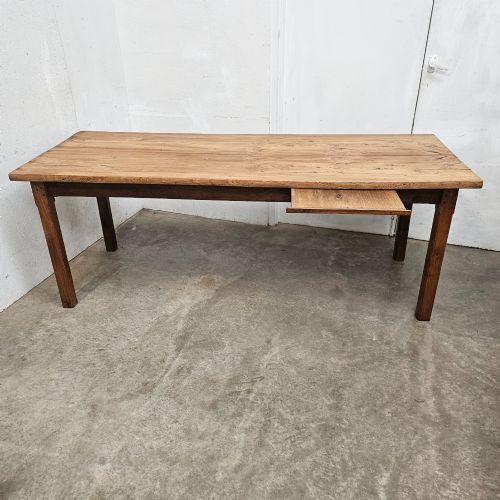
Buyers meet farmhouse dining tables with two-board tops alongside smaller cricket and side tables. Sycamore appears alongside elm in several trestle designs, while Chinese examples often feature distinct low proportions.
Materials and construction
Carpenters constructed these tables using solid elm, sycamore, and pine timber, often supported by metal fittings or sturdy gnarled wooden legs. Joinery relies on thick planks and cross bases designed to bear heavy daily use.
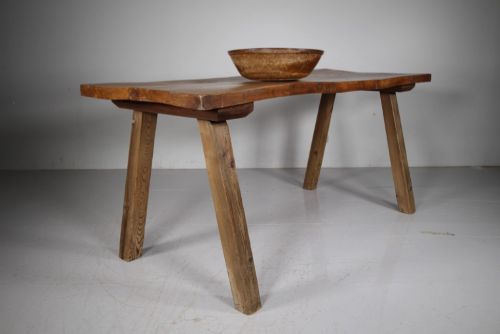
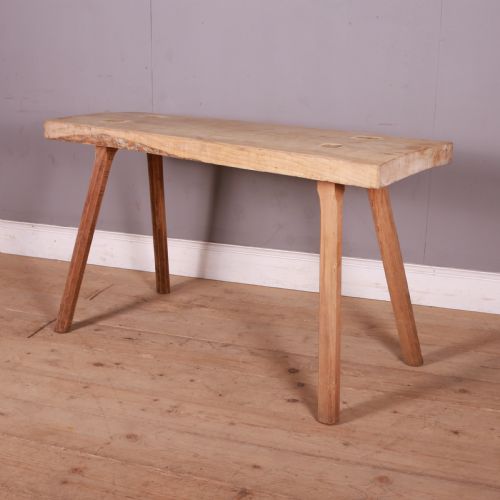
Surfaces frequently show scrubbed finishes or live edges that highlight the natural grain patterns of the wood. Makers utilised local hardwoods to build functional chopping blocks, harvest tables, and primitive dining boards.
Assessing quality
Quality rests in the integrity of the timber slab and the balance of the underlying structure. Tables featuring thick, well-figured tops and original legs command greater attention than standard utilitarian builds.
The character of the grain and the honesty of the scrubbed surface dictate the visual appeal. Uniformity matters less than the authentic wear of nineteenth-century rural and provincial workshops.
The Natural Elm Table Glossary
- Elm
- A tough, interlocking-grained hardwood valued for its resistance to splitting. It forms the primary surface material for these rustic tables.
- Vernacular
- Objects built by local craftspeople using traditional regional methods rather than high academic styles. These pieces reflect domestic utility.
- Trestle table
- A board resting on two or more supports connected by a horizontal beam. This design offers stability for dining and kitchen work.
- Live edge
- A natural edge of the tree left unfinished on the wooden board. This feature retains the organic contour of the log.
Natural Elm Table: Frequently Asked Questions
Where were these tables made?
The listings show pieces originating from England, France, Spain, and China during the nineteenth century. Makers utilised local regional styles suited to provincial and rural life.
English and French pieces typically take the form of farmhouse dining boards or kitchen chopping blocks, while Chinese examples often appear as low coffee or side tables.
How do I clean a natural wood table?
Scrubbed timber surfaces respond best to gentle cleaning with mild soap and warm water using a soft brush. Avoid harsh chemical treatments that strip the dry patina.
Allow the wood to dry naturally after washing to preserve the character of the nineteenth-century grain.
Can I use an elm chopping block daily?
These blocks were originally built for heavy kitchen labour, making them robust enough for regular food preparation tasks. The dense hardwood resists heavy impact.
Treat the surface with appropriate food-safe oils periodically to maintain the timber against moisture and heavy use.
What defines a primitive nineteenth century table?
Primitive tables display straightforward construction methods without decorative flourishes, prioritising function over ornament. They feature thick timber tops and simple peg or mortise joints.
Makers built these pieces for everyday farm and workshop use, resulting in honest structural forms.