


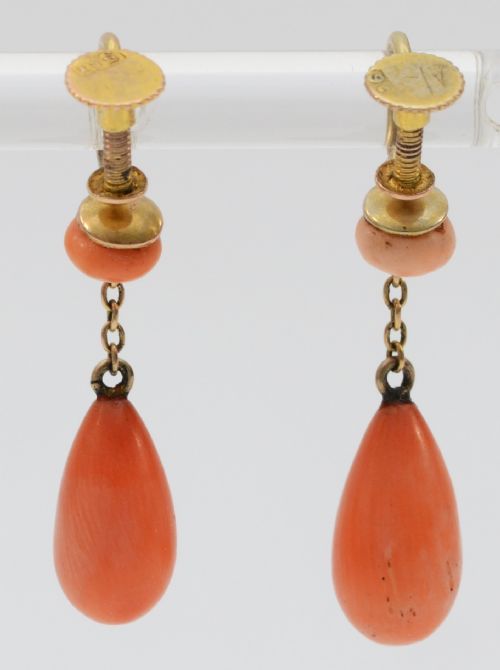


Natural Coral Bead Jewellery
Natural coral bead jewellery brings together organic warmth and historic craftsmanship, offering pieces fashioned from genuine coral across multiple eras.
Natural Coral Bead Jewellery
Natural coral bead jewellery encompasses necklaces, bracelets, pendants, and earrings fashioned from organic marine materials. When you search for natural coral bead jewellery, you encounter items stretching from the Georgian and Victorian eras through to the mid-twentieth century.
The selections available here lean heavily toward Victorian pieces alongside examples dated around 1900, 1920, 1930, and 1950. Necklaces form the bulk of these items, appearing in single or multiple strands, alongside matched earrings and pendants.
Forms vary from short chokers to exceptionally long ropes exceeding sixty inches, utilising salmon, pink, and deep red shades. Many incorporate supplementary materials such as gold, silver, seed pearls, and silk thread alongside the primary coral beads.
Materials and construction methods
The primary material is natural, un-dyed coral, shaped into round beads, graduated segments, or rustic rod and branch forms. Artisans utilised these organic skeletal formations directly from Mediterranean and other marine sources, preserving the natural colour variations.
Metal components such as gold and silver appear in clasps, settings, and mountings, often paired with delicate seed pearls. Silk thread was frequently used to string the beads securely, allowing flexibility and movement in the finished necklaces and bracelets.
Some coral strands stretch to over sixty inches, offering enough length to loop multiple times or knot in classic vintage style.
Distinguishing quality in coral pieces
The integration of precious metals like gold or silver in clasps and settings also marks the distinction between standard work and finer pieces. Preservation of the original silk stringing and secure fastenings contributes further to the overall standard of a piece.
The Natural Coral Bead Jewellery Glossary
- Graduated
- A design method where beads increase in size progressively from the clasp to the centre. This technique requires careful sorting of the coral material by diameter.
- Seed Pearl
- Tiny, naturally small pearls often used as accent stones alongside coral beads. They appear frequently in Victorian and Georgian pendant and earring settings.
- Salmon Coral
- A specific pale orange-pink shade of natural coral material. This particular colour variation is typical of many antique necklaces.
- Branch Coral
- Unshaped or minimally processed coral fragments retaining their natural organic growth pattern. These create a more rustic appearance than perfectly round beads.
Natural Coral Bead Jewellery: Frequently Asked Questions
How do I care for antique coral jewellery?
Coral is an organic material that reacts sensitively to chemicals, perfumes, and cosmetics. Wipe it gently with a soft cloth after wearing and store it away from harder gemstones.
Avoid submerging coral pieces in water or using ultrasonic cleaners. Proper storage prevents scratching and maintains the natural lustre of the beads over time.
What is un-dyed natural coral?
Un-dyed coral retains its original hue harvested directly from the sea, showing natural variations in colour and tone. This includes shades of pink, salmon, and deep red without artificial colour enhancement.
Examining the beads under magnification often reveals organic growth marks unique to natural coral formations. These subtle imperfections confirm the lack of synthetic treatment.
Why do some necklaces use silk thread?
Traditional stringing methods utilised silk thread to allow the necklace to drape naturally around the neck. Silk provides flexibility and strength while protecting the drill holes within the coral beads.
Many antique pieces retain or have been restored using silk thread to preserve their historical method of construction. This material complements the organic nature of the coral beads.