




Narrow Wooden Side Table
A narrow wooden side table brings compact surface space and period character into a hallway or tight corner.
Narrow Wooden Side Table
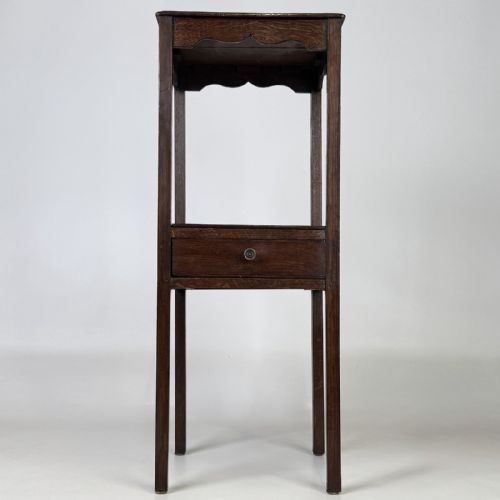
A narrow wooden side table serves practical needs in restricted spaces, appearing in forms such as console tables, occasional tables, and bedside cabinets. These pieces span the Victorian and Edwardian eras alongside nineteenth-century examples.
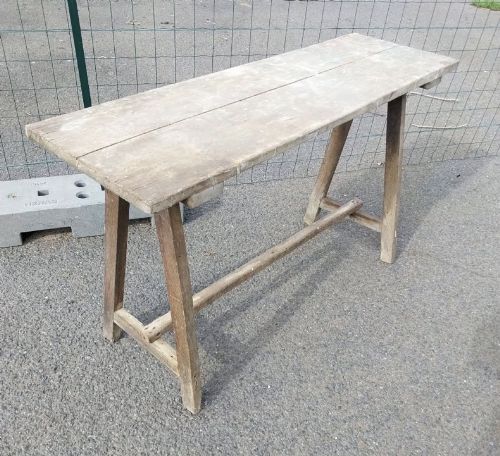
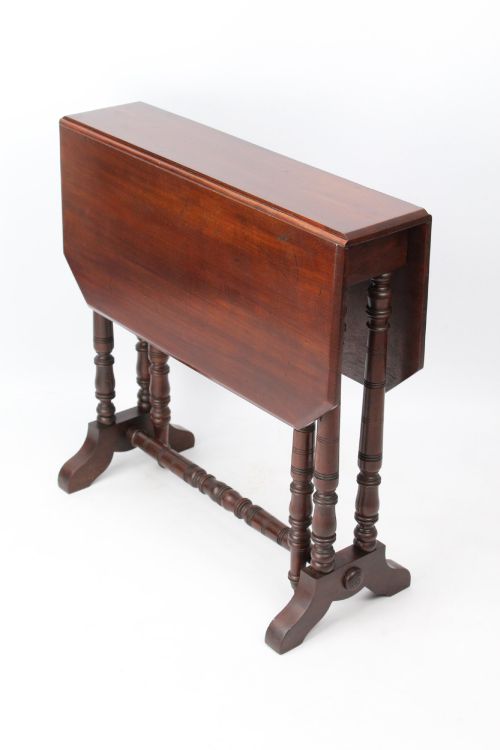
Buyers encounter walnut, mahogany, pine, and oak constructions shaped into drop-leaf, Sutherland, and trestle formats. Origins stretch from English country workshops to French provincial settings.
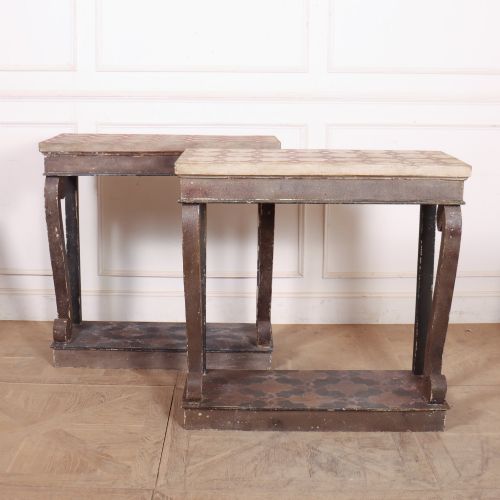
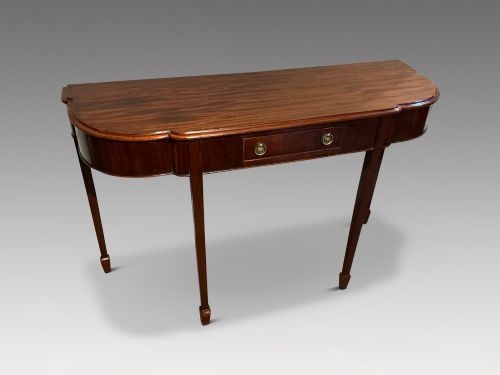
The selection ranges from simple pine organ benches and wash tables to refined mahogany hall tables and marble-topped consoles.
How they were made
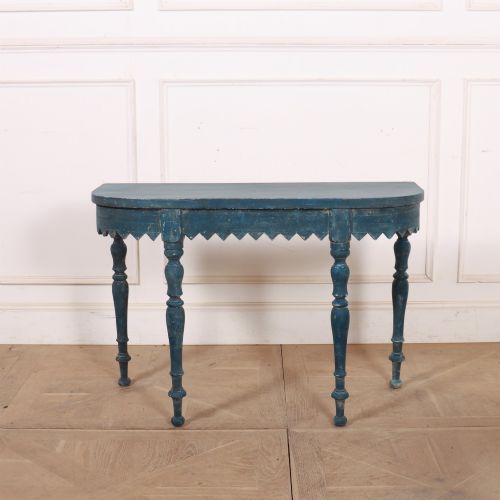
Cabinet makers utilised solid timbers such as mahogany, oak, pine, and walnut, frequently finished with paint or left in a scrubbed state. Joinery relied on traditional methods to construct drop leaves, folding actions, and stable trestle bases.
Surface details incorporate brass hardware, inlaid motifs, and marble tops set into wooden frames. Structural variations accommodate specific functions, from slender spider-legs on pembroke tables to sturdy potboard supports on French tables.
Narrow Wooden Side Table Retail Price Guide 2026
Typical asking prices for narrow wooden side table among the pieces listed under this phrase on Sellingantiques today, from the lower quarter to the upper quarter. They describe what is for sale here now, not the wider market.
Listings feature timber varieties including mahogany, oak, pine, walnut, birch, and sycamore alongside painted wood surfaces.
What varies in quality
The standard of timber selection and cabinet work dictates the grade of a piece, distinguishing utilitarian furniture from formal parlour items. Finer examples display careful grain alignment, subtle inlay work, and robust folding mechanisms.
Proportion and surface finish separate basic workshop output from pieces designed for formal reception rooms. The integrity of original painted finishes or polished wood surfaces influences the overall character.
The Narrow Wooden Side Table Glossary
- Sutherland table
- A narrow drop-leaf table with exceptionally slender folding flaps supported by swinging gate legs. When closed, it occupies minimal floor space.
- Console table
- A table designed to stand flat against a wall, frequently secured with brackets or resting on front legs. These items suit narrow hallways and reception spaces.
- Trestle table
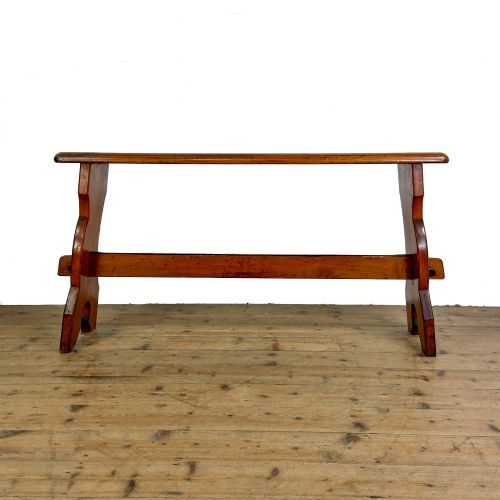
- A sturdy form featuring a horizontal beam supported by two vertical frame feet. Historical examples often served utilitarian dining or preparation functions.
- Whatnot
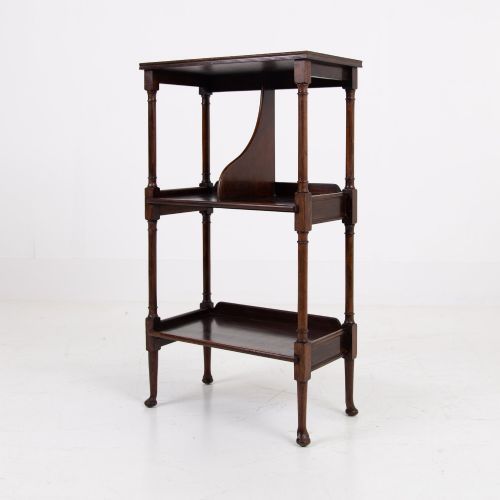
- A set of open shelves standing on slender supports used for displaying small objects. They appear alongside traditional side tables in domestic interiors.
- Pembroke table
- A drop-leaf table fitted with hinged flaps on opposite sides and a drawer beneath the top. Spider-leg variants offer particularly delicate proportions.
Narrow Wooden Side Table: Frequently Asked Questions
Where should I place a narrow wooden side table?
These pieces fit naturally into narrow hallways, beside beds, or against empty wall spaces in living rooms where floor area is restricted.
Their compact footprints provide functional surface space without obstructing walkways or overwhelming small rooms.
How do I identify a Victorian side table?
Victorian pieces often utilise dense timbers like mahogany and walnut, featuring dark polished finishes and robust turnings. Construction methods reflect industrial-era joinery alongside traditional hand-finishing.
Design traits draw on revival styles and practical domestic requirements, yielding forms like the Sutherland table and hall table.
What is the difference between a console table and a side table?
Console tables traditionally stand directly against a wall, sometimes requiring support or stabilization from the structure behind them. They often serve a decorative role in entrance halls.
Side tables operate as freestanding furniture that moves easily to various positions within a room to hold lamps or small objects.
How do I care for antique wooden tables?
Keep wooden surfaces away from direct heat sources and strong sunlight to prevent timber shrinkage and finish degradation. Regular dusting with a dry cloth maintains the polish.
Avoid excessive moisture on unsealed or scrubbed wood surfaces, applying appropriate wax feeds only when the timber appears dry.