





Narrow Wooden Shelves
Narrow wooden shelves offer practical vertical storage for compact spaces, appearing across Edwardian, Victorian, and Arts and Crafts periods in mahogany, oak, and pine.
Narrow Wooden Shelves
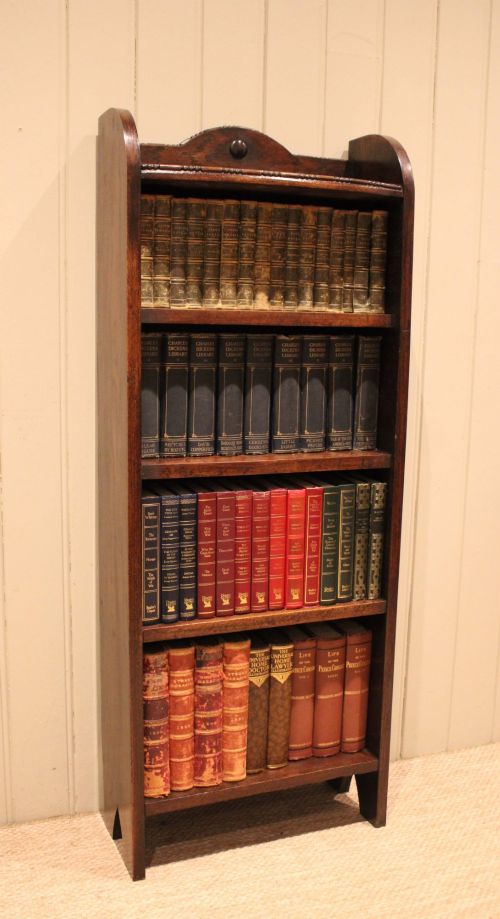
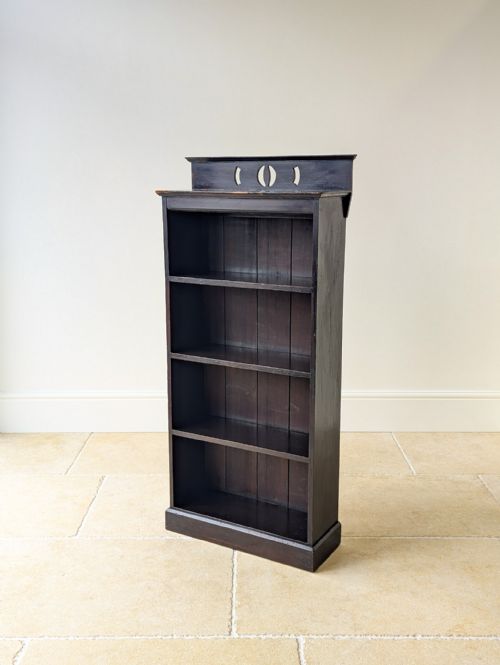
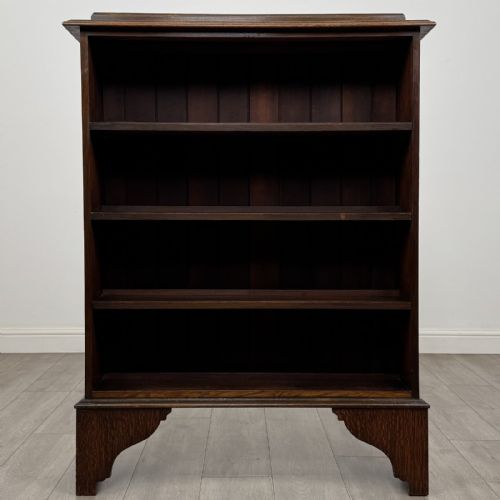
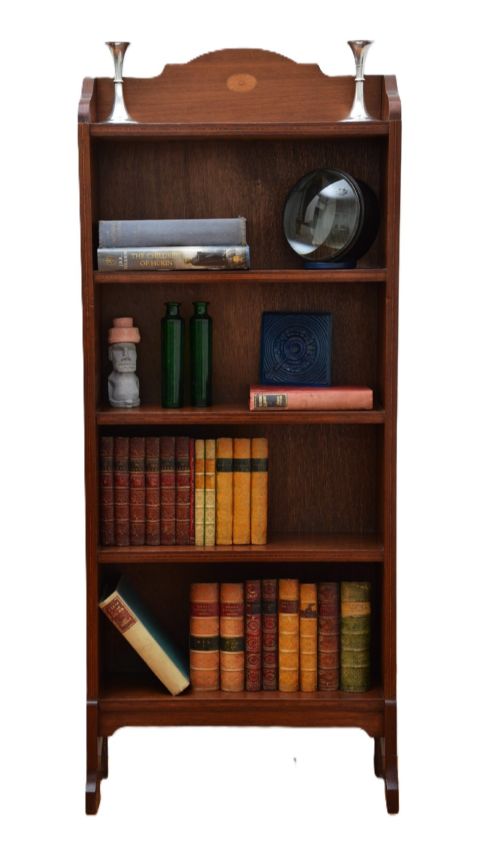
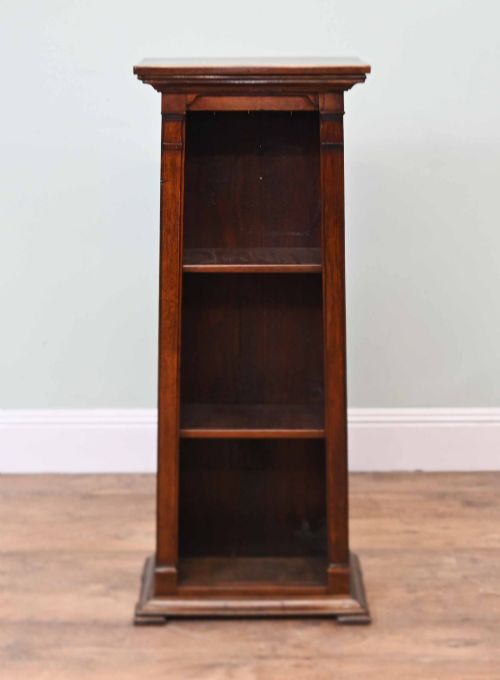
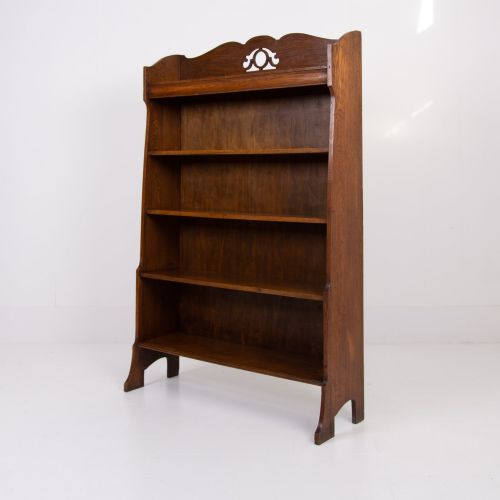
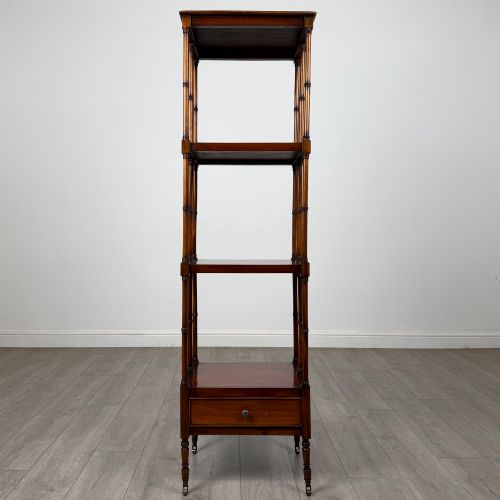
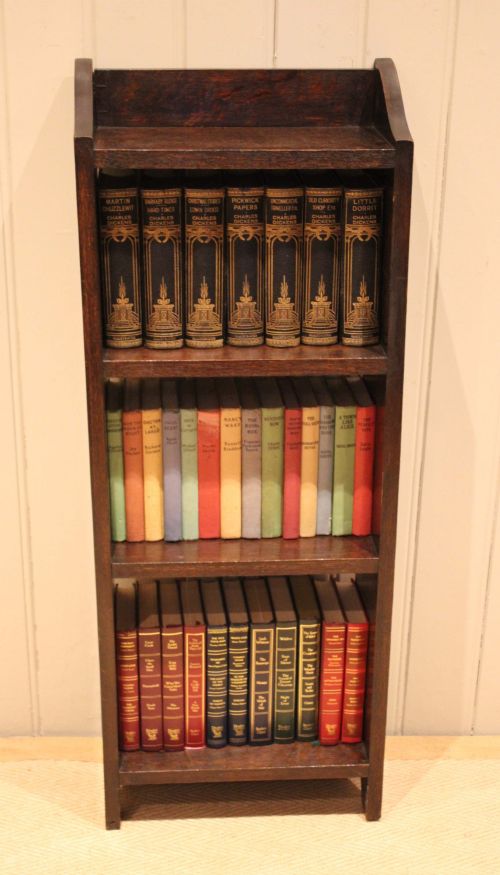
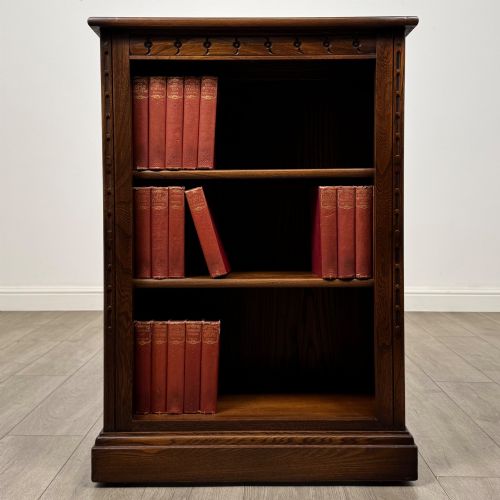
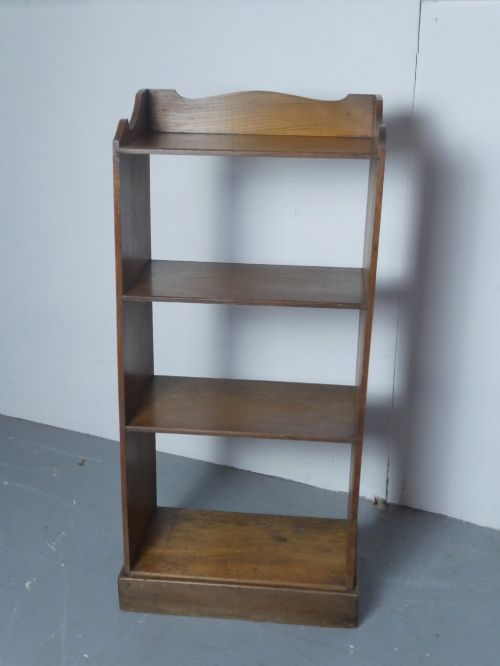
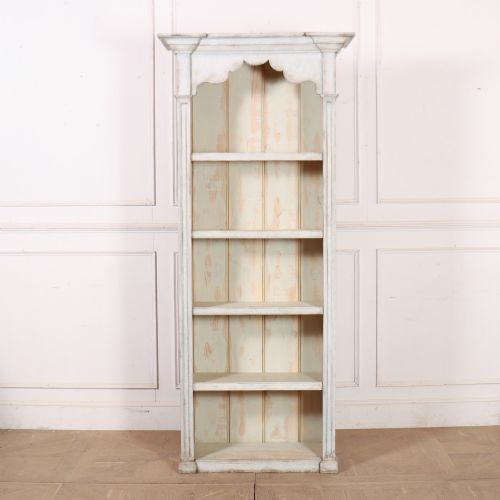
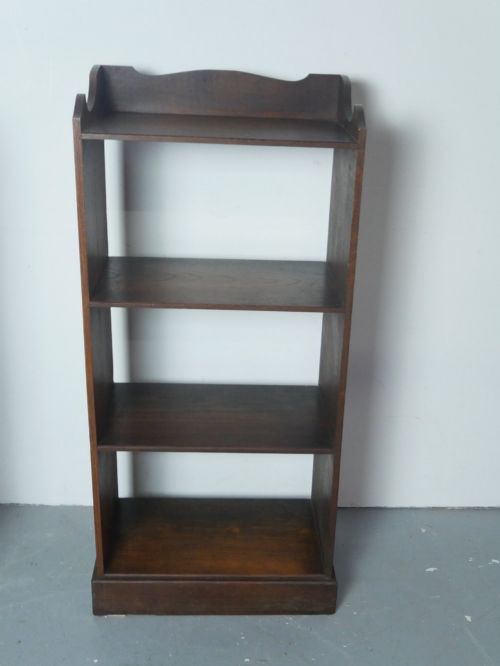
Narrow wooden shelves encompass open bookcases, slender stands, and compact display units designed for small spaces. The pieces appearing on this page span the Victorian and Edwardian eras alongside early twentieth-century examples, taking the form of open bookcases, whatnots, and chiffoniers.
The most common formats met here are open oak bookcases and slender mahogany shelving units, often featuring raised galleries or carved top edges. These items provide functional book storage while maintaining a minimal footprint in smaller rooms.
Materials and construction
Makers utilised solid timbers such as oak, mahogany, pine, elm, and yew wood, sometimes adding satinwood inlay or brass details. Surfaces appear in natural polished wood, stained finishes, or painted treatments.
Construction methods rely on traditional joinery suitable for upright open shelving and freestanding cabinets. Details include moulded fronts, decorative cut-outs, lower drawers, and slender pillars.
Narrow Wooden Shelves Retail Price Guide 2026
Typical asking prices for narrow wooden shelves among the pieces listed under this phrase on Sellingantiques today, from the lower quarter to the upper quarter. They describe what is for sale here now, not the wider market.
Listings feature items built from oak, mahogany, pine, elm, yew wood, and rosewood across the nineteenth and early twentieth centuries.
Assessing quality
Quality rests upon the selection of timber and the crispness of decorative elements like carved top edges and inlay work. Pieces displaying thoughtful proportions and deliberate stylistic details from the Arts and Crafts or Regency Revival movements stand apart.
Structural integrity and the retention of original surfaces govern how well a piece holds its character over time. Refined execution in small mouldings and fitted lower drawers distinguishes finer examples from simpler utilitarian shelving.
Ercol
The Narrow Wooden Shelves Glossary
- Whatnot
- A moveable set of open shelves used for displaying small objects or books. These pieces typically feature multiple tiers supported by slender uprights.
- Chiffonier
- A small sideboard or cabinet featuring shelves or a raised gallery above a low storage base. Victorian and Georgian examples often combine enclosed lower space with upper display surfaces.
- Waterfall bookcase
- A standing set of graduated shelves where each tier is narrower than the one below, creating a stepped profile. Regency and early twentieth-century makers utilised this form to save floor space.
- Gallery
- A low decorative rail or raised border running along the top edge of a shelf or cabinet. This feature prevents items from sliding off the surface.
- Satinwood inlay
- Contrasting light wood veneer inserted into a darker primary timber to create decorative patterns. Edwardian and Victorian cabinet makers applied this technique on mahogany surfaces.
Narrow Wooden Shelves: Frequently Asked Questions
What rooms suit narrow wooden shelves?
These compact pieces fit easily into hallways, alcoves, and smaller bedrooms where floor space is limited. Their vertical orientation provides useful storage without dominating the room.
They work well alongside seating areas or desks to hold books and display objects within arm's reach.
How do I identify an Edwardian bookcase?
Edwardian examples often feature light oak or mahogany construction, sometimes accented with subtle inlay work or carved top edges. They frequently take the form of open bookcases with slender proportions.
Looking at the backboards and interior construction helps confirm the early twentieth-century date alongside characteristic stylistic details.
Were these shelves used only for books?
While many examples function as open bookcases, similar forms like whatnots and display shelves were built to hold decorative items, ceramics, and ornaments. The flexible tier spacing accommodated various household objects.
Lower drawers or cabinets included in some designs also provided concealed storage for papers and small items.
How do I care for antique wood shelving?
Keep wooden shelves away from direct heat sources and strong sunlight to prevent the timber from drying out or fading. Regular dusting with a soft, dry cloth maintains the surface finish.
Occasional application of appropriate wax polish helps nourish older timbers like oak and mahogany without building up heavy residues.