

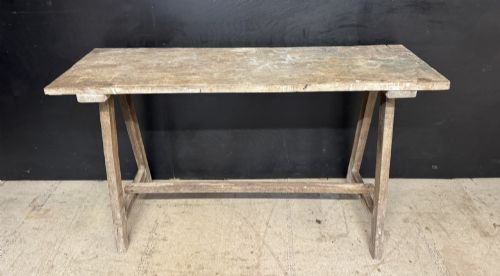
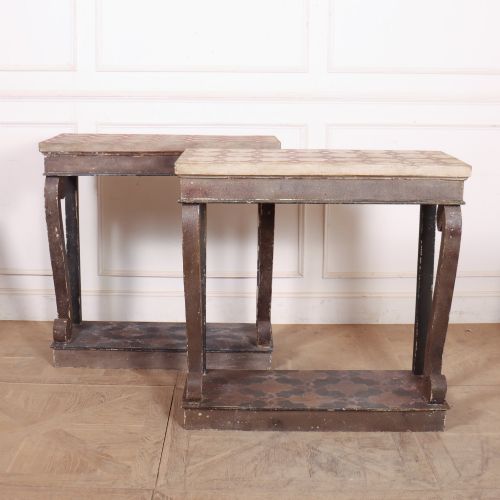
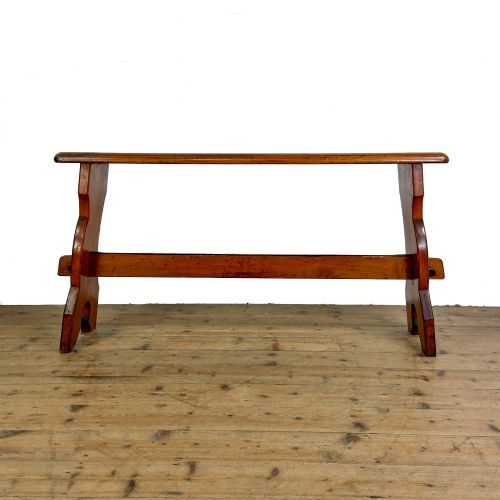

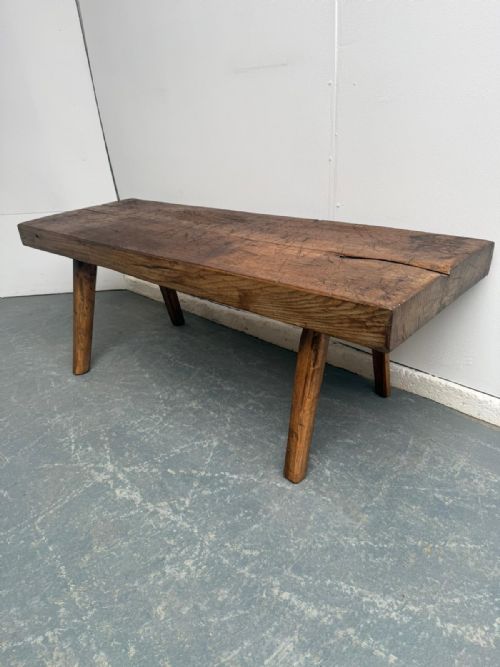


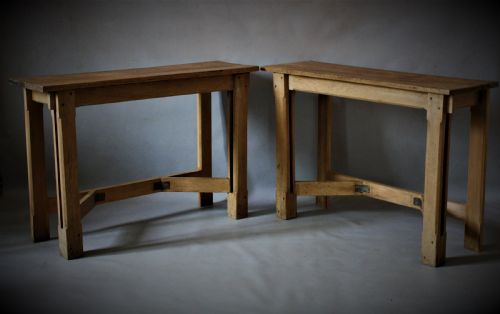
Narrow Wooden Hallway Table
These narrow wooden hallway table pieces combine utility and character, offering practical surface space for tight spaces.
Narrow Wooden Hallway Table
A narrow wooden hallway table provides a slender surface suited for passage spaces and corridors. These items appear in various forms, including console tables, side tables, servers, and benches adapted for surface use.
Most examples found here date from the nineteenth century into the early twentieth century. Common stylistic expressions span Victorian country designs, French provincial work, Spanish painted pieces, and Sheraton Revival mahogany forms.
Makers utilised timber such as oak, mahogany, pine, and hardwood to construct these slim furniture pieces. Several items incorporate painted finishes, wood inlay, brass elements, or marble tops.
How they were made
Carpenters constructed these tables using solid timber foundations like oak, mahogany, pine, and imported hardwoods. Joinery methods relied on traditional hand tools to shape legs, aprons, and tops for domestic service.
Surface treatments vary between natural wood grains left exposed, bleached finishes, and applied paint or wood inlay. Certain pieces feature carved details or integrated potboards beneath the main surface.
Narrow Wooden Hallway Table Retail Price Guide 2026
Typical asking prices for narrow wooden hallway table among the pieces listed under this phrase on Sellingantiques today, from the lower quarter to the upper quarter. They describe what is for sale here now, not the wider market.
The inventory records timber variants including oak, mahogany, pine, and hardwood, alongside painted wood and brass details.
What varies in quality
The selection of timber dictates the foundational weight and visual grain pattern of each table. Dense hardwoods and well-figured mahogany or oak denote superior material choice compared to utilitarian pine.
Execution of detail defines the grade of a piece, from crisp wood carving and precise inlay to the stability of trestle bases and potboards. Original surface treatments and period brass hardware elevate the character of individual examples.
The Narrow Wooden Hallway Table Glossary
- Console table
- A table designed to stand against a wall, frequently supported by brackets or legs at the front. These pieces suit narrow passages and reception rooms.
- Potboard
- A lower shelf fitted beneath a table or dresser base, traditionally used for storing pots and kitchen utensils. This structural element appears on rustic and provincial servers.
- Sheraton Revival
- A late nineteenth-century design movement inspired by the neoclassical furniture of George Sheraton. Pieces from this revival favour refined mahogany construction and delicate inlay.
- Campaign console table
- A portable furniture form originally designed for military officers on campaign. These tables often feature brass corners and sturdy folding or knockdown construction.
Narrow Wooden Hallway Table: Frequently Asked Questions
Where do I place a narrow wooden hallway table?
Position these slim tables in corridors, entryways, or behind sofas where floor space is restricted. Their shallow depth allows passage while providing a surface for lamps or small objects.
Ensure the length matches the wall proportion so the piece does not obstruct doors or movement through the room.
How do I clean a wooden console table?
Dust timber surfaces regularly with a soft, dry cloth to prevent dirt accumulation. Avoid silicone sprays or harsh chemical cleaners that damage antique finishes.
Feed waxed surfaces occasionally with traditional beeswax to maintain the timber lustre and protect the grain.
What is the difference between a console and a side table?
Console tables are specifically designed to stand against a wall, frequently anchored or supported by wall brackets in historical examples. Side tables are freestanding pieces that can move around a room.
Both serve similar functional roles in narrow spaces depending on their depth and base construction.
Are these tables suitable for heavy items?
Sturdiness depends on the timber and base construction, with solid oak and mahogany versions offering robust support. Tables featuring trestle bases or potboards distribute weight evenly across the floor.
Lighter pine or painted pieces suit decorative displays rather than heavy storage.