


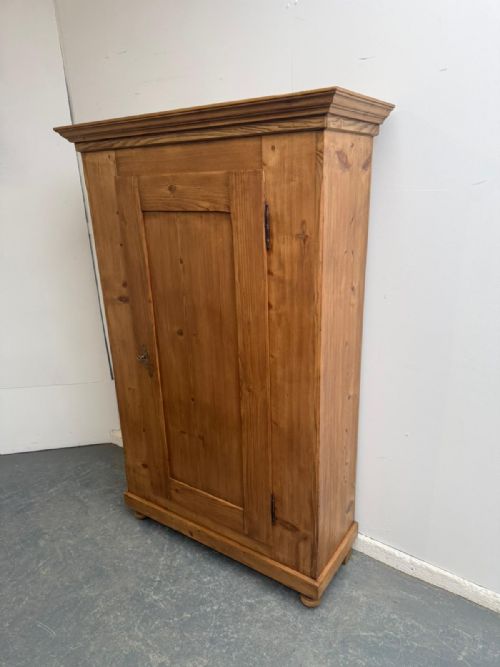


Narrow Single Wardrobe
These narrow single wardrobe pieces solve tight bedroom layouts with genuine period character, offering compact hanging space without dominating a room.
Narrow Single Wardrobe
A narrow single wardrobe provides compact storage through a single upright door, designed specifically for rooms with limited wall space. These pieces serve as hall robes, child's wardrobes, and shallow bonnetieres depending on their original domestic context.
The examples gathered here span the Victorian, Georgian, and 1920s eras, alongside specific regional interpretations like French provincial armoires and Scandinavian cupboards. Oak and pine dominate the current selection, complemented by select mahogany pieces from earlier decades.
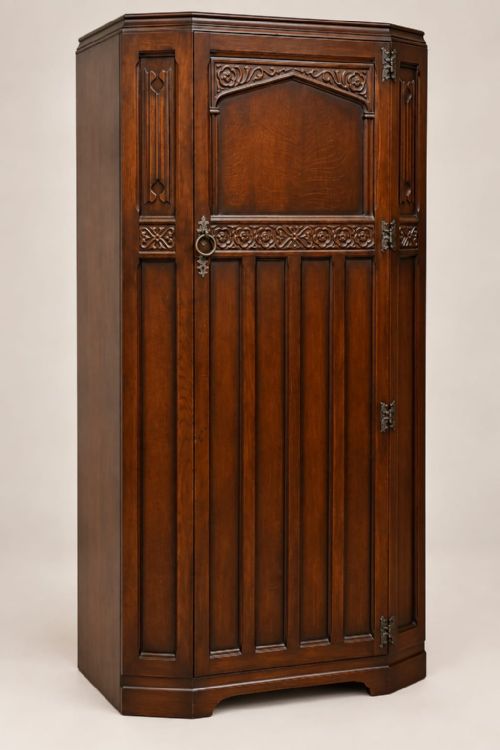
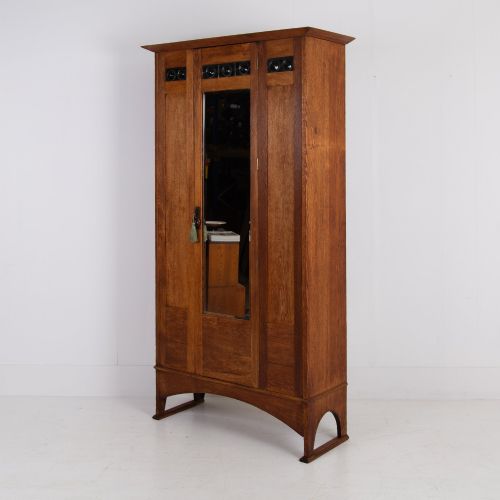
Buyers most frequently encounter vernacular pine and solid oak builds from the late nineteenth and early twentieth centuries. These range from plain utility pieces to Arts and Crafts designs featuring carved details like linen fold panels.
Construction and materials
Makers relied primarily on solid timbers such as oak, pine, and mahogany, utilising natural wax finishes to protect the wood grain. Metal hardware like brass handles and iron hinges secure the single doors and internal hanging arrangements.
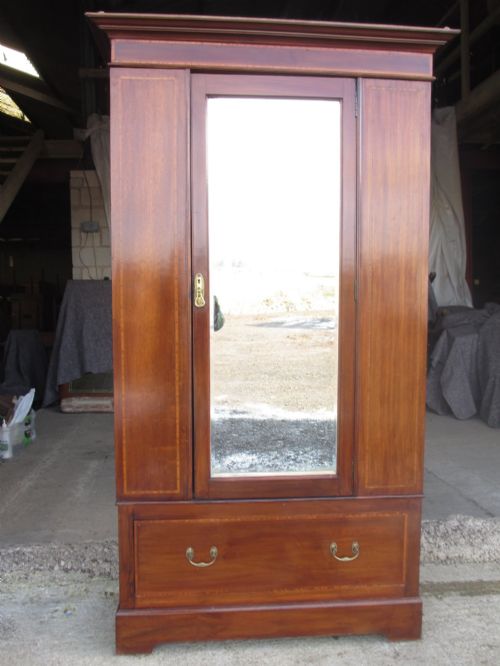
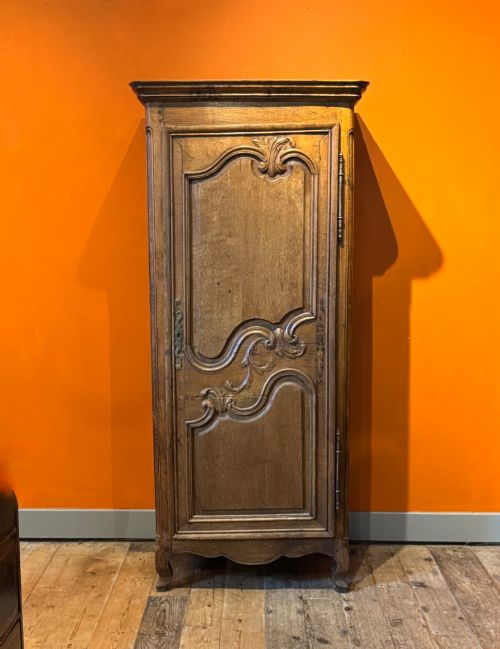
Certain regional variations incorporate decorative glass panels, mirrored doors, or intricate serpentine shaping to elevate standard utility forms. Joinery methods reflect the period of origin, from traditional pegged frames in earlier oak pieces to later industrial production.
Narrow Single Wardrobe Retail Price Guide 2026
Typical asking prices for narrow single wardrobe among the pieces listed under this phrase on Sellingantiques today, from the lower quarter to the upper quarter. They describe what is for sale here now, not the wider market.
Listings feature woods spanning oak, pine, and mahogany, alongside metal, glass, and brass details across various periods.
Assessing quality and proportion
Quality rests heavily on the integrity of the timber and the retention of original surface finishes, such as early waxed pine or polished oak. Superior pieces display thoughtful proportions and harmonious stylistic details, like Arts and Crafts carving or subtle Louis XV shaping, rather than plain utility construction.
The presence of original hardware, glass, and internal fittings distinguishes better examples from those altered over time. Structural depth also matters, as genuinely shallow wardrobes must balance compact exterior dimensions with practical interior utility.
The Narrow Single Wardrobe Glossary
- Bonnetiere
- A tall, single-door cabinet originally designed in France for storing bonnets and headwear. These narrow cupboards now function effectively as compact wardrobes in tight spaces.
- Linen fold
- A carved wooden panel motif resembling folded linen cloth, frequently seen on the doors of Arts and Crafts and revival furniture. This decorative technique adds texture to otherwise plain timber surfaces.
- Serpentine
- A curved line shape featuring a convex centre flanked by concave ends, found on the fronts of select 19th-century cupboards. This subtle contouring softens the rigidity of upright furniture.
- Hall robe
- A shallow wardrobe or cupboard placed near an entrance to store coats and outdoor wear. These pieces typically feature reduced depths compared to standard bedroom furniture.
- Arts and Crafts
- A design movement valuing handcraftsmanship and simple vernacular forms over mass production. Pieces from this style often highlight the natural grain of oak.
Narrow Single Wardrobe: Frequently Asked Questions
Will a narrow single wardrobe hold adult clothes?
Most narrow wardrobes feature a reduced internal depth that requires front-to-back hanging rails or specialised compact hangers. They suit everyday coats, shirts, and folded items rather than bulky winter garments.
Buyers should check internal dimensions carefully against their specific storage needs before purchasing a shallow hall robe or child's wardrobe.
How do I date a wooden wardrobe?
Dating relies on observing construction techniques, timber choices, and stylistic markers such as Arts and Crafts carvings or Georgian proportions. Machine-sawn timber generally indicates later 19th-century or 20th-century manufacture.
Secondary woods used inside drawers and back panels also offer clues to the period and regional origin of the piece.
Are these wardrobes easy to move?
Single wardrobes of this scale prove far more manageable to transport than large multi-door wardrobes due to their narrow footprint and lighter timber construction. Solid pine and oak versions remain sturdy while fitting easily through standard doorways.
Most pieces are built as a single solid unit rather than being completely dismantlable.
What is the difference between an armoire and a wardrobe?
Armoire traditionally describes a tall continental cupboard with doors, whereas wardrobe specifically denotes British furniture designed for hanging garments. In practice, dealers often use both terms interchangeably for single-door storage.
Continental examples frequently show regional aesthetic touches like Louis XV shaping or mirrored panels.