

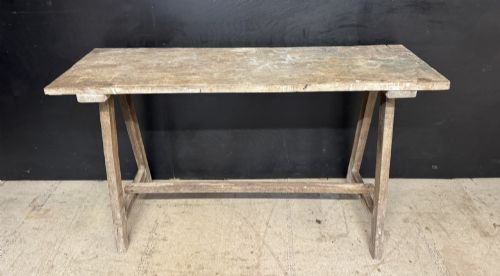
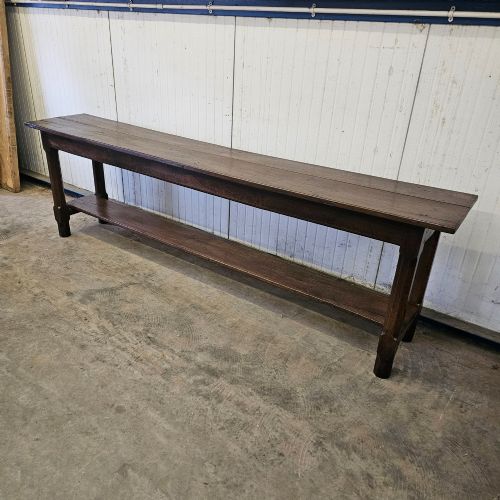
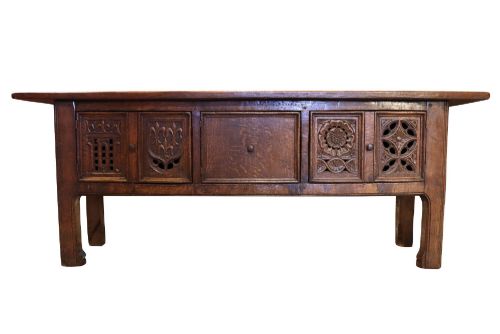
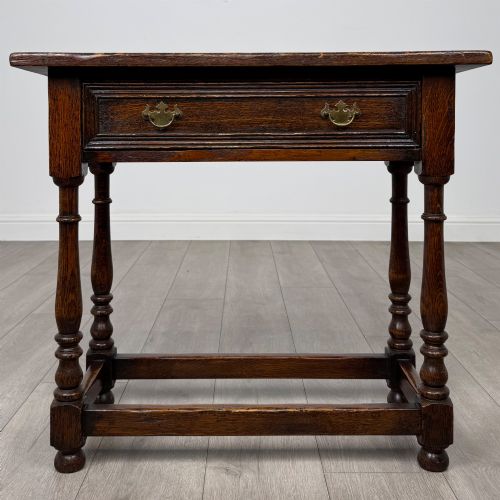


Narrow Oak Console
These narrow oak console tables bring compact character and solid timber grain to tight hallways and living spaces.
Narrow Oak Console
A narrow oak console search reveals compact tables built to occupy hallways, tight passages, and slim rooms without obstructing passage. These pieces draw from various periods including the nineteenth century and the Edwardian era, spanning console tables, side tables, and dresser bases.
Most examples lean towards English country or French provincial styling, incorporating functional elements like potshelves, potsboard bases, and trestle underframes. Buyers encounter solid timber construction adapted for smaller footprints, often reflecting revival movements or utilitarian forms.
Materials and construction methods
Makers utilised solid oak alongside supporting timbers such as pine and poplar, occasionally pairing the primary wood with brass hardware or marble surfaces. Bleached oak finishes appear frequently, altering the natural warmth of the grain to a lighter tone.
Construction relies on traditional joinery suited to tables, trestle frames, and dresser bases, with some items featuring carved detailing or gallery rails. The combination of sturdy oak frames and practical proportions defines the physical build of these items.
Narrow Oak Console Retail Price Guide 2026
Typical asking prices for narrow oak console among the pieces listed under this phrase on Sellingantiques today, from the lower quarter to the upper quarter. They describe what is for sale here now, not the wider market.
The listings on this site feature oak as the primary material alongside pine and poplar, spanning the nineteenth century up to the nineteen-twenties.
Distinctions in build and finish
Quality rests upon the selection of timber and the integrity of the structural frame, distinguishing plain utilitarian pieces from those with refined carving or specific period revival details. The depth of the grain and the execution of underframes, such as potsboards and trestles, dictate the visual weight.
The finish also plays a role, as deliberate bleaching or historic patination alters the presentation of the oak. Superior examples maintain balanced proportions and robust joinery across narrow dimensions without sacrificing stability.
The Narrow Oak Console Glossary
- Console table
- A table designed to stand against a wall, typically narrow in depth to fit restricted spaces.
- Dresser base
- The lower section of a traditional dresser, comprising cupboards or drawers beneath a flat surface.
- Trestle table
- A table structure where the top rests on two or more upright supports connected by a horizontal beam.
- Potsboard base
- A low slatted shelf beneath a table or dresser used originally for storing pots and kitchen utensils.
- Bleached oak
- Timber treated to lighten its natural colour, revealing the grain with a softer tone.
Narrow Oak Console: Frequently Asked Questions
Where should I place a narrow console?
These pieces suit narrow hallways, entryways, and tight spaces where standard depth furniture obstructs movement. Their shallow proportions allow them to sit flush against walls without dominating the room.
They also function effectively as side tables or lamp tables in living rooms, providing a surface for lighting and display while maintaining a minimal footprint.
How do I identify the period of an oak table?
Dating relies on examining the construction methods, timber selection, and stylistic cues present in the frame. Pieces from the nineteenth century often display heavier proportions or specific revival details like Gothic carving.
Edwardian and early twentieth-century examples frequently show simpler lines or functional alterations suited to domestic spaces of that era.
What is a potsboard base?
A potsboard base is a low shelf fixed beneath the main surface of a table or dresser base. Historically, this platform held kitchen pots, pans, and heavy domestic vessels.
In modern settings, this lower shelf provides open storage or display space for baskets and books while adding structural stability to the table frame.
Are these tables suitable for daily dining?
Most console and side tables are built primarily for display and surface use rather than seated dining. Their narrow dimensions limit knee clearance and tabletop area for multiple place settings.
However, specific drop-leaf or gateleg variations within this category are designed to expand for occasional dining needs before folding back down.