

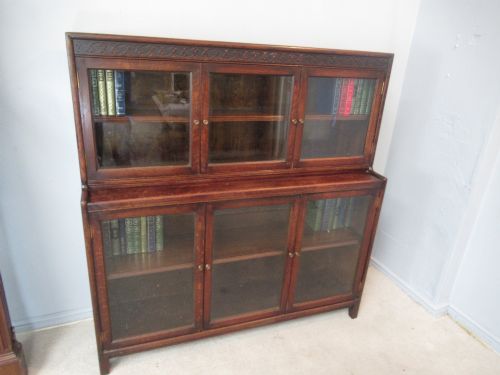

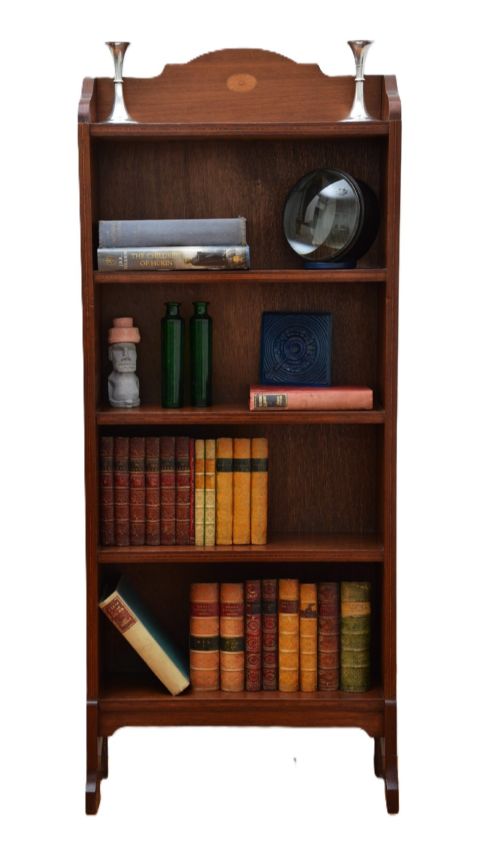
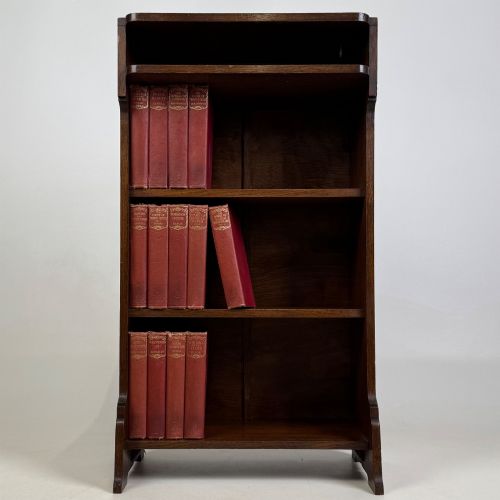
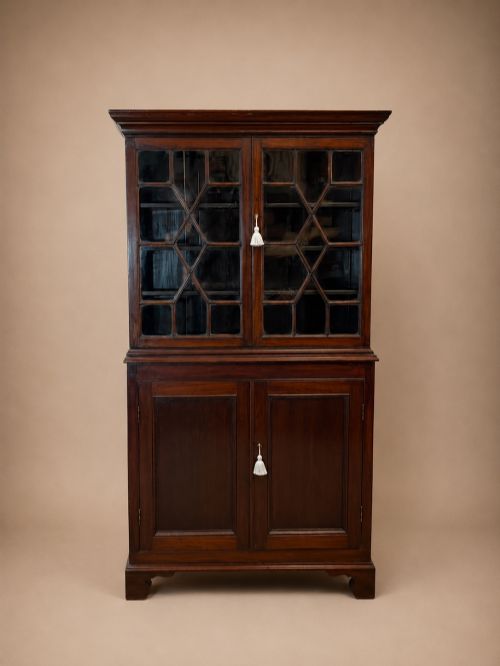


Narrow Library Cabinet
These narrow library cabinet examples offer practical upright storage in compact footprints, bringing period timber character directly into tight domestic spaces.
Narrow Library Cabinet
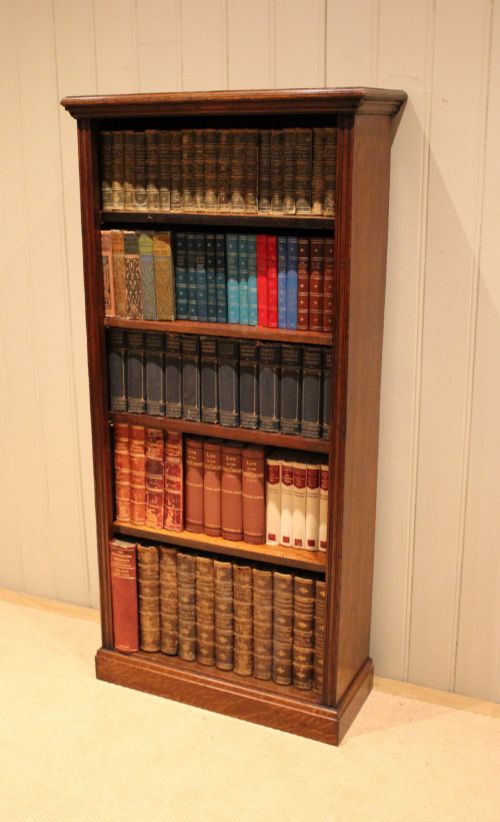
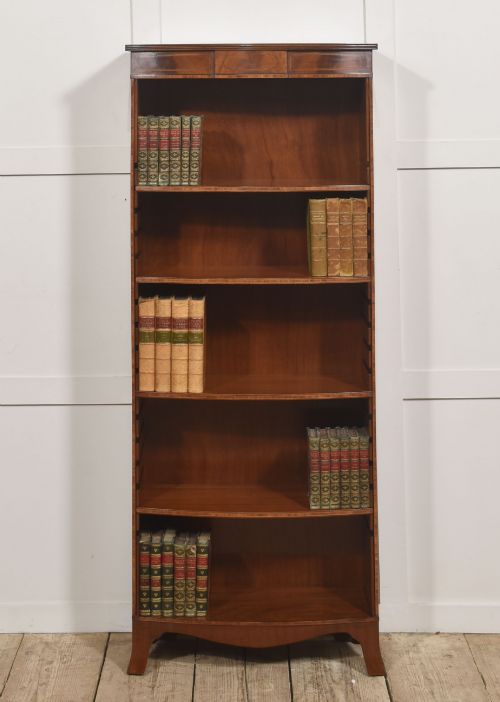
A narrow library cabinet provides vertical book storage and display through slender proportions suited to smaller walls and alcoves. The pieces on this page span the Victorian and Edwardian eras, alongside early twentieth-century examples.
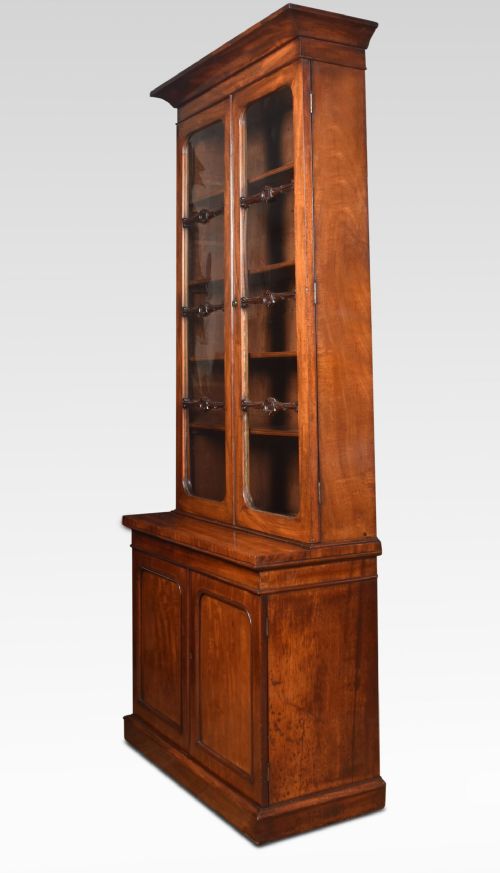
Most entries take the form of open bookcases or glazed cabinets constructed to maximise shelf space without dominating a room. Materials range from traditional mahogany and oak to decorative satinwood and yew wood.
Origins stretch from the late nineteenth century into the nineteen-twenties, incorporating styles from Victorian and Edwardian periods down to Arts and Crafts and Regency revivals.
How they were made
Cabinet makers utilised dense hardwoods like mahogany and oak as the structural carcasses for these upright pieces, often adding boxwood and satinwood inlay for decorative contrast. Timber was selected for grain pattern and strength to support loaded shelving.
Glazing techniques involve fitted glass panels, including astral glazed doors, paired with brass hardware such as adjustable shelf brackets and hinges. Open formats rely on clean joinery and carved edges to define the silhouette.
Narrow Library Cabinet Retail Price Guide 2026
Typical asking prices for narrow library cabinet among the pieces listed under this phrase on Sellingantiques today, from the lower quarter to the upper quarter. They describe what is for sale here now, not the wider market.
Listings feature mahogany, oak, satinwood, and yew wood alongside brass hardware and glass panels.
What varies in quality
Quality rests upon the selection of timber figures and the precision of inlaid details, where balanced satinwood or boxwood work elevates standard construction. Maker attribution, such as pieces associated with firms like Gillows or Minty, separates standard workshop output from higher tier commissions.
Refinements in proportion and internal detailing, including adjustable shelving systems and fine brass fittings, distinguish superior examples. The integrity of original glass and the crispness of carved wooden edges further define the upper tier of these pieces.
Gillows·Minty
The Narrow Library Cabinet Glossary
- Astral glazing
- A method of dividing glass panes within a door using slender wooden bars to create geometric patterns. This technique provides structural support while maintaining a clear view of the books inside.
- Waterfall bookcase
- A tiered shelving unit where each lower shelf steps out wider than the one above it. This form creates a descending cascade effect often executed in satinwood or yew.
- Satinwood inlay
- The insertion of contrasting blonde satinwood into a darker mahogany or walnut ground to form geometric or floral motifs. It requires precise woodworking to fit the veneer flush.
- Adjustable shelving
- A system using wooden racks or brass pins inside the cabinet sides to alter shelf heights. This allows owners to accommodate books of varying vertical sizes.
Narrow Library Cabinet: Frequently Asked Questions
What defines a narrow library cabinet?
These pieces are upright storage units designed specifically for books, featuring compact widths to fit restricted wall spaces.
They combine the shelving capacity of larger bookcases with a reduced footprint suitable for domestic interiors.
How were these cabinets used originally?
Libraries and studies utilised them to keep frequently referenced volumes accessible within easy reach of a desk or armchair.
Glazed versions protected valuable leather-bound editions from dust and light exposure.
How do I date a Victorian piece?
Nineteenth-century examples often display dense mahogany construction, hand-cut dovetails, and heavier proportions compared to later Edwardian designs.
Brass fittings and secondary timbers inside the carcass provide additional clues to the manufacturing decade.
Are the shelves adjustable?
Many period examples incorporate movable shelving supported by wooden ratchets, brass studs, or slot-in brackets.
This adaptability accommodates diverse book heights inside the vertical cabinet frame.