


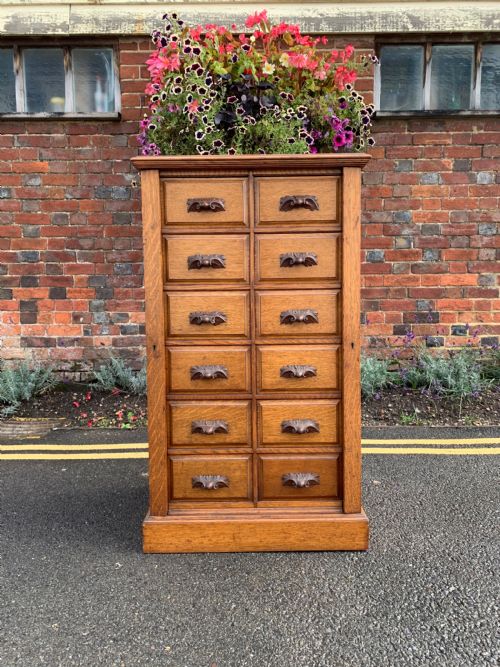


Narrow Filing Chest
A narrow filing chest offers vertical storage for documents and papers, combining compact floor space with deep compartmentalised drawers.
Narrow Filing Chest
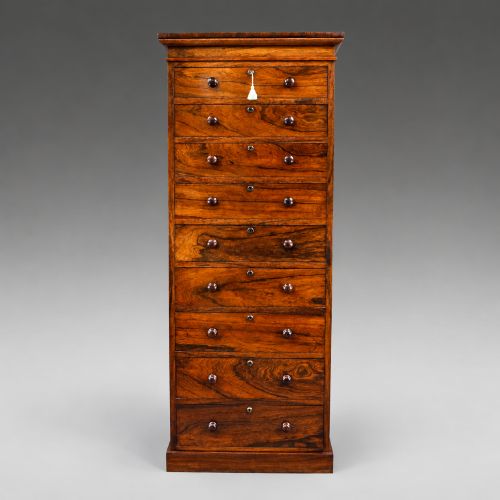
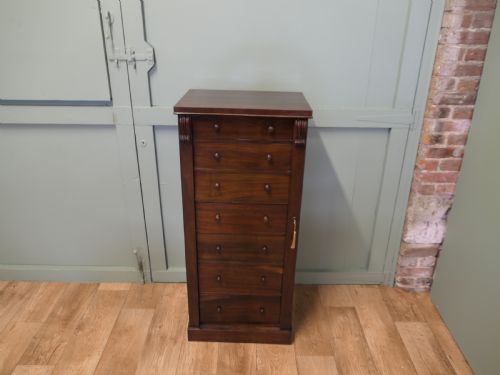
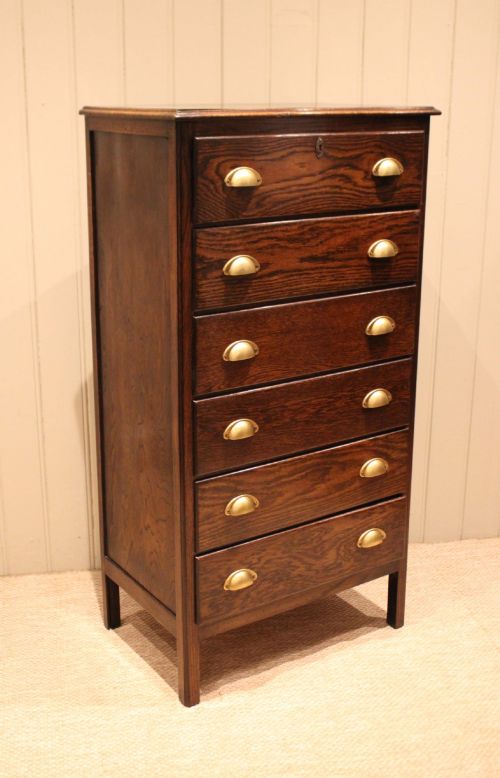
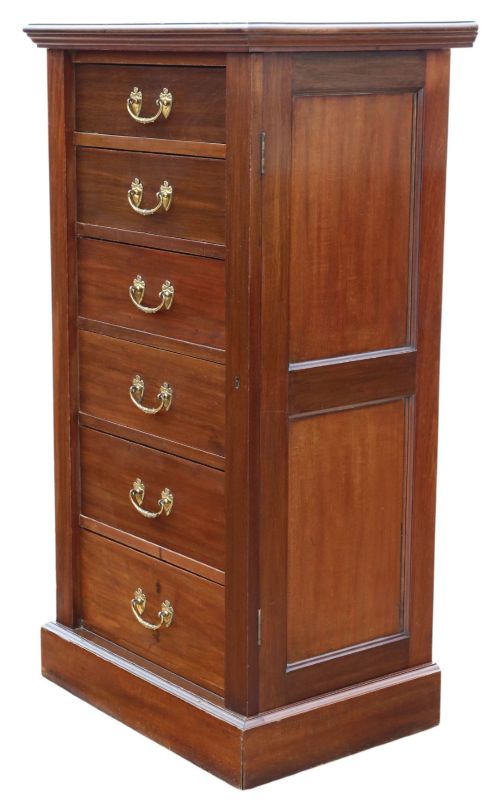
A narrow filing chest is designed to store papers efficiently in rooms with limited floor space, utilising height rather than width. These pieces appear in forms such as tallboys, Wellington chests and music cabinets, dating from the Victorian and Edwardian eras alongside the early twentieth century.
Most examples seen here are configured with multiple shallow drawers stacked vertically, often secured by a locking mechanism such as a hinged stile found on Wellington chests. The proportions remain tall and slender, matching the requirements of period offices and libraries.
Origins span the nineteenth and early twentieth centuries, encompassing styles from the Victorian and Edwardian periods as well as Georgian influences. Oak, mahogany, rosewood and figured walnut provide the primary timber construction for these functional storage items.
Construction and materials
Makers utilised dense hardwoods including mahogany, oak, rosewood and figured walnut to build stable carcasses capable of supporting heavy paper loads. Timber selection often featured figured veneers on drawer fronts to enhance the visual grain.
Joinery techniques involved precise drawer construction, frequently incorporating brass hardware for handles, escutcheons and locking stiles. The integration of locking mechanisms required exact carpentry to ensure the security bar engaged smoothly across the drawer banks.
Narrow Filing Chest Retail Price Guide 2026
Typical asking prices for narrow filing chest among the pieces listed under this phrase on Sellingantiques today, from the lower quarter to the upper quarter. They describe what is for sale here now, not the wider market.
Music cabinets often masqueraded as filing chests until opened to reveal shallow compartments once reserved for sheet music.
Judging quality in a narrow filing chest
Quality rests upon the choice of timber and the precision of the cabinetwork, particularly where secondary woods meet primary veneers. Fine examples display consistent grain patterns across every drawer front and smooth operation within the runners.
The sophistication of the locking mechanism and the original condition of the brass fittings distinguish finer workshop output from standard utility pieces. A secure, well-fitted locking stile indicates careful attention to the original brief of a filing chest.
Maple and Co
The Narrow Filing Chest Glossary
- Wellington chest
- A tall, narrow chest of drawers featuring a hinged locking bar on one side that fastens over the drawer edges. This specific design originated in the nineteenth century for secure document storage.
- Figured walnut
- Timber cut from walnut trees that display attractive, swirling grain patterns. Cabinetmakers applied this veneer to primary surfaces for decorative effect.
- Stile
- A vertical framing member of a panelled piece of furniture. On filing chests, the locking stile secures the entire stack of drawers.
Narrow Filing Chest: Frequently Asked Questions
What is a narrow filing chest used for?
These pieces served primarily for organising correspondence, legal papers and documents in studies or offices. The vertical arrangement kept large quantities of paperwork accessible within a minimal footprint.
Today, they function effectively in modern homes for storing stationery, craft supplies or household admin. Their slender dimensions allow them to fit into alcoves and tight hallways.
How do I identify a Wellington chest?
A Wellington chest is distinguished by its tall, narrow proportions and a locking side-bar that fastens over the drawer edges. This hinged flap secures all drawers simultaneously with a single key.
Most examples date from the Victorian era and were constructed from mahogany, walnut or oak. The design prioritised security and vertical space economy.
What woods were used for these chests?
Cabinetmakers relied on durable hardwoods such as mahogany, oak, rosewood and figured walnut. These timbers provided the structural rigidity needed for stacked drawers loaded with paper.
Secondary woods like maple sometimes appear in the internal linings of the drawers. Timber choice often reflected the prevailing style of the Victorian or Edwardian period.
Where should I place a tall chest?
A narrow filing chest suits spaces where floor area is restricted, such as home offices, hallways or bedroom corners. Their height draws the eye upward while taking up minimal square footage.
Ensure the piece has adequate clearance for drawers to open fully and, in the case of Wellington chests, enough side clearance to swing the locking stile open.