



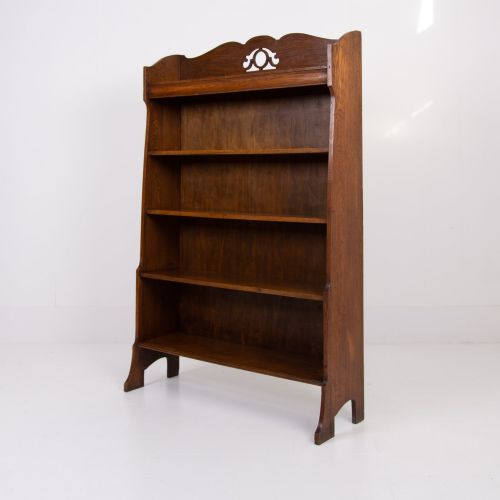
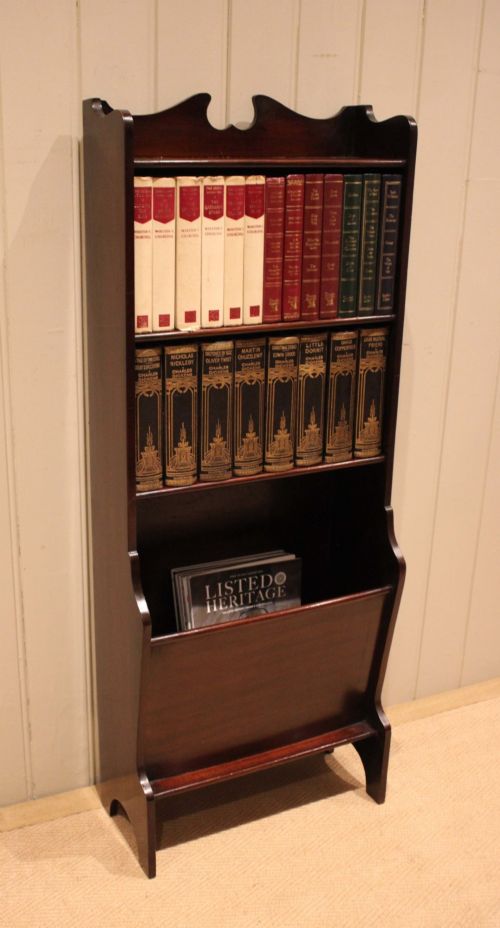
Narrow Book Shelf
A narrow book shelf solves the persistent problem of small wall spaces while keeping a generous library within arm's reach.
Narrow Book Shelf
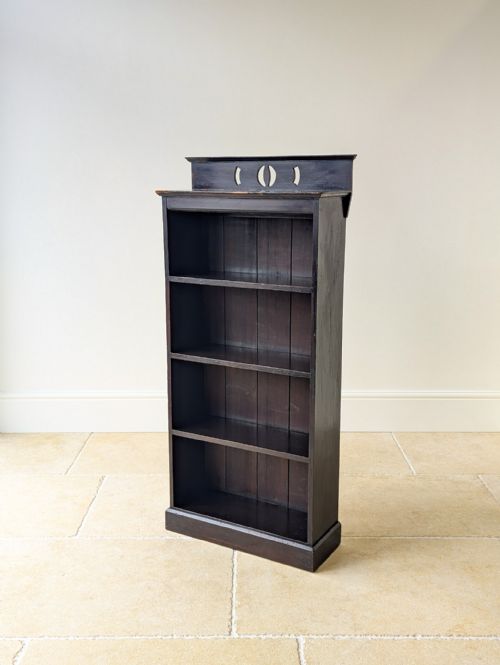
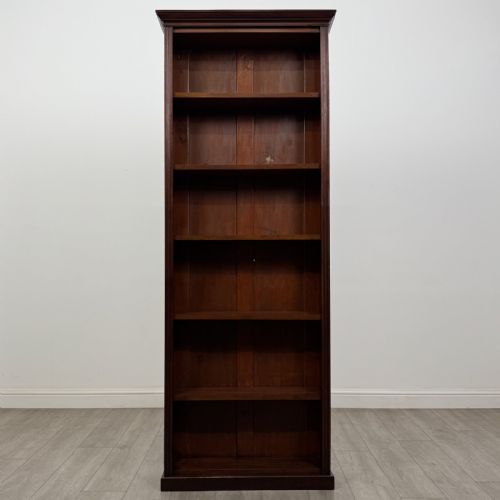
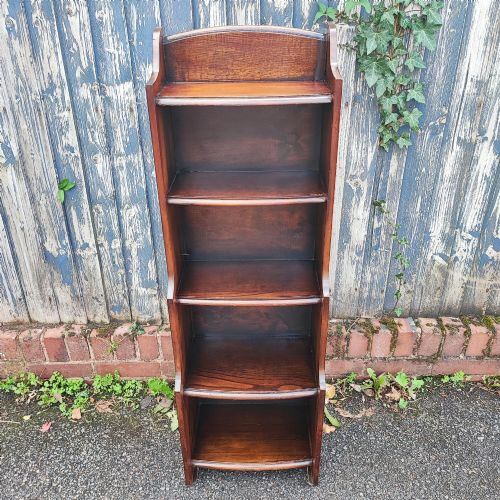
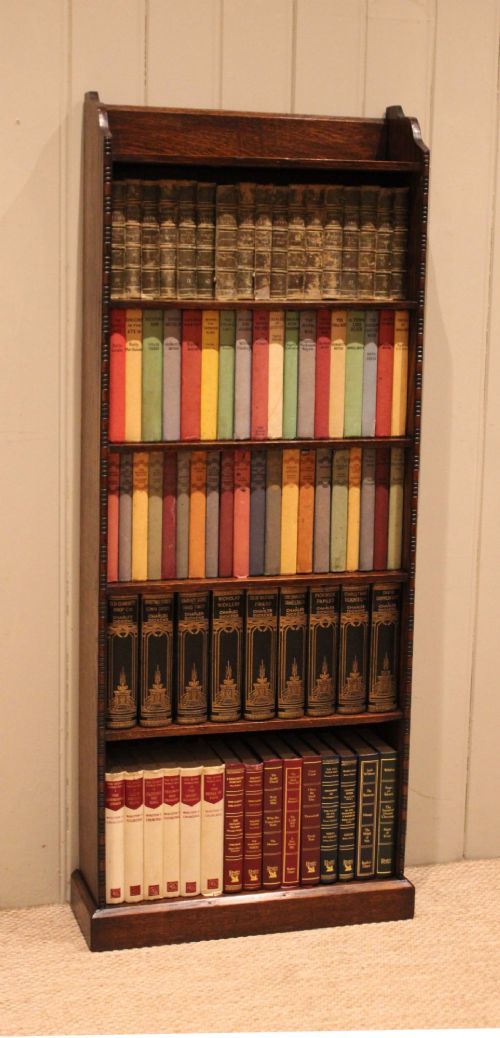
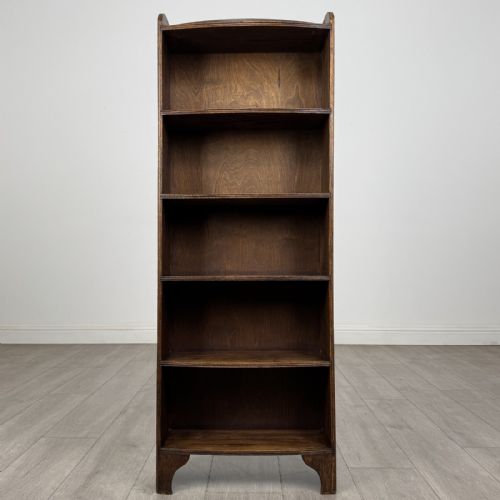
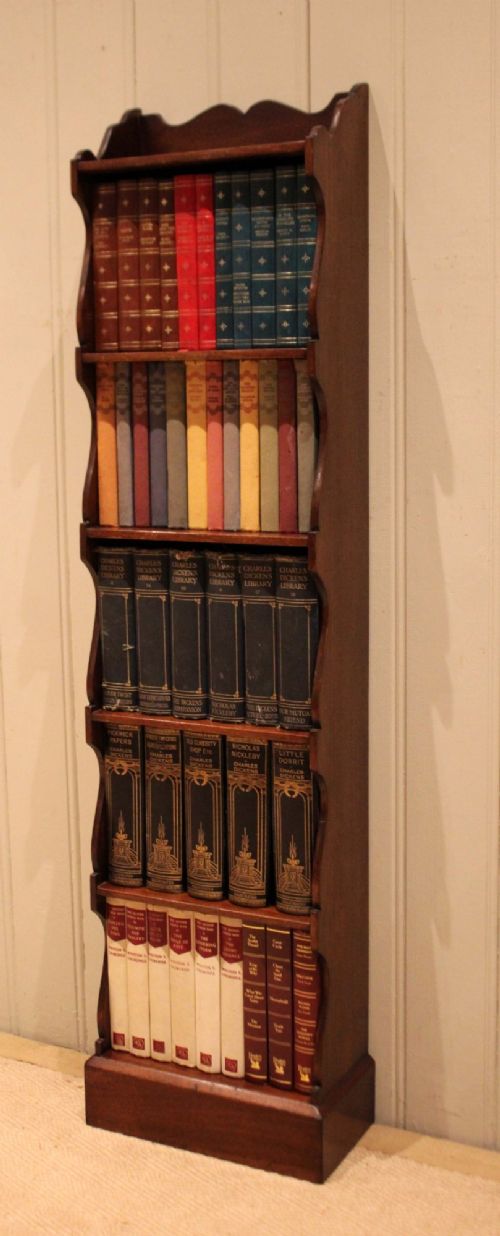
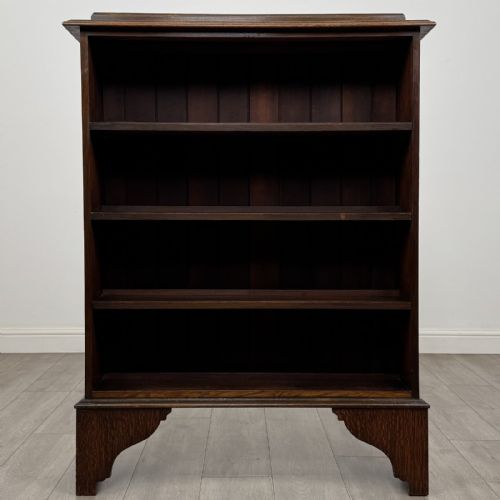
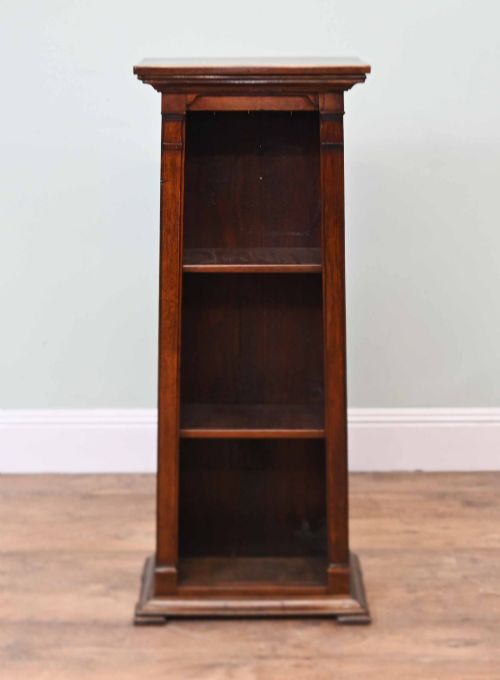
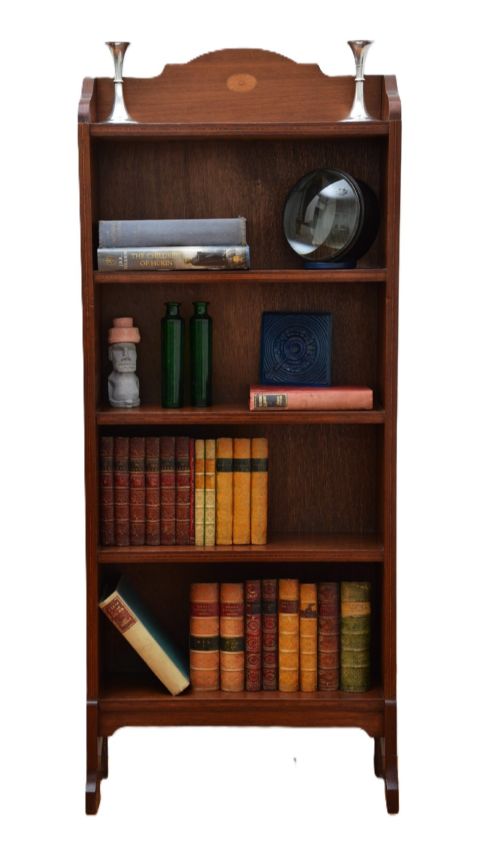
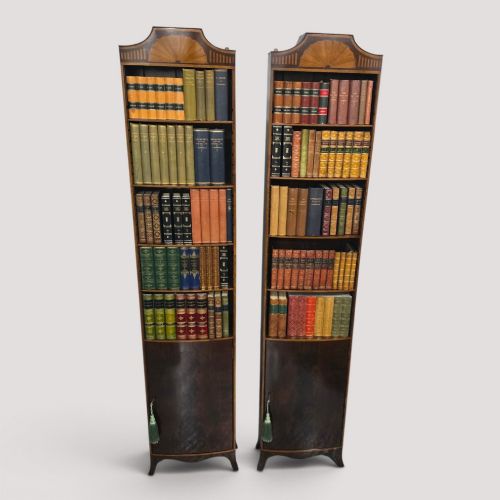
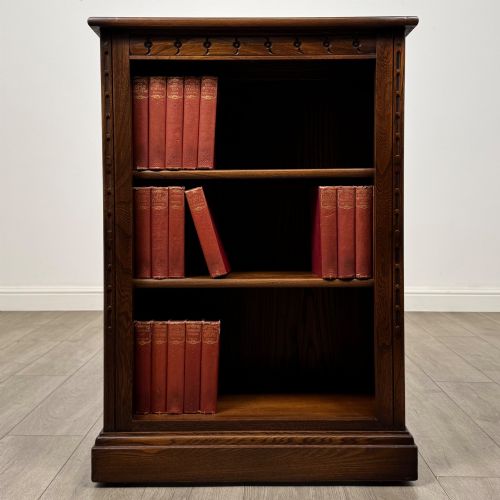
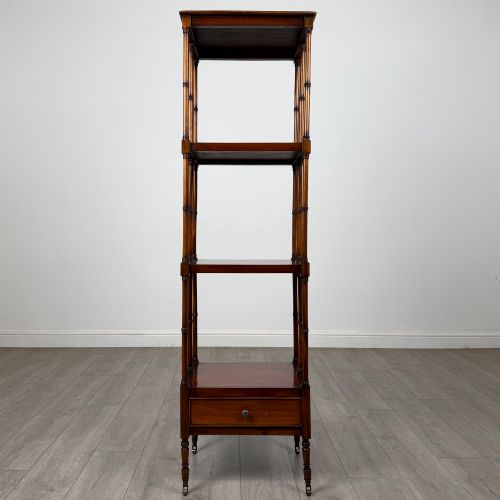
A narrow book shelf is designed for compact footprints, frequently appearing as slim open bookcases, slender whatnot shelves, and compact corner cabinets from the nineteenth and early twentieth centuries. These pieces serve rooms where floor space is limited, offering vertical storage without dominating the interior. The version most commonly met on this page is the Edwardian or Victorian oak or mahogany open bookcase, built for domestic libraries and studies.
Craftsmen built these shelves in styles ranging from plain rustic country pine to refined Edwardian mahogany, Arts and Crafts oak, and revival designs like Regency and Jacobean. Makers focused on slender proportions, often incorporating adjustable shelves, lower drawers, or magazine racks to maximise utility in small chambers. Their origins lie in British workshops and factories responding to the domestic demands of the Victorian and Edwardian eras.
Materials and construction
Makers relied principally upon oak and mahogany for these slender shelves, occasionally turning to pine, rosewood, and satinwood inlay for decorative contrast. Timber was selected for grain pattern and strength, ensuring that narrow uprights could support heavy volumes without bowing under pressure.
Construction techniques combined traditional joinery with decorative elements such as beaded edges, slender pillars, carved panels, and brass or ormolu mounts. Open backs, enclosed cupboards, and integrated magazine racks demonstrate how structural utility met the stylistic demands of the period.
Narrow Book Shelf Retail Price Guide 2026
Typical asking prices for narrow book shelf among the pieces listed under this phrase on Sellingantiques today, from the lower quarter to the upper quarter. They describe what is for sale here now, not the wider market.
Several bookcases double as magazine racks, proving that Victorian readers also enjoyed a casual periodical before dinner.
Distinctions in quality
Quality rests upon the selection of timber and the precision of the joinery rather than mere ornamentation. Superior pieces exhibit carefully matched grain, sound structural framing, and refined details such as fine inlay or deliberate carved motifs.
Proportion and utility separate standard workshop output from exceptional examples. A well-proportioned narrow book shelf maintains stability despite its slender profile, while lesser pieces may show heavier, utilitarian construction without the same attention to aesthetic balance.
Waring and Gillows·Wylie Lochhead of Glasgow·E.A. Taylor·Ercol
The Narrow Book Shelf Glossary
- Whatnot
- A multi-tiered piece of furniture with open shelves, used for displaying books or small objects. It typically stands on slender uprights.
- Satinwood Inlay
- Contrasting light wood inserted into a darker timber surface to form decorative patterns. It is frequently seen on Edwardian and Victorian mahogany furniture.
- Arts and Crafts
- A design movement prioritising traditional craftsmanship, plain materials, and simple forms over mass-produced ornamentation. Pieces from this style often feature exposed joinery and decorative cut-outs.
- Waterfall Bookcase
- A set of open shelves where each tier steps back from the one below, creating a silhouette resembling cascading water. This form dates primarily to the nineteenth and early twentieth centuries.
Narrow Book Shelf: Frequently Asked Questions
What is a narrow book shelf used for?
These compact pieces hold collections of books and display items in restricted floor spaces. They fit easily into alcoves, halls, and small sitting rooms.
Their open or shelved design keeps volumes accessible while maintaining an airy feel in modest interiors.
How do I identify an Edwardian narrow book shelf?
Edwardian examples often feature lighter timbers like mahogany or satinwood inlay, alongside slender pillars and refined proportions. They reflect the domestic tastes of the early twentieth century.
Look for light construction, open shelving, and occasional decorative elements such as low drawers or carved oak panels.
Are these shelves suitable for heavy books?
Many period pieces include sturdy oak or mahogany uprights and adjustable shelving designed to bear considerable weight. Solid timber construction provides the necessary strength for dense libraries.
Checking the thickness of the shelves and the rigidity of the frame helps determine their capacity for heavy volumes.
What styles are common among these shelves?
The listings show a prevalence of Edwardian, Victorian, and Arts and Crafts styles, alongside revival forms like Regency and Jacobean. Rustic country pieces also appear in pine and oak.
Each style brings distinct aesthetic choices, from the plain functionality of Arts and Crafts to the refined inlay of Sheraton and Edwardian designs.