

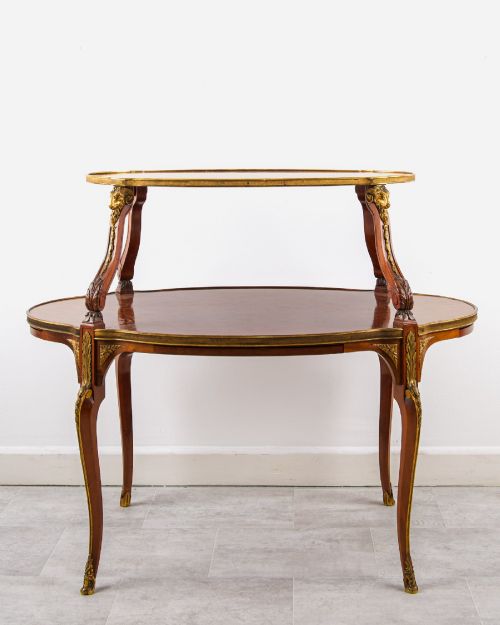


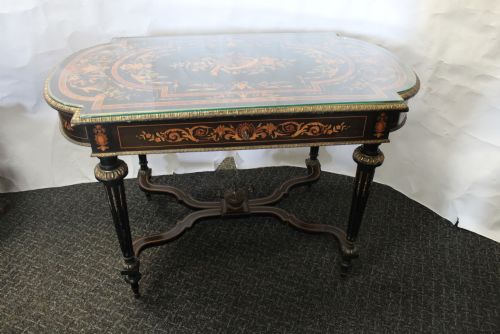

Napoleon III Center Table
A napoleon iii centre table brings lavish French nineteenth-century design into a room with striking ormolu mounts and intricate marquetry.
Napoleon III Center Table
A napoleon iii centre table sits proudly in the middle of a room, serving both a decorative and a functional purpose. These pieces emerge from the nineteenth century, drawing heavily on earlier French royal styles like Louis XV and Louis XVI alongside eclectic revivals.
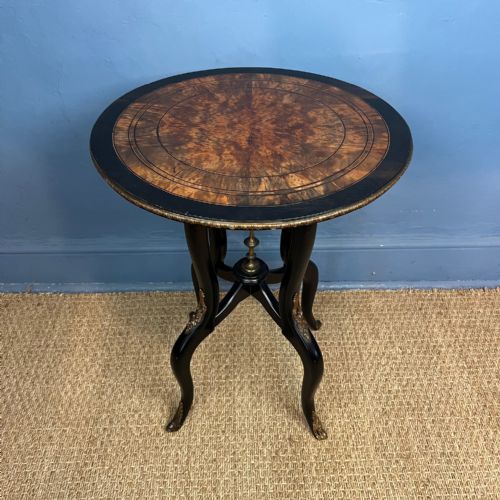
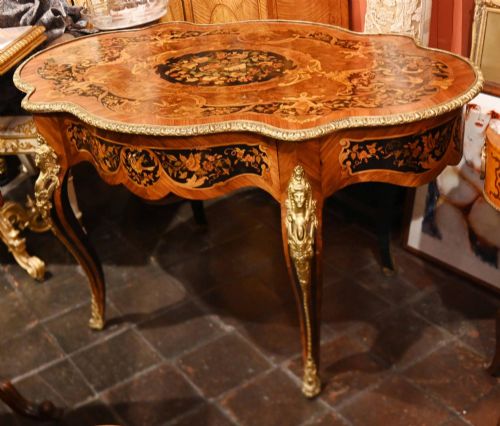
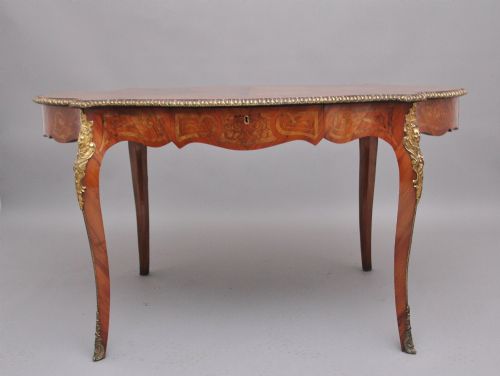
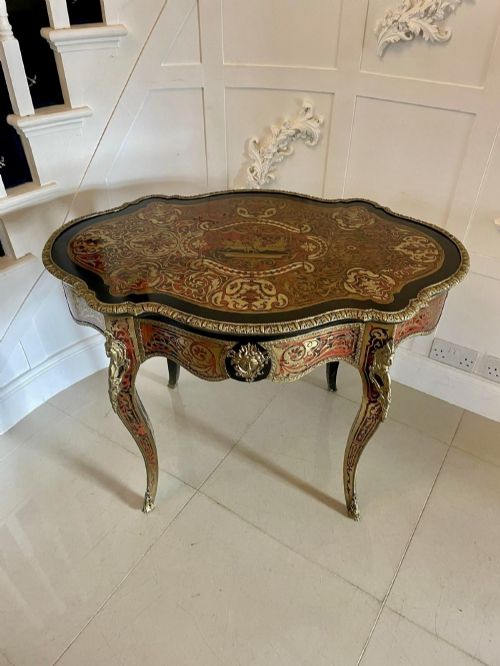
You will frequently encounter variations featuring elaborate Boulle work, floral marquetry, or inset porcelain plaques. Common forms on this page include formal centre tables, side tables, occasional tables, and writing desks.
The aesthetic leans towards ornate French styling, utilising rich veneers and gilded bronzes to create a commanding visual presence. Each piece reflects the decorative ambitions of the period, often combining dark woods with contrasting metallic highlights.
Materials and Construction Techniques
Cabinetmakers built these tables using sturdy foundational timbers such as walnut, mahogany, and ebonised wood, which were then overlaid with decorative veneers including rosewood and kingwood. Artisans applied precise marquetry and inlay work using brass, tortoiseshell, and exotic woods to form elaborate floral and geometric patterns.
Metal ornamentation played a crucial role in the construction, featuring cast ormolu and gilt bronze mounts screwed or pinned to the structural frames. Many examples incorporate Sevres style porcelain plaques set directly into the wooden surfaces, demanding careful joinery to support the mixed media.
Napoleon III Center Table Retail Price Guide 2026
Typical asking prices for napoleon iii center table among the pieces listed under this phrase on Sellingantiques today, from the lower quarter to the upper quarter. They describe what is for sale here now, not the wider market.
Distinctions in Quality
The refinement of the casting in the ormolu and gilt bronze mounts sets the finer examples apart, where chiselling reveals sharp details rather than soft, mass-produced edges. Superior pieces display meticulous precision in the Boulle work and marquetry, with tight joints between the brass and tortoiseshell or the various wood veneers.
Makers who signed their work or operated in prominent Parisian workshops generally delivered a higher standard of overall execution and structural integrity. The choice of secondary timbers and the depth of the hand-applied polish also dictate the lasting presence and durability of the piece.
Maison Millet·A. Beurdeley·Zwiener Jansen Sucesseur
The Napoleon III Center Table Glossary
- Boulle
- An elaborate form of marquetry utilising brass and tortoiseshell, developed in France and popular on nineteenth-century tables. The technique creates a striking contrast between the dark organic material and the gleaming metal inlay.
- Ormolu
- Gilt bronze ornamentation applied to the mounts and edges of fine furniture. This gilded finish adds bright metallic accents to the darker woods typical of the period.
- Marquetry
- The art of applying pieces of veneer to a structure to form decorative patterns and pictorial designs. Craftsmen used various woods and metals to achieve intricate surface textures.
- Étagère
- An open tiered piece of furniture designed for display. These multi-level tables provide additional surface space while maintaining an airy silhouette.
Napoleon III Center Table: Frequently Asked Questions
Where should I place a centre table?
These tables are traditionally intended to anchor the middle of a principal room, allowing them to be viewed from all sides.
Ensure there is enough walking clearance around the perimeter so the intricate marquetry and ormolu mounts can be fully appreciated.
How do I care for ebonised wood?
Dust the surface regularly with a soft, dry cloth to prevent abrasive particles from scratching the dark finish.
Avoid placing the table in direct sunlight or near heat sources to protect the delicate veneers and gilt bronze from drying out.
What is the difference between Boulle and marquetry?
Boulle specifically refers to the distinct pairing of brass and tortoiseshell cut together in intricate counterchange patterns.
General marquetry relies solely on various coloured wood veneers to create floral or geometric motifs across the tabletop.
Can I use these tables for daily writing?
Some variations function as desks or writing tables equipped with integrated drawers for storage.
If you use the table for writing, consider adding a protective blotter to safeguard the antique wood and porcelain surfaces from ink or friction.