



Naive Folk Art Landscape
These naive folk art landscape works capture rural scenes and country life with direct, unpretentious charm and honesty.
Naive Folk Art Landscape
A naive folk art landscape brings straightforward country charm to any interior through unpretentious rural street scenes, topographical views, and pastoral subjects. When browsing these pieces, a buyer encounters oil paintings on canvas and board produced across the eighteenth, nineteenth, and twentieth centuries. These works offer a direct window into past rural life without the academic perspective of traditional fine art.
The selections span English naive school works alongside provincial depictions of historic sites, farmsteads, and domestic animals. Works range from early eighteenth-century canvases depicting locations like Windsor Castle to mid-twentieth-century windmill harvest scenes. Each painting presents a distinct regional viewpoint shaped by self-taught observation rather than formal academy training.
Materials and construction methods
Artists painted these scenes using oil paint applied to stretched canvas, wooden panels, or canvas laid over board. The physical fabric of the work often includes original giltwood frames or decorative gilt gesso mouldings that complement the provincial brushwork. Mixed media additions such as watercolour and coloured pencil appear in later twentieth-century examples.
Makers relied on straightforward handling of pigments to build flat planes of colour and strong linear definitions without relying on complex perspective rules. This direct application results in textured surfaces where brush marks and underlying wood grain remain visible. The physical components reflect accessible local materials gathered by working painters.
Naive Folk Art Landscape Retail Price Guide 2026
Typical asking prices for naive folk art landscape among the pieces listed under this phrase on Sellingantiques today, from the lower quarter to the upper quarter. They describe what is for sale here now, not the wider market.
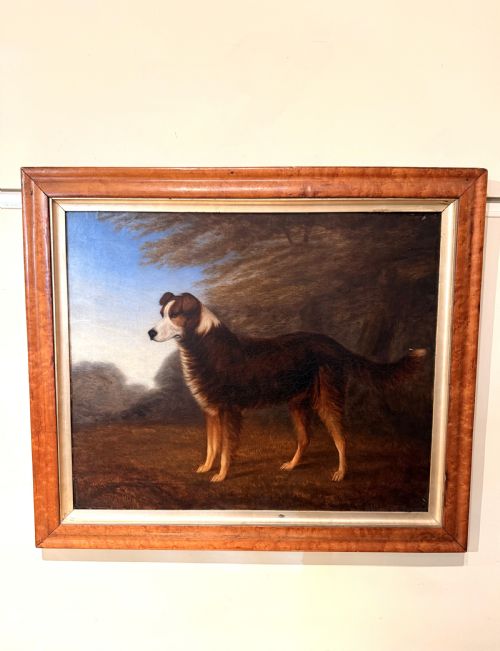
One determined border collie keeps eternal watch over a canvas while a church nearby proudly flies the red duster.
Factors of artistic quality
Quality in a naive folk art landscape rests upon the strength of composition and the confidence of brushwork within the self-taught tradition. Superior examples achieve a balanced arrangement of space and subject that draws the eye directly into the rural scene. Softer, more atmospheric handling of light distinguishes the finer provincial interpretations from stiffer academic copies.
The integration of the painting with its period frame contributes significantly to the overall integrity of the piece. Works that retain their original giltwood or simple wooden surrounds preserve the historic context in which the artist intended them to be viewed. Greater expressive vigour in depicting figures, animals, and architecture elevates individual paintings.
Irene Lagut
The Naive Folk Art Landscape Glossary
- Naive art
- Art created by a self-taught person lacking formal training in perspective and proportion. This style emphasises sincerity and direct visual storytelling over academic precision.
- Folk art
- Artistic work created within a traditional culture by untrained makers. These objects serve everyday decorative or community purposes rather than academic display.
- Oil on canvas
- Pigment bound in drying oil applied to a woven fabric support stretched across a wooden frame. This medium allows for rich colour depth and layered textures.
- Topographical painting
- An artwork depicting a specific real location or building with descriptive accuracy. These pieces serve as visual records of towns, country houses, and landscapes.
- Giltwood
- Wood that has been decorated with a thin layer of gold leaf or powder. It frequently frames historic paintings to add warmth and definition.
Naive Folk Art Landscape: Frequently Asked Questions
What defines a naive landscape?
A naive landscape is an artwork created by an artist without formal training who paints rural scenes, buildings, or natural views using simplified perspective. These pieces rely on honest observation and direct expression rather than strict adherence to academic rules.
Such works often feature charming asymmetries and flat planes of colour that give them an immediate and engaging visual appeal.
How old are these paintings?
The pieces span multiple centuries, with examples originating from the eighteenth, nineteenth, and mid-twentieth centuries. Each era brings its own palette and choice of canvas or board support.
Georgian and Victorian works show early provincial approaches, while later twentieth-century examples continue the tradition through mid-century rural subjects.
Where should I hang one?
These paintings suit traditional country interiors, kitchen spaces, and studies where their unpretentious character can stand out. They pair well with natural wood furnishings and neutral walls.
Keep them away from direct sunlight and excessive moisture to protect the oil paint and period framing.
Are the frames original?
Many pieces retain period surrounds such as giltwood frames or simple wooden mouldings that match the age of the canvas. These housings complement the provincial aesthetic.
Examining the corner joints and surface wear helps determine whether the frame has accompanied the painting for generations.