



Muted Wool Rug
A muted wool rug brings soft, weathered character and tactile depth to a room through gentle patination and traditional knotting.
Muted Wool Rug
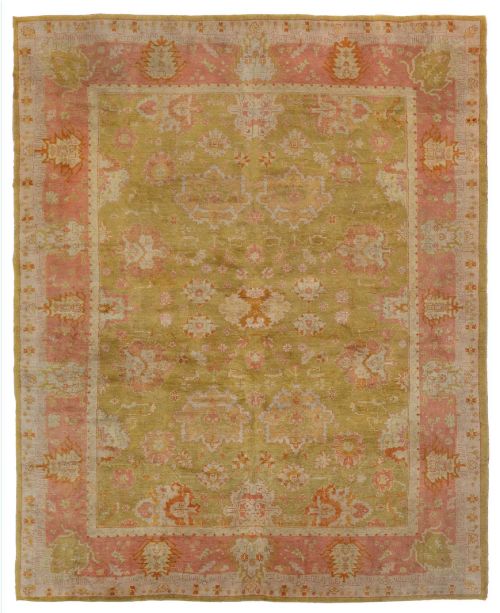
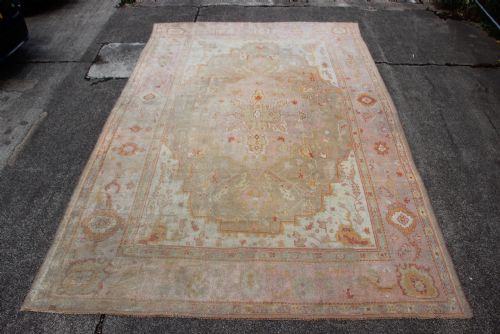
When you search for a muted wool rug, you encounter hand-knotted floor coverings hailing from regions such as Persia, Turkey, and Afghanistan, dating from the early nineteenth century through the early twentieth century. The selection leans heavily toward historic room-size carpets and smaller area formats originating from weaving centres like Ushak, Ziegler, Bidjar, and Sivas.
Buyers choose these items for their subdued palettes, which typically present faded pinks, soft beiges, and gentle pastel tones rather than saturated primary colours. This selection demonstrates diverse cultural traditions, ranging from Ottoman prayer rugs inscribed in script to tribal Afghan Aqcha pieces and intricate Persian room carpets.
How they were made
The primary material found across these listings is natural wool, frequently combined with cotton foundations and occasionally incorporating angora wool for added softness in pile construction. Artisans tied these fibres by hand using traditional knotting techniques characteristic of Anatolian, Persian, and tribal workshops.
Natural dye processes and decades of gentle fading created the muted aesthetic prized today. The physical structure relies on dense hand-knotting over sturdy warp and weft threads, ensuring structural integrity despite the age of the textiles.
Muted Wool Rug Retail Price Guide 2026
Typical asking prices for muted wool rug among the pieces listed under this phrase on Sellingantiques today, from the lower quarter to the upper quarter. They describe what is for sale here now, not the wider market.
Listings feature pieces spanning the 1800s to 1920, predominantly constructed from wool with cotton foundations.
What varies in quality
Quality differences stem from the fineness of the knotting, the complexity of the design, and the integrity of the remaining pile across large field areas. Carpets that maintain a balanced, even wear pattern alongside structural stability command greater attention than those with compromised foundations.
The sophistication of the original design work and the harmony of the faded colour palette also dictate the standing of an individual piece. Artisanal precision in regional weaving traditions separates standard production from exceptional historic examples.
The Muted Wool Rug Glossary
- Oushak carpet
- A large floor covering originating from the town of Ushak in western Anatolia, known for larger-scale geometric or floral motifs and softer pastel wool colourways. These pieces date from the nineteenth and early twentieth centuries in the current selection.
- Prayer rug
- A small textile featuring a mihrab or arch design indicating the direction of prayer, often inscribed with script as seen in early nineteenth-century Ottoman examples. They were traditionally used for daily devotional practices.
- Runner
- A long, narrow carpet format designed to fit hallways, corridors, or alongside furniture, represented here by nineteenth-century Persian weaving styles such as Bidjar. Their elongated proportions require specific spatial planning in a home.
- Patina
- The surface appearance acquired by wool and dyes through age, wear, and light exposure over decades or centuries. A soft faded patina is characteristic of the older carpets in this group.
- Hand knotted
- A construction method where individual strands of wool are tied by hand to the warp threads of the foundation. This labour-intensive process produces durable floor coverings designed to withstand generations of use.
Muted Wool Rug: Frequently Asked Questions
How do I clean an antique wool rug?
Gentle surface cleaning and regular low-suction vacuuming without a rotating brush help maintain the wool pile safely.
Professional specialist washing is recommended for deeper maintenance to protect the historic dyes and natural fibres.
Where should I place a large carpet?
Large room-size carpets anchor living rooms, dining spaces, or bedrooms by sitting partially or fully beneath furniture groupings.
Ensure the room dimensions allow a border of exposed floor to frame the textile properly.
How do I identify an Ushak carpet?
Ushak pieces typically display relaxed, large-scale floral or geometric patterns rendered in pale pastel wools, pinks, and beiges.
Originating from western Anatolia, they possess a distinctively softer palette than many other nineteenth-century eastern rugs.
What is an Aqcha rug?
An Aqcha rug is a tribal wool floor covering produced in northern Afghanistan, often featuring distinctive geometric patterns.
Examples from this tradition display traditional regional aesthetics and sturdy hand-knotted construction.