






Muted Tones Painting
When you search for muted tones painting, you are exploring works that favour restraint, subtle colouration and quiet atmospheric depth.
Muted Tones Painting
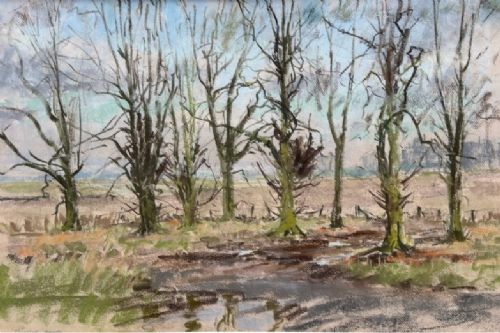
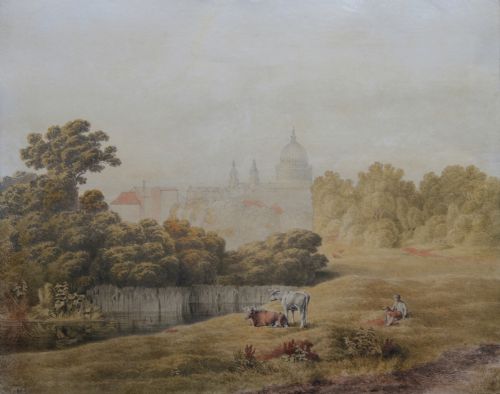
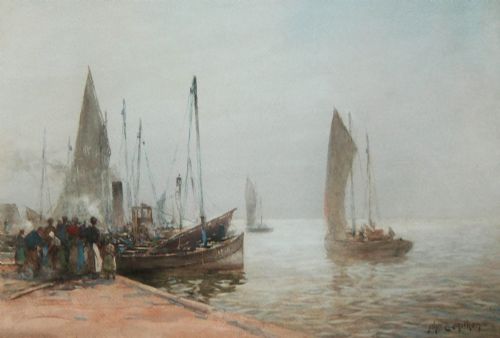
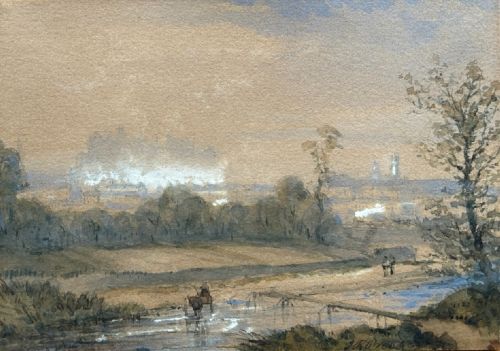
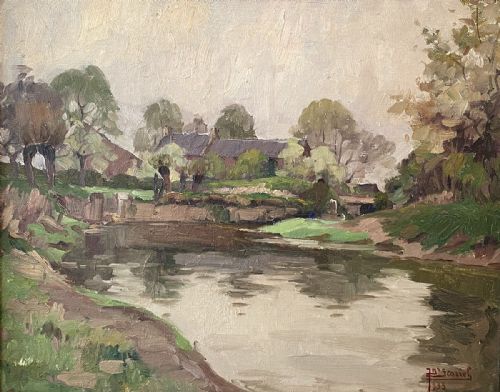
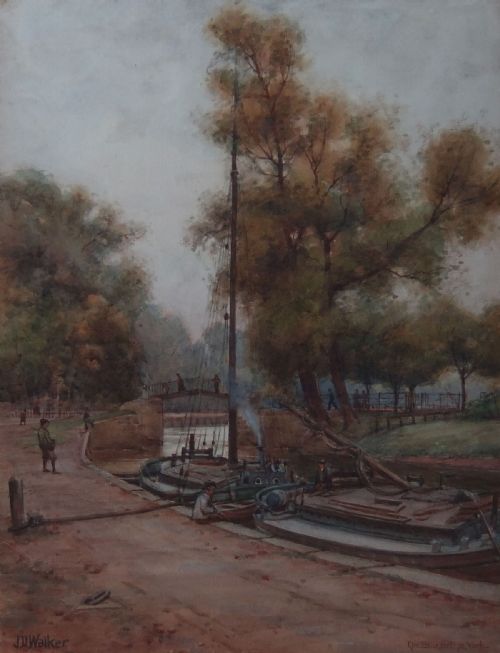
A muted tones painting on this page typically takes the form of a landscape, seascape, or genre scene executed in oil or watercolour. The selection spans the nineteenth century through to the mid-twentieth century, capturing domestic British and European views with a restrained palette.
Buyers will encounter works from specific movements such as British Impressionism, Post-Impressionism, and Realism. These range from intimate watercolours of village streets and coastal harbours to larger oil paintings on canvas and panel.
The assortment relies heavily on early twentieth-century and Victorian pieces, where artists used subdued pigments to render everyday rural life, industrial cityscapes, and quiet river banks. Each piece offers a window into historical topography handled with a gentle, atmospheric touch.
How they were made
The makers of these works primarily utilised oil paint and watercolour paint applied to traditional grounds such as paper, canvas, and wooden panels. Watercolours rely on translucent washes on paper support, sometimes enhanced with mixed media.
Oil paintings employ layered brushwork upon stretched canvas or solid panel, allowing for rich texture and deep tonal control. These physical supports define the durability and visual texture of each individual artwork.
Muted Tones Painting Retail Price Guide 2026
Typical asking prices for muted tones painting among the pieces listed under this phrase on Sellingantiques today, from the lower quarter to the upper quarter. They describe what is for sale here now, not the wider market.
Listings feature works spanning the nineteenth century through the 1960s, executed in oil and watercolour on paper, canvas, and panel.
What varies in quality
Quality rests upon the artist's ability to manipulate light and shadow within a restricted palette, giving depth and presence to subdued pigments. Stronger works display confident brushwork and precise atmospheric perspective rather than mere reliance on dark or faded colours.
The handling of the medium, whether the fluid transparency of watercolour on paper or the considered impasto of oil on canvas, dictates the distinction between competent studio output and a compelling, masterly composition.
John R Prentice·James E Aitken·James Hayllar·Gyrth Russell·Ernest Higgins Rigg·Fred Lawson·Florence Hess·Louie Stanley Maurice Prince·Sidney James Beer·Kate E Booth·Andrew Young·Henry Charles Fox·Thomas James Lloyd·Stephen John Batchelder·Rowland Henry Hill·Fred Stead·Edward Killingworth Johnson·Frederick Thomas Baynes·Thomas Swift Hutton·Owen Bowen·James Bertrand·Cuthbert Crossley·John D Walker·Bernard Meninsky·Augustus William Ennes
The Muted Tones Painting Glossary
- Watercolour paint
- A water-based medium utilising finely ground pigments suspended in a water-soluble binder. It is traditionally applied in washes to paper to create luminous, delicate effects.
- Oil paint
- A slow-drying medium consisting of pigment particles suspended in a drying oil, typically linseed oil. This medium allows for smooth blending and substantial textural depth.
- Impressionism
- A nineteenth-century movement characterised by relatively small, thin, yet visible brush strokes and an emphasis on accurate depiction of light. Artists of this style focused on ordinary subject matter captured in transient moments.
- Post-Impressionism
- A predominantly French art movement that developed from about 1880 to 1905, extending Impressionism while rejecting its limitations. Practitioners relied on symbolic colour schemes and heavier pictorial structure.
- Panel
- A flat piece of wood or other rigid material used as a support for painting instead of stretched canvas. Panels provide a firm, stable surface favoured by many historical painters.
Muted Tones Painting: Frequently Asked Questions
What defines a muted tones painting?
These works rely on restrained, low-saturation colour palettes rather than bright primary hues. They often capture atmospheric weather, dusk, or winter light.
Artists utilised this approach to evoke mood, depth, and quiet realism in landscapes and domestic scenes.
How should I frame an antique watercolour?
Watercolours require conservation framing with acid-free mounts to prevent the paper from yellowing over time. Keeping the work away from direct sunlight protects the fugitive pigments often found in older pieces.
Glazing is essential to shield the paper and paint surface from dust and atmospheric moisture.
Are these paintings original works?
The selection consists of original hand-painted works executed directly by the artists in oil or watercolour. Each piece is a unique historical artefact rather than a modern reproduction.
Signatures, dates, and stylistic markers help establish their period origin.
How do I care for an oil painting on canvas?
Oil paintings on canvas benefit from stable indoor humidity and temperatures to prevent cracking of the paint layer. Dust should be removed gently from the surface with a soft, dry brush.
Avoid using liquid cleaners or exposing the canvas to direct heat sources.