
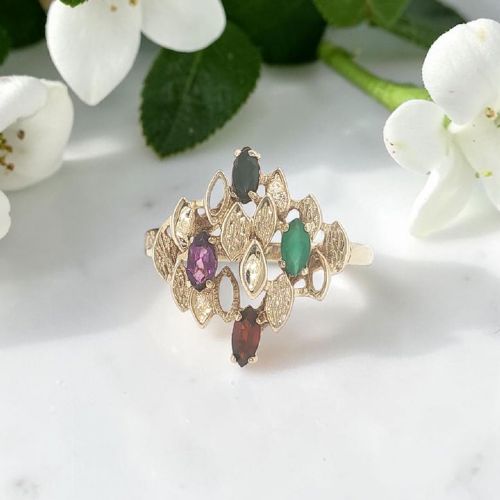


Multi Stone Cluster Ring
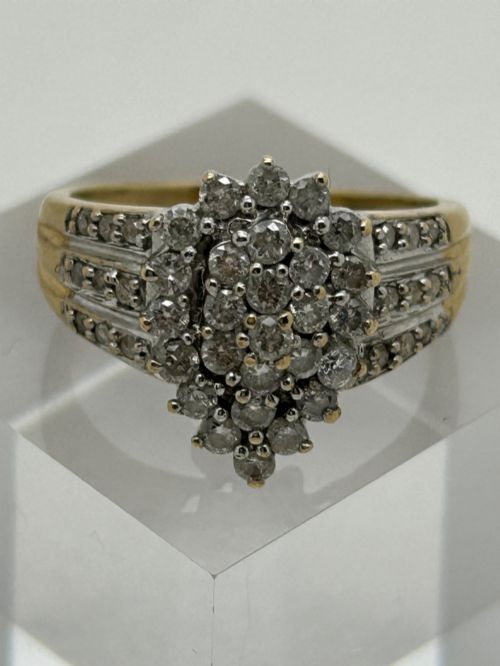
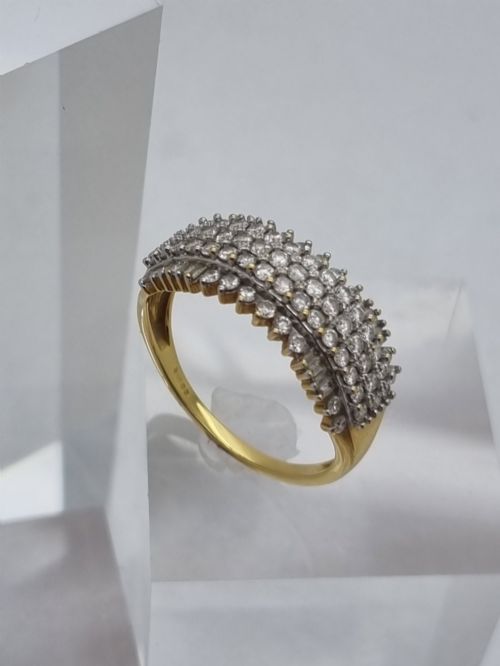
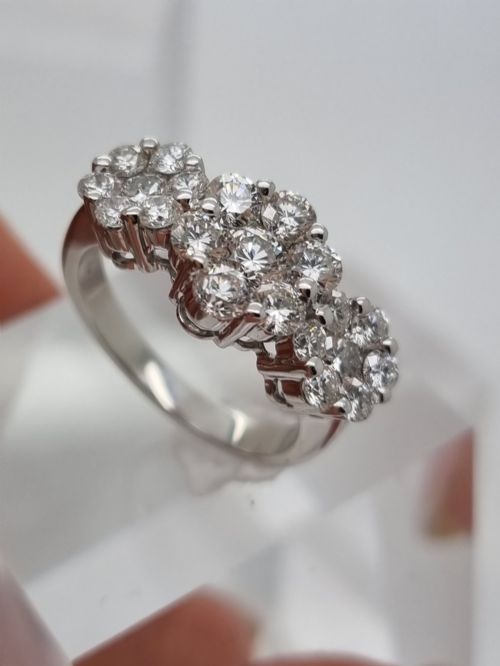
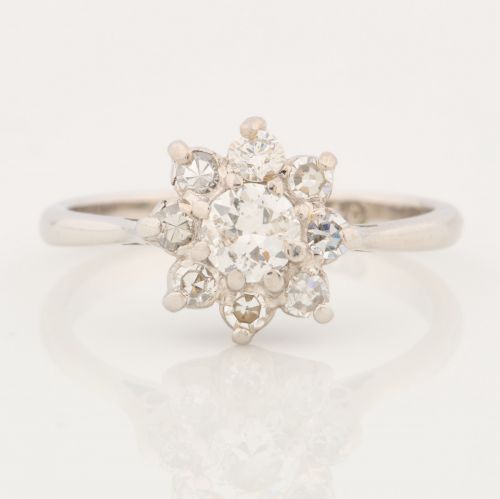
A multi stone cluster ring gathers several gems into a central focus, offering plenty of character across various twentieth-century and earlier periods.
Multi Stone Cluster Ring
When someone searches for a multi stone cluster ring, they are looking at dress rings, engagement pieces and cocktail rings that arrange multiple gems together on the finger. The versions met most often on this page date from the mid-twentieth century, specifically the nineteen-fifties and nineteen-sixties, alongside earlier examples.
Designs range from flower trilogy arrangements and daisy clusters to raised multi-gem formations featuring diamond, sapphire, emerald, amethyst, garnet, opal and tanzanite. The forms span vintage, retro, art deco and traditional styles, reflecting the aesthetic preferences of their respective decades.
Origins stretch from the Edwardian era and nineteenth century through to contemporary fine jewellery and later twentieth-century periods. Buyers encounter both white and yellow gold settings, alongside platinum and multi-carat diamond configurations.
Materials and construction
Metals used across these pieces include platinum, fourteen-carat gold and eighteen-carat gold in both white and yellow variations. Goldsmiths mounted central and surrounding stones securely within these durable precious metal frameworks.
Gemstone selection pairs diamonds with coloured stones such as sapphires, emeralds, opals and tanzanites. Old cut diamonds appear alongside brilliant cuts, secured in cluster, trilogy and raised multi-stone settings.
A sparkling multi stone cluster ring ensures your hand tells a story from the nineteen-fifties every time you wave hello.
Assessing quality in multi stone cluster rings
Quality in a multi stone cluster ring depends upon the harmony of the stone arrangement and the crispness of the metalwork surrounding each gem. Superior examples display balanced stone proportions where the central gem and surrounding stones complement one another without overcrowding.
The choice of precious metals and the precision of the stone settings distinguish finer pieces. Heavier eighteen-carat gold and platinum mountings provide robust foundations for complex gemstone configurations.
The Multi Stone Cluster Ring Glossary
- Cluster ring
- A ring style featuring a central gemstone surrounded by a group of smaller stones. This arrangement maximises visual impact and light reflection.
- Trilogy ring
- A ring set with three stones, traditionally representing the past, present and future. These pieces often incorporate diamonds alongside coloured gems.
- Old cut
- A diamond cut associated with earlier periods such as the Edwardian era, featuring a smaller table and a higher crown. This cut produces a distinctive, softer scintillation compared to modern brilliant cuts.
- Cocktail ring
- A large, showy ring worn to attract attention, typically featuring prominent clusters of diamonds or coloured gemstones. They rose to popularity during the mid-twentieth century.
- Raised setting
- A mounting style that elevates the gemstone cluster above the band. This technique allows more light to enter the stones from the sides.
Multi Stone Cluster Ring: Frequently Asked Questions
How do I wear a multi stone cluster ring?
These rings work well as standalone statement pieces on the hand due to their size and stone arrangement. They pair comfortably with plain bands if you wish to wear them alongside other jewellery.
Because the settings often feature raised clusters or multiple stones, consider removing them during heavy manual tasks to protect the claws and prongs.
What periods do these rings come from?
The listings span several eras, including the nineteenth century, Edwardian period, nineteen-thirties art deco, and nineteen-fifties and sixties retro styles. Each period brings distinct design characteristics to the cluster formation.
Twentieth-century pieces from the nineteen-fifties and sixties appear frequently, alongside earlier antique examples featuring old cut diamonds and pearls.
Which stones are used in these rings?
Diamonds form the primary stone in many pieces, often paired with sapphires, emeralds, amethysts, garnets, opals or tanzanites. Some designs focus purely on diamonds arranged in daisy or teardrop clusters.
Coloured gemstones provide vibrant contrast within the cluster, while platinum and eighteen-carat gold secure the stones in place.
What is the difference between art deco and vintage cluster rings?
Art deco cluster rings from the nineteen-thirties typically showcase geometric symmetry, crisp lines, and strong contrasts between white metals and diamonds. They reflect the architectural design trends of that specific decade.
Vintage pieces from later decades often embrace softer floral motifs, such as daisy clusters and teardrop shapes, utilising yellow gold alongside white gold settings.