





Mother of Pearl Games
Mother of pearl games equipment brings intricate natural iridescence and detailed craftsmanship into your home through centuries-old boards, tables, and counters.
Mother of Pearl Games
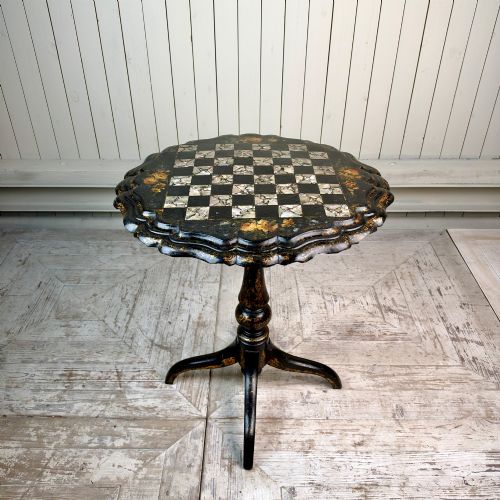
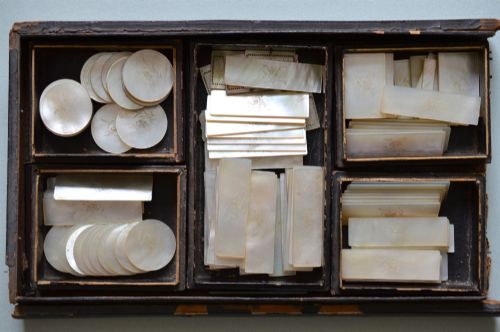
Mother of pearl games items include elaborate multi-purpose tables, folding boards, and gaming counters originating from Victorian Europe, the Ottoman Empire, and Qing Dynasty China. These pieces combine utility with decorative skill, serving both as functional items for pastimes like chess and backgammon and as striking display furniture.
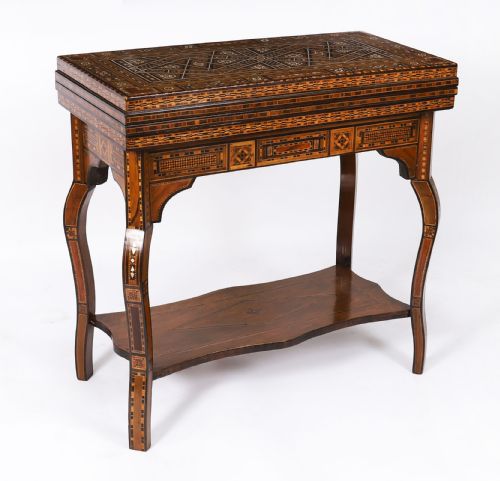
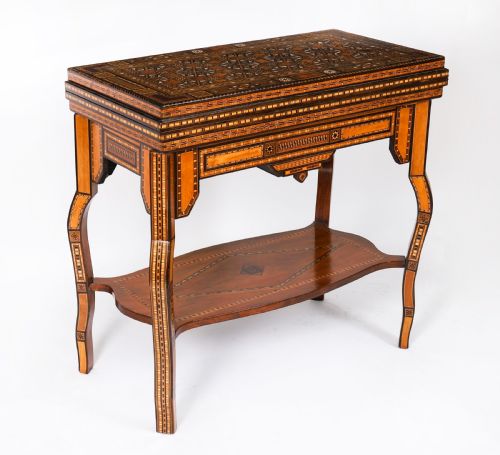
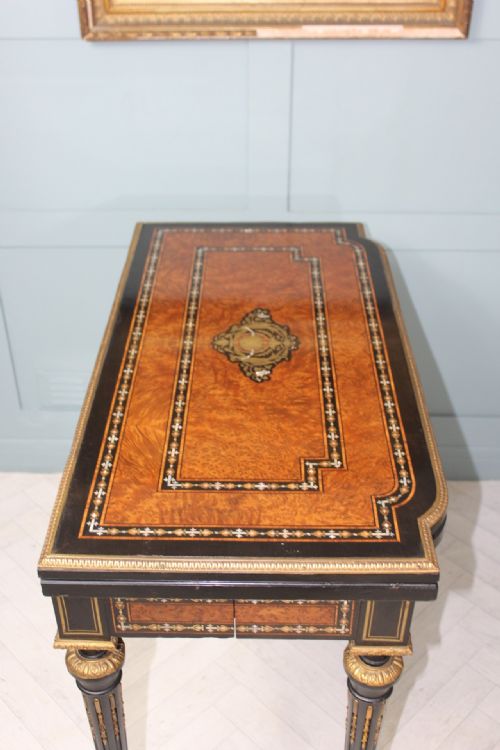
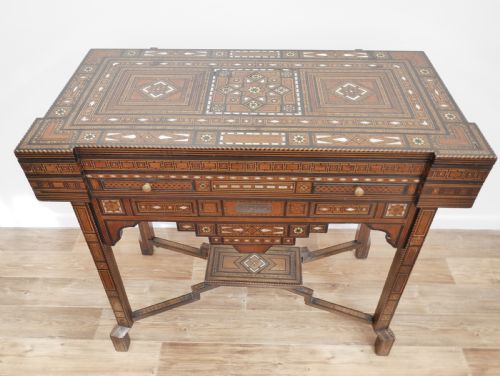
The most common examples on this page are 19th-century inlaid tables from Syrian and Levantine workshops, alongside French Napoleon III designs and antique Chinese counters. Buyers encounter walnut, fruitwood, and ebonised wooden structures enriched with distinct geometric or floral shell work.
Many tables offer dual or triple purposes, featuring reversible surfaces for cards, chess, and backgammon, occasionally concealing writing desks beneath their lids. This versatility reflects the social habits of period parlours, where games and correspondence occupied the same refined spaces.
Materials and construction methods
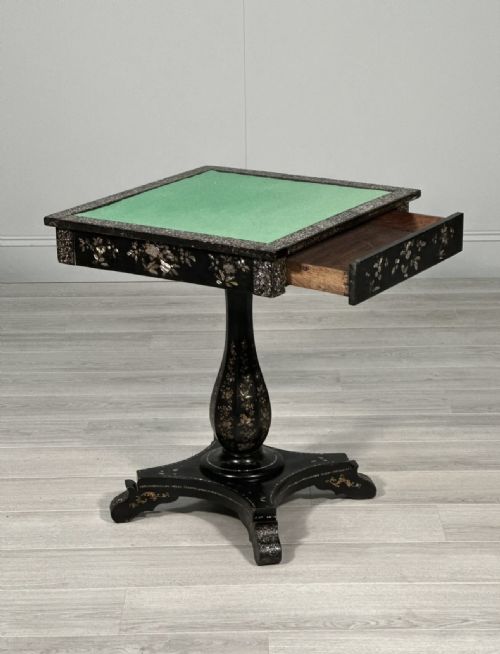
Artisans built these pieces using solid timbers like walnut and fruitwood, often applying ebonisation or intricate wood inlay to create dark, contrasting backdrops for the shell. Mother-of-pearl sections were meticulously cut into geometric tiles or figurative motifs and embedded directly into the wooden or papier-mâché substrates.
Levantine and Syrian makers utilised detailed mosaic woodwork, combining wood, bone, and mother-of-pearl to cover entire table surfaces in complex geometric lattices. French workshops favoured brass stringing alongside shell inlay set into polished ebonised wood, while Chinese export pieces featured carved shell gaming counters.
Mother of Pearl Games Retail Price Guide 2026
Typical asking prices for mother of pearl games among the pieces listed under this phrase on Sellingantiques today, from the lower quarter to the upper quarter. They describe what is for sale here now, not the wider market.
Victorian travellers frequently packed folding chess boards into their luggage, ensuring a quick match could happen anywhere from a carriage to a steamship cabin.
Distinctions in craftsmanship
Quality rests upon the precision of the inlay work and the structural integrity of the timber base. Finer examples display tightly fitted shell tesserae with minimal filler, whereas simpler pieces show wider gaps between individual material pieces.
The complexity of the games interior also dictates the standard of the piece, with multi-game combination tables requiring sophisticated joinery for folding tops, storage wells, and metamorphic writing surfaces. Well-preserved surfaces retain their original baize linings and smooth operational mechanics without excessive timber warping.
The Mother of Pearl Games Glossary
- Mother-of-pearl
- The iridescent inner layer of mollusc shells, valued for its shimmering quality and used to ornament furniture and counters. It is shaped into thin plates and set flush into wood or papier-mâché.
- Baize
- A coarse woollen material resembling felt, traditionally used to line the playing surfaces of card and board tables. It provides a soft texture that protects counters and dice during play.
- Ebonised
- Wood treated with a dark stain or finish to imitate expensive ebony. This technique was popular in Victorian and Napoleon III furniture to create high contrast with mother-of-pearl inlay.
- Metamorphic
- Furniture designed to transform from one form of object into another, such as a writing desk that converts into a gaming table. These pieces utilise clever hinges and folding mechanisms.
- Gaming counters
- Small tokens or markers used in card and board games to keep score or represent stakes. Antique sets are frequently carved from mother-of-pearl or bone.
Mother of Pearl Games: Frequently Asked Questions
What games can be played on these tables?
Most multi-purpose examples on this page are built for card games, chess, and backgammon. Reversible tops and removable boards allow players to switch between activities.
Interior compartments beneath the playing surface typically store dice, counters, and chess pieces when not in use.
How do I care for mother of pearl inlay?
Keep these items away from direct sunlight and excessive moisture to prevent the wood from warping and the shell adhesive from failing. Dust gently with a dry, soft cloth.
Avoid commercial liquid polishes, which can seep beneath the inlaid sections and damage the underlying ground.
Where were Syrian games tables made?
Syrian and Levantine tables originated from workshops in Damascus and surrounding regions known for intricate woodworking traditions. Artisans combined wood, bone, and mother-of-pearl into dense geometric mosaics.
These pieces often reached European markets through trade and travel during the nineteenth century.
What is a Napoleon III games table?
Napoleon III tables date from the French Second Empire period and frequently feature ebonised wood surfaces. They are characterised by precise brass inlay and mother-of-pearl detailing.
These decorative surfaces often fold open to reveal baize-lined spaces intended for evening entertainment.