



Moorish Accent Chair
These moorish accent chair pieces bring intricate geometric design and rich woodwork into a room, offering distinct historical character and seating presence.
Moorish Accent Chair
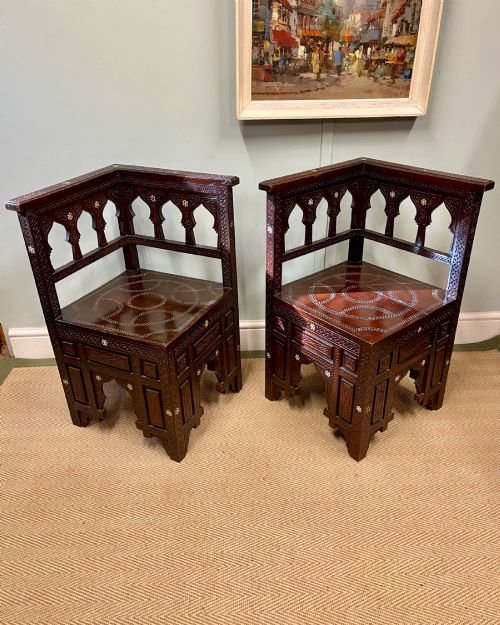
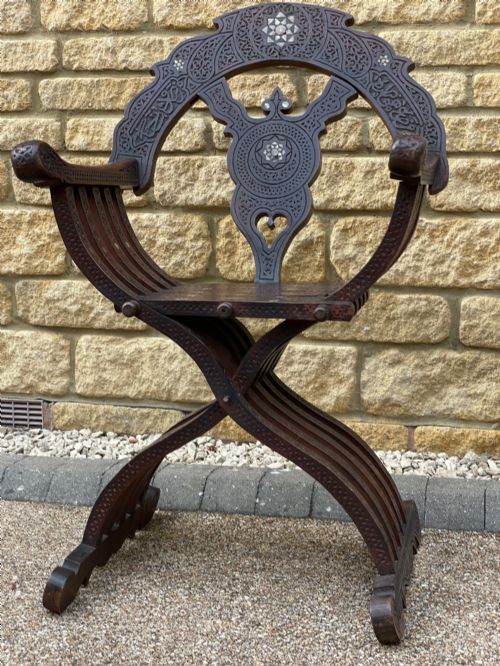
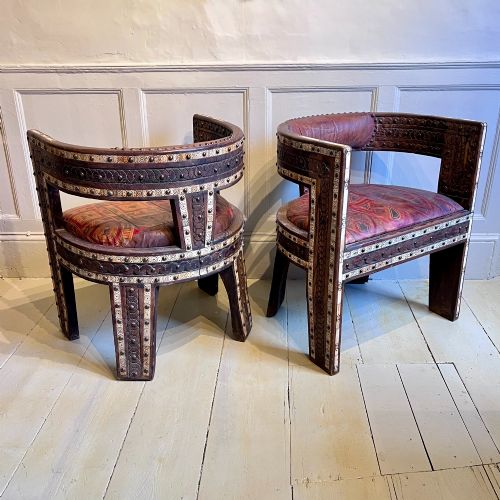
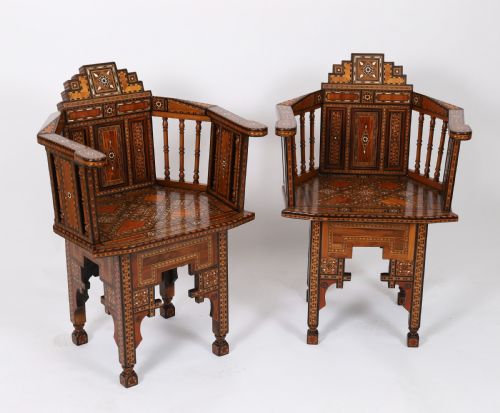
A moorish accent chair encompasses diverse seating forms originating from North Africa and the Middle East, alongside European Revival interpretations. You will encounter low armchairs, folding X-frame seats, and side chairs spanning the nineteenth century through the nineteen-thirties.
The aesthetic bridges Syrian, Moroccan, Levantine, and Spanish traditions, frequently grouped under Moorish Revival or Ottoman styles. These pieces function as striking focal points in an interior rather than standard utilitarian seating.
Materials and construction
Makers utilised dark timbers including walnut, fruitwood, and dense hardwoods, often building sturdy frames designed to support complex decorative schemes. Joinery ranges from traditional folding X-frame mechanics to rigid pin-and-tenon armchair structures.
Surface ornamentation defines the category, incorporating intricate bone inlay, mother-of-pearl or nacre-shell pieces, and detailed parquetry. Some examples feature applied paint finishes or incorporate leather and upholstered elements alongside carved woodwork.
Moorish Accent Chair Retail Price Guide 2026
Typical asking prices for moorish accent chair among the pieces listed under this phrase on Sellingantiques today, from the lower quarter to the upper quarter. They describe what is for sale here now, not the wider market.
Some folding chairs collapse flat, proving that historical nomads and Victorian parlor owners shared a love for clever space-saving furniture.
Assessing quality
Quality rests primarily on the precision of the inlay work and the depth of the carving. Dense, tightly patterned geometric mosaic using bone and nacre indicates superior craftsmanship compared to sparse or crudely stamped decoration.
Structural integrity of the timber frame also dictates worth, particularly in folding X-frame models where joint wear occurs. Original surface patination and complete inlay tesserae elevate an example above heavily restored counterparts.
Liberty and Co
The Moorish Accent Chair Glossary
- Moorish Revival
- An architectural and decorative style popular in the nineteenth century that reinterpreted Islamic design elements from Spain and North Africa. It brought exotic geometric motifs and horseshoe arches into Western domestic interiors.
- Parquetry
- A geometric mosaic of wood pieces used for decorative surfacing on furniture. Skilled makers arranged contrasting timber veneers to create complex repeating patterns.
- Nacre
- An iridescent organic-inorganic composite material produced by the inner shell layer of certain molluscs, commonly known as mother-of-pearl. It is shaped into tiny geometric plaques for inlay work.
- X-frame
- A seating structure formed by intersecting diagonal members that cross to support the seat and back. This folding or rigid form has ancient origins and appears frequently in Mediterranean seating.
- Levantine
- Pertaining to the eastern Mediterranean region encompassing modern-day countries of the Levant. Furniture from this area often displays distinct regional woodworking and inlay traditions.
Moorish Accent Chair: Frequently Asked Questions
Where did moorish accent chairs originate?
These seating forms draw upon craftsmanship traditions from Syria, Egypt, Morocco, and the wider Ottoman world. Many examples reflect nineteenth-century European interest in Islamic design.
Craftsmen in urban workshops produced these pieces for local use and export to Western markets seeking exotic furnishing styles.
How do I care for inlaid wood?
Protect the timber and delicate bone or mother-of-pearl elements by keeping the furniture away from direct heat sources and strong sunlight. Stable indoor humidity prevents the wood from shrinking and loosening the small inlay tesserae.
Dust gently with a soft dry cloth and avoid applying modern liquid polishes that might seep into microscopic gaps in the geometric mosaic.
Are these chairs comfortable to sit in?
Most historic examples were built for formal reception spaces or visual effect rather than prolonged lounging. They often feature upright backs and rigid wooden or leather seats.
Adding a subtle, well-fitted cushion can improve comfort for everyday use without obscuring the intricate side rails and backrests.
How do I date a moorish chair?
Dating relies on examining the timber species, construction methods, and the style of inlay work. Pieces spanning the nineteenth century and the Edwardian era often display characteristic hand-cut joinery and dense nacre patterns.
Later twentieth-century revivals sometimes employ machine-cut elements or standardised backing materials that differ from older workshops.