


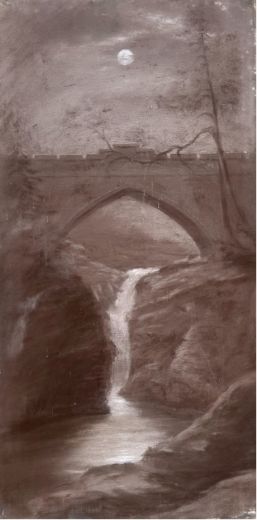


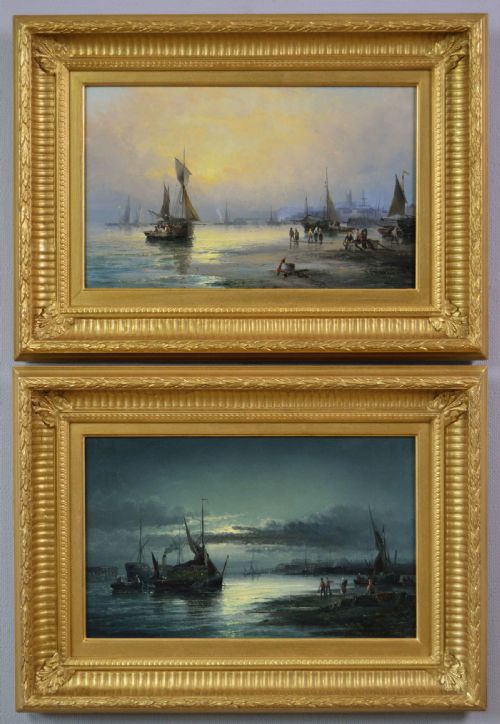


Moonlit Landscape Canvas
A moonlit landscape canvas captures nocturnal waters, quiet coasts, and shadowed hills through rich brushwork.
Moonlit Landscape Canvas
A moonlit landscape canvas brings the quiet of night into view, capturing nocturnal seascapes, rugged Scottish shores, and moonlit rivers. You are looking at oil paintings on canvas, alongside charcoal or chalk works, spanning the nineteenth century through the mid-twentieth century.
The styles you will most frequently encounter include Victorian nocturnes, maritime impressionism, and Scottish and Highland romanticism. These works range from moody coastal shipping scenes to tranquil inland castles under pale moonlight.
The subjects focus heavily on water and open skies, featuring ships on the Medway, quiet Scottish linns, and vast coastal horizons. Each piece relies on tone and shadow to evoke the atmosphere of night without losing the detail of the land.
Materials and methods
These works are built primarily with oil paint applied to canvas, supported by traditional wooden stretcher frames and often framed in gilt moulding. Artists built depth through layered oils, capturing the pale luminescence of the moon against dark water and shadowed earth.
Some works utilise charcoal or chalk on canvas, capturing the stark contrast of moonlight with rapid, expressive strokes. The combination of dark pigments and lighter highlights creates the distinct nocturnal mood seen across nineteenth and twentieth-century examples.
Moonlit Landscape Canvas Retail Price Guide 2026
Typical asking prices for moonlit landscape canvas among the pieces listed under this phrase on Sellingantiques today, from the lower quarter to the upper quarter. They describe what is for sale here now, not the wider market.
Listings span from the 1880s to the 1960s, featuring oil, charcoal, and chalk on canvas framed in wood and gilt.
Judging quality in nocturnal art
Quality rests in the handling of light and shadow, where the best examples create a convincing luminescence without muddying the dark tones. The skill of the brushwork defines whether a night sky feels vast and atmospheric or merely flat and dark.
The strength of the composition and the fidelity of the period materials further separate works, particularly in how the canvas holds its tension and how the gilt frames complement the palette. Masterful control of tone distinguishes accomplished marine and landscape works from simpler decorative pieces.
Hans Harlander·James Bell Anderson·George Cole·Hubert Thornley·Walter Meegan·William Crampton
The Moonlit Landscape Canvas Glossary
- Nocturne
- A painting depicting a night scene, typically focusing on the subtle interplay of moonlight and shadow over water or land.
- Maritime Impressionism
- A style capturing the shifting light and atmosphere of seascapes and coastal shipping with loose, expressive brushwork.
- Gilt
- A gold leaf or gold-coloured finish applied to wooden frames, adding a traditional decorative border to nineteenth-century canvases.
- Stretcher
- The wooden frame upon which the canvas is stretched tight before painting, crucial for maintaining the structural integrity of the artwork.
Moonlit Landscape Canvas: Frequently Asked Questions
How do I care for an oil painting on canvas?
Keep the canvas away from direct sunlight and dramatic shifts in temperature to prevent the oil paint from cracking. Dust the surface gently with a soft, dry brush.
Avoid using any moisture or liquid cleaners on the canvas or the gilt frame. Professional conservation should be sought if the paint layer requires cleaning.
What defines a Victorian nocturne?
A Victorian nocturne focuses on night scenes, often using a muted palette dominated by blues, greys, and pale yellows for the moon. These works emphasise mood and atmospheric light over bright daylight clarity.
Artists used this style to capture the quiet mystery of rivers, seas, and rural landscapes after dark.
How can I tell the period of a canvas?
Examine the preparation of the canvas, the materials of the stretcher frame, and the style of the gilt moulding. Nineteenth-century works often feature hand-carved frames and heavier linen canvases.
Signatures, framing labels, and the specific artistic style provide further clues to date the piece accurately.
Where were these maritime scenes painted?
Many maritime scenes depict specific British waterways and ports, such as the River Medway in Kent or Scottish coastal waters. Artists frequently travelled to these working rivers to capture shipping and fishing boats.
These locations offered dynamic lighting conditions created by tides, moonlight, and industrial or maritime activity.