




Moonlight Landscape Painting
A moonlight landscape painting captures nocturnal stillness and silvery light, offering collectors a striking alternative to daylight scenes.
Moonlight Landscape Painting
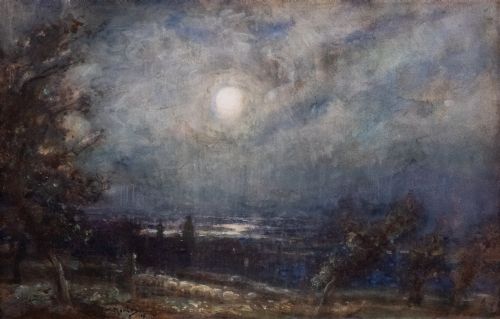
A moonlight landscape painting depicts nocturnal scenery illuminated by the moon, capturing river views, coastal waters, and highland vistas. These works range from late nineteenth century Victorian nocturnes to mid twentieth century interpretations.
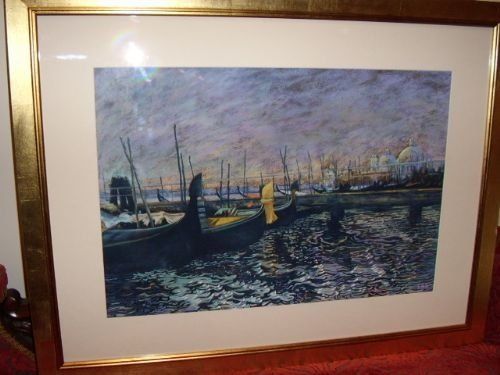
Buyers encounter various forms on this page, including oil paintings on canvas, delicate watercolours, and mixed media works such as pastel and gouache on paper. Subjects span Scottish landscapes, maritime shipping scenes, and architectural views like Venetian canals.
The selection reflects diverse European traditions, encompassing traditional European approaches, maritime impressionism, and Scottish romanticism. Works often demonstrate the influence of prominent nineteenth century painters within Victorian coastal and inland settings.
Materials and techniques
Artists executed these works using oil on canvas, watercolour, pastel, gouache, charcoal, and ink on paper. Canvases and papers frequently retain their original wooden and gilt frames, which complement the darker nocturnal palettes.
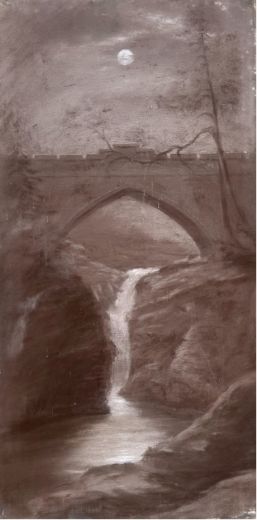
Makers applied oil paints and watercolours to build atmospheric effects of night skies, moonlight reflections on water, and shadowed terrain. Monochrome charcoal and ink drawings also appear, relying on tonal contrast to suggest darkness and illumination.
Moonlight Landscape Painting Retail Price Guide 2026
Typical asking prices for moonlight landscape painting among the pieces listed under this phrase on Sellingantiques today, from the lower quarter to the upper quarter. They describe what is for sale here now, not the wider market.
Gondolas quietly glide past moonlight on Venetian canals while Scottish castles loom large under midnight skies.
Assessing quality and execution
Quality rests upon the artist's handling of light and shadow, distinguishing evocative atmospheric depth from flat tonal application. Stronger examples capture the subtle luminescence of moonlight against dark skies and water.
The precision of brushwork in architectural and maritime details separates more accomplished works from simpler compositions. Provenance and attribution to documented nineteenth and twentieth century painters further elevate individual pieces.
Hans Harlander·Thomas William Morley·James Bell Anderson·Walter Meegan·William Samuel Horton·William Manners·George Cole·Hubert Thornley
The Moonlight Landscape Painting Glossary
- Nocturne
- A painting depicting a night scene, particularly one focused on the moody or atmospheric qualities of darkness and artificial or lunar light.
- Gouache
- An opaque water-based paint that provides solid, flat areas of colour and allows for highlights in works on paper.
- Gilt
- A gold leaf or gold paint finish applied to wooden picture frames, adding decorative metallic sheen to the presentation.
- Impressionism
- An art style characterised by relatively small, thin yet visible brush strokes and an emphasis on accurate depiction of light.
Moonlight Landscape Painting: Frequently Asked Questions
What subjects do these paintings feature?
These works depict nocturnal scenes including Scottish highlands, coastal waters, rivers, and architectural landmarks like Venetian canals. Shipping vessels and castles also frequently appear under lunar illumination.
Artists drew inspiration from specific British and European locations, recording familiar geography transformed by nighttime shadows and moonlight.
How should I hang a dark painting?
Display these works away from direct glare to allow the subtle contrasts of moonlight and shadow to remain visible. Proper wall placement enhances the atmospheric depth characteristic of Victorian and later nocturnes.
Pairing them with appropriate lighting highlights the gilt frames and the tonal nuances within oil and watercolour mediums.
What materials were commonly used?
Makers utilised oil paint on canvas, traditional watercolours, gouache, pastel, charcoal, and ink on paper. Wooden frames, often with gilt finishes, complete the presentation of these framed artworks.
Each medium offers a distinct texture, from the heavy impasto of oil paintings to the delicate washes found in nineteenth century watercolours.
How do I identify a Victorian nocturne?
Victorian nocturnes typically employ subdued palettes dominated by deep blues, greys, and muted yellows to represent night skies and water reflections. They often reflect the stylistic influence of nineteenth century mood painting.
Signatures, framing styles, and subject matter relating to nineteenth century landscapes help contextualise the dating of each piece.