




Moonlight Landscape Art
Moonlight landscape art captures nocturnal scenes of coasts, canals and highlands through historical watercolours and oils.
Moonlight Landscape Art
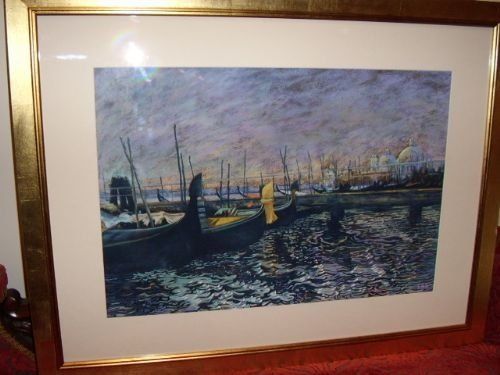
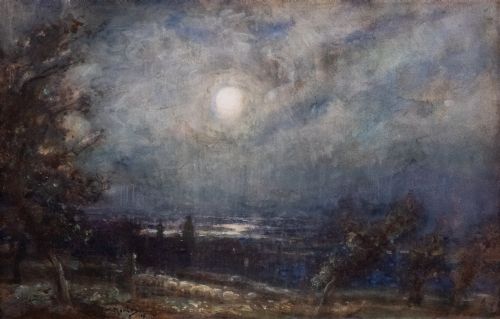
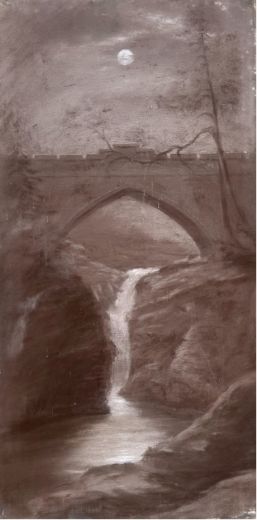
Moonlight landscape art encompasses works depicting nocturnal scenery, featuring subjects such as Venetian canals, Scottish highlands, and coastal shipping lanes. Buyers searching for moonlight landscape art encounter various historical interpretations ranging from Victorian marine scenes to mid-twentieth-century watercolours and oils.
The pieces on this page span several decades and styles, including Victorian nocturnes, Impressionism, Scottish Romanticism, and traditional European approaches. Creators utilise mediums like oil on canvas, watercolour, pastel, gouache, ink, and charcoal to render the interplay of moonlight and shadow.
Subjects frequently centre on specific geographic locations such as Venice, Loch Ness, Whitby, and the Medway. Artists frame these night-time views within framed paintings, wall art, and standalone paper works utilising wood and gilt elements for presentation.
Materials and methods
Works in this category rely heavily on oil on canvas and watercolour applied to paper, capturing the specific luminosity of night skies. Artists often employ gouache, pastel, ink, and charcoal to build contrasting tones between deep shadows and moonlight reflections.
Support materials include prepared canvas and various paper types, housed within traditional wooden frames that sometimes incorporate gilt accents. These physical components support the delicate layering required to depict nighttime atmospheres and coastal haze.
Moonlight Landscape Art Retail Price Guide 2026
Typical asking prices for moonlight landscape art among the pieces listed under this phrase on Sellingantiques today, from the lower quarter to the upper quarter. They describe what is for sale here now, not the wider market.
Listings feature works from the Victorian period up to the 1960s, executed in oil, watercolour, and pastel.
Evaluating quality and execution
Quality in these nocturnes rests on the artist's ability to handle tonal gradation and the convincing depiction of artificial or natural light sources against dark surroundings. Superior examples demonstrate confident brushwork and precise atmospheric perspective, particularly in water and sky rendering.
The distinction between standard decorative pieces and finer works involves the subtlety of the colour palette and the handling of pigment density. Stronger compositions maintain depth in shadowed areas without losing the specific character of the landscape or seascape depicted.
Hans Harlander·Thomas William Morley·Walter Meegan·William Samuel Horton·William Manners·George Cole·Hubert Thornley·Henri Joseph Harpignies
The Moonlight Landscape Art Glossary
- Nocturne
- A painting or piece of art depicting a night scene. This term was widely used by nineteenth-century artists to describe atmospheric works focused on twilight or moonlight.
- Gouache
- An opaque method of watercolour painting where white pigment is added to produce denser, solid colours. It appears frequently in works requiring sharp highlights against dark skies.
- Impressionism
- An art style characterised by relatively small, thin, yet visible brush strokes and an emphasis on accurate depiction of light. In moonlight subjects, this technique captures shimmering water reflections.
- Gilt
- Covered thinly with gold leaf or gold paint. This finish frequently adorns the wooden frames enclosing historical paintings on this page.
Moonlight Landscape Art: Frequently Asked Questions
What periods do these paintings come from?
The works span the late nineteenth century through to the mid-twentieth century, encompassing Victorian, Edwardian, and later periods.
Specific dates within the listings include the 1880s, 1890s, 1910s, 1920s, 1950s, and 1960s.
What mediums were used in these artworks?
Artists utilised oil on canvas, watercolour, pastel, gouache, ink, and charcoal to create these nocturnal scenes.
Many pieces are mounted on paper or canvas and housed in traditional wooden and gilt frames.
Where do the landscape scenes typically take place?
The geographic subjects include Scottish highlands, coastal towns like Whitby, Venetian canals, and rivers such as the Medway.
Specific locations recorded in the titles range from Loch Ness and Lancaster to Provence and Venice.
How should I care for historical watercolours and oils?
Paper works like watercolours and pastels require protection from direct sunlight to prevent fading of pigments over time.
Oil paintings on canvas benefit from stable indoor humidity and gentle dusting of the wooden and gilt frames.