

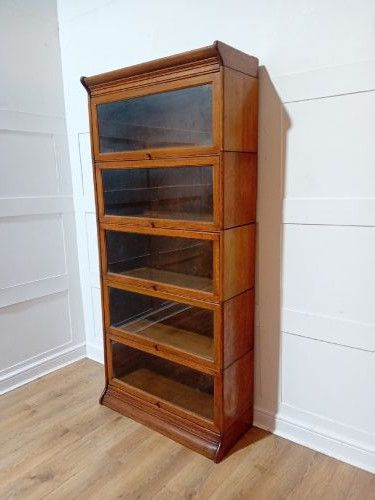
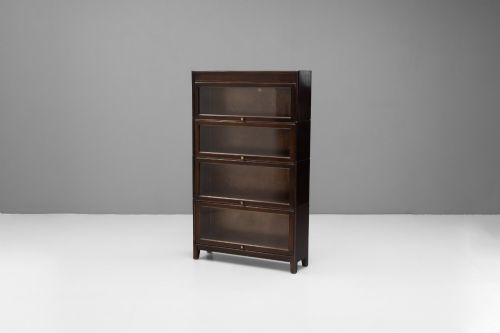
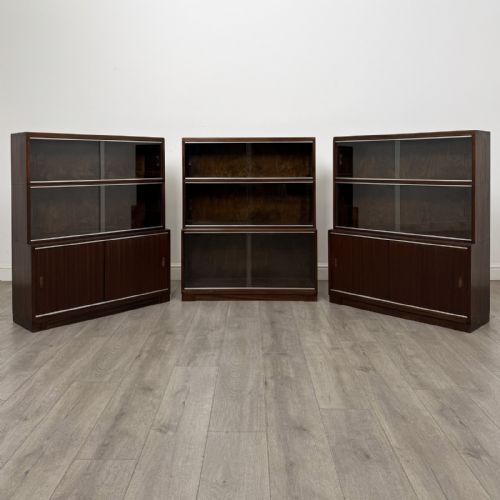
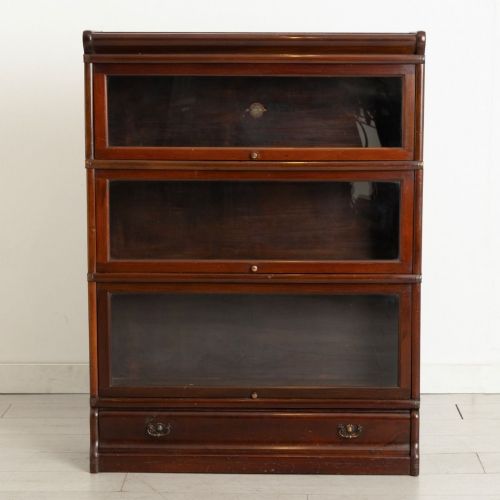
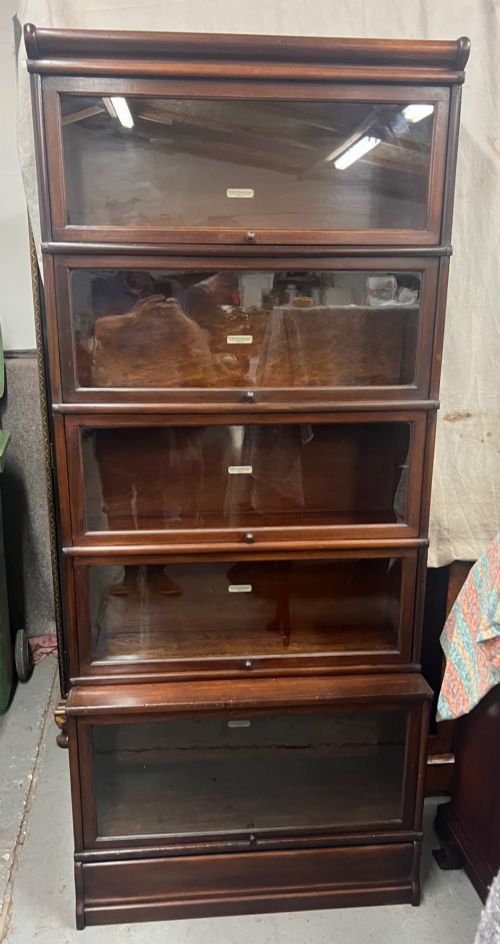


Modular Wood Bookcase
A modular wood bookcase offers a practical and adaptable solution for storing volumes while introducing period character to a room.
Modular Wood Bookcase
A modular wood bookcase is built in distinct vertical tiers or sections that stack together or assemble side by side. These versatile pieces allow collectors to expand their storage as their library grows without replacing the entire unit.
The modular wood bookcase variations found here include sectional cabinets, stacking designs, and multi-tier barrister configurations. They span the nineteenth century, Edwardian era, nineteen-tens, nineteen-twenties, and nineteen-thirties.
Makers utilised distinct formats such as sliding glass doors, up and over doors, and double sectional arrangements. The predominant construction relies on modular stacking technology developed to protect volumes from dust.
How they were made
Construction relies heavily on durable hardwoods including oak and mahogany, often paired with pine internals. Metal and brass hardware provide structural reinforcement and smooth operation for the moving tiers.
Transparent glass panels protect the books while allowing titles to remain visible from the outside. Lead is also utilised in specific glazing techniques to secure individual panes within the doors.
Modular Wood Bookcase Retail Price Guide 2026
Typical asking prices for modular wood bookcase among the pieces listed under this phrase on Sellingantiques today, from the lower quarter to the upper quarter. They describe what is for sale here now, not the wider market.
Listings feature oak and mahogany modular bookcases spanning the nineteenth century through the nineteen-thirties, incorporating glass, brass, and metal.
What varies in quality
Quality in a modular wood bookcase is determined by the precision of the joinery and the selection of timber figures. Maker attribution to firms such as Globe Wernicke, Gunn Furniture, Macey, or Heal's elevates the standing of a piece.
The mechanical action of up and over doors or sliding glass mechanisms reveals the care taken in original manufacture. Finer examples exhibit seamless tier alignment and superior hardware durability.
Gunn Furniture·Macey·Globe Wernicke·Heal's
The Modular Wood Bookcase Glossary
- Modular wood bookcase
- A shelving unit constructed from separate stacking tiers or interchangeable sections. This design permits easy disassembly and reconfiguration.
- Sectional cabinet
- A storage unit built from independent boxes that lock or stack together vertically. These pieces provide flexible organisation for growing libraries.
- Barrister bookcase
- A stacking bookcase featuring glazed up and over doors that lift and slide back into the tier. This mechanism protects books from dust while remaining easy to open.
- Up and over door
- A pivoting glass door fitted with a scissors mechanism that retracts smoothly above the shelf. It defines the classic stacking lawyer bookcase.
Modular Wood Bookcase: Frequently Asked Questions
What is a modular wood bookcase?
A modular wood bookcase is a multi-tiered storage unit composed of separate stacking sections or cabinets that assemble vertically. This design allows owners to add or remove tiers according to their storage needs.
Such pieces combine traditional cabinet-making materials like oak and mahogany with functional mechanisms like glass doors and brass hardware. They provide accessible storage for growing collections while maintaining a cohesive aesthetic.
How do barrister bookcases work?
Barrister bookcases utilise individual stacking tiers, each fitted with a glazed door that lifts and slides into the recess above the books. This keeps volumes protected from dust and moisture while allowing quick access.
The mechanical action relies on small metal scissor arms or pivots attached to the sides of the door and the interior walls. When pushed inward, the door glides smoothly out of the way above the shelf level.
How do I identify the period?
Dating relies on stylistic clues, hardware construction, and timber choices across the Edwardian era, nineteenth century, and early twentieth century. Art Deco influences appear in pieces from the nineteen-thirties, while modular stacking designs frequently date from nineteen-ten to nineteen-twenty.
Maker stamps or labels found inside the tiers provide definitive chronological markers. Examining the joinery and glass retention methods also helps narrow down the decade of manufacture.
Where were these bookcases used?
These bookcases originated in offices, law firms, and studies where professionals needed to organise and protect reference volumes. The modular format allowed working libraries to expand without requiring new furniture.
Over time, these practical units transitioned into domestic living rooms and libraries. Their adaptable height made them suitable for rooms with varying ceiling dimensions.