



Modular Stacking Shelf
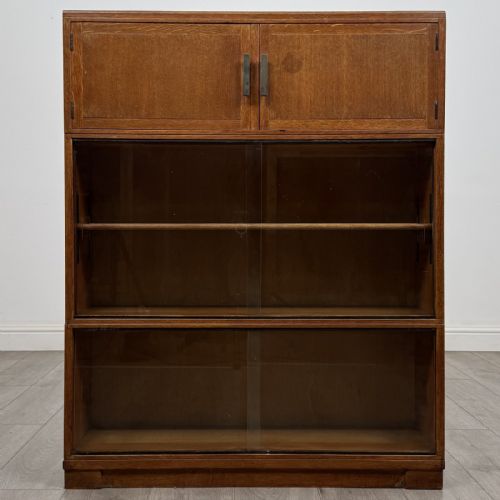
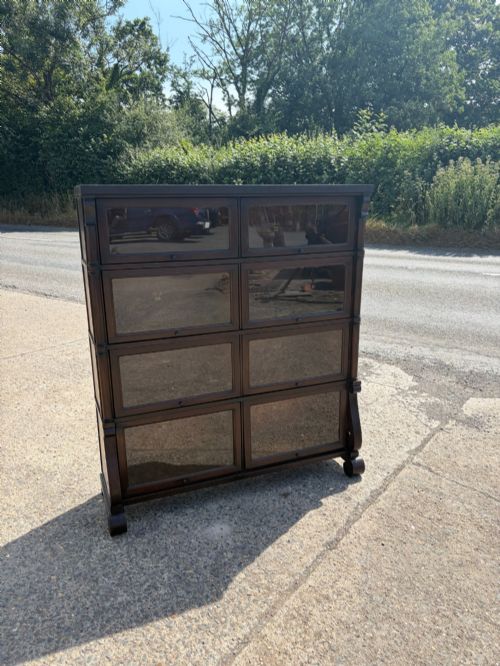
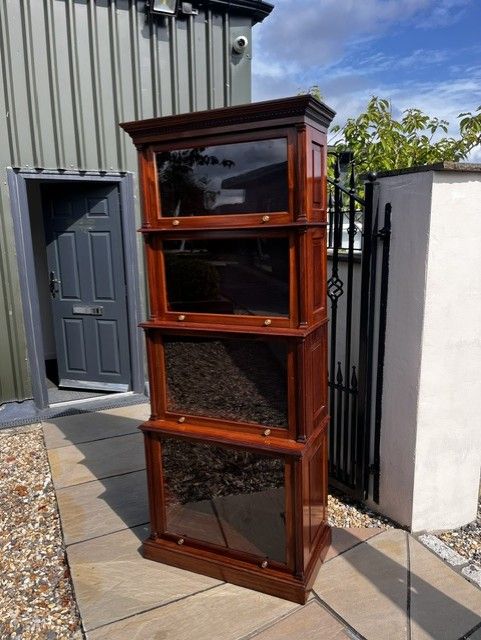
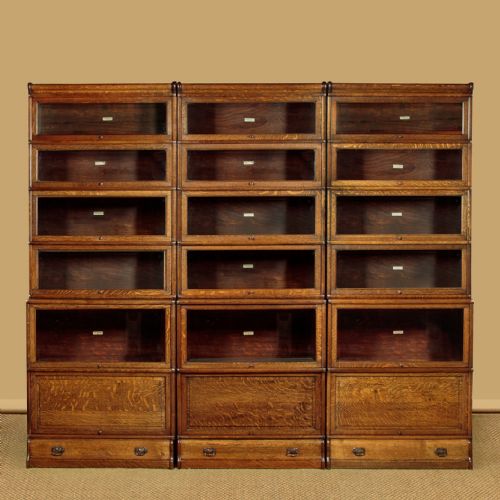
These modular stacking shelf designs bring practical tiered storage and modular flexibility to any room, offering a clever way to house a growing library.
Modular Stacking Shelf
A modular stacking shelf, commonly found as sectional or barrister bookcases dating from the Edwardian period through to the 1930s, consists of individual tiers that stack together without permanent fixings. These practical pieces allow owners to add or rearrange sections as collections grow, offering a flexible approach to domestic storage.
The versions most frequently met on this page are constructed from oak or mahogany, often featuring glazed up-and-over doors that lift and slide inside the recess. Makers such as Minty of Oxford, Macey, Globe Wernicke, Lebus, and Heal's produced these functional office and home units in Edwardian, Art Deco, 1920s commercial, and mid-century modern styles.
Construction and materials
Makers utilised solid oak and mahogany for the main bodies of these bookcases, pairing the timber with brass hardware and glass for the lift-up doors. Metal components appear in the internal mechanisms that guide the stacking sections and enable the smooth movement of up-and-over doors.
Individual tiers were manufactured to standard dimensions within each maker's system, allowing different sections to interlock securely when stacked. Glazing was fitted into wooden frames to protect books while keeping titles visible from the room.
Modular Stacking Shelf Retail Price Guide 2026
Typical asking prices for modular stacking shelf among the pieces listed under this phrase on Sellingantiques today, from the lower quarter to the upper quarter. They describe what is for sale here now, not the wider market.
Listings span the Edwardian era through the 1920s and 1930s, featuring oak, mahogany, glass, and brass.
Assessing quality in sectional shelving
Quality in a modular stacking shelf rests upon the precision of the joinery and the original hardware. Pieces bearing maker stamps or plates from established firms command attention for their robust internal metal tracks and well-fitted timber sections.
The choice of timber grain, the clarity of the original glass, and the smooth operation of the up-and-over door mechanisms distinguish standard utility office furniture from finer domestic variants.
Minty of Oxford·Macey·Heal's·Globe Wernicke·Lebus
The Modular Stacking Shelf Glossary
- Sectional bookcase
- A piece of furniture built from separate, stackable tiers that rest one upon another. Each tier forms its own enclosed shelf with a dedicated door.
- Up-and-over door
- A glazed door fitted with side arms that slides upwards into the top of the shelf compartment. This mechanism allows the door to recess smoothly out of the way when opened.
- Barrister bookcase
- An alternative name for a sectional stacking bookcase, historically used by lawyers to transport and house libraries. The modular design allowed the whole library to be moved tier by tier.
- Edwardian
- The period of British history spanning the reign of King Edward VII from 1901 to 1910, noted here in early stacking bookcase designs. Furniture from this era often utilised figured oak with traditional brass fittings.
Modular Stacking Shelf: Frequently Asked Questions
How do modular stacking shelves stay together?
Each tier rests securely on the one below it using interlocking wooden lips or rebates rather than screws or glue. This gravity-held design keeps the modules aligned while allowing the entire stack to be easily taken apart.
The weight of the loaded books and the solid timber construction provide additional stability to the assembled tower, preventing the individual sections from shifting during normal daily use.
Can I separate the sections of a stacking bookcase?
Yes, the individual tiers lift off one another independently once the contents are removed. This modular construction was originally intended to make moving heavy libraries much simpler.
You can reconfigure the order of the sections or reduce the overall height of the bookcase to fit different ceiling heights or room layouts.
What is an up-and-over door?
An up-and-over door is a glazed wooden panel fitted with internal metal scissor arms that guide it upwards. When pushed, the door slides horizontally into the recess above the books.
This clever mechanism keeps the aisle clear and protects the contents from dust without requiring space for outward-swinging doors.
How do I date a stacking bookcase?
Dating relies on maker marks, brass hardware styles, and timber choices such as oak or solid mahogany. Edwardian and 1920s examples often feature distinct manufacturer stamps and patent dates stamped into the wood or metal fittings.
Stylistic shifts also help, moving from traditional Edwardian oak to Art Deco designs produced into the 1930s.