


Modernist Chrome Table Lamp
These modernist chrome table lamp designs bring a sleek, industrial aesthetic to interiors through clean metallic surfaces and geometric forms.
Modernist Chrome Table Lamp
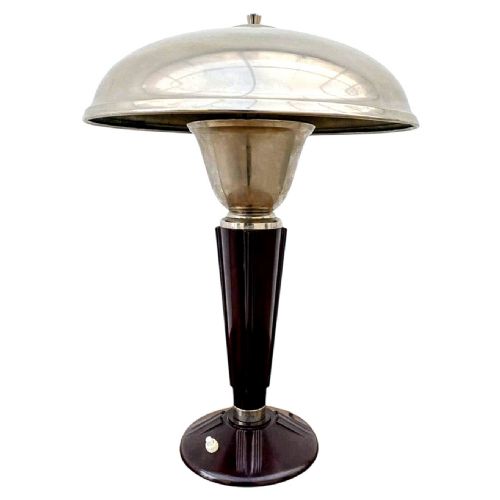
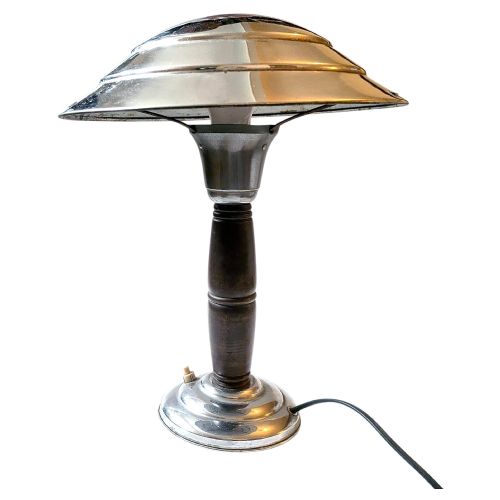
A modernist chrome table lamp typically combines polished metal frames with contrasting elements like glass or bakelite to achieve a functional desk or table light. These pieces often draw from early twentieth-century design movements, bringing purposeful geometry into domestic spaces.
The most common examples on this page date from the nineteen-thirties, reflecting Art Deco and Machine Age styles. Makers from this era favoured practical illumination paired with striking structural silhouettes.
While primarily designed for desks and tables, the broader category includes related occasional furniture alongside the dominant lighting forms. Buyers encounter various interpretations spanning French and English workshops.
How they were made
Construction relies on durable metal bases finished with chrome plating or nickel to achieve a reflective, modern sheen. Manufacturers combined these metallic components with moulded bakelite switches and shades.
Glass elements, including opaline shades, appear alongside metal to diffuse light effectively. Joinery and assembly techniques of the period prioritised functional industrial strength and clean lines.
Some designers loved bakelite so much they used it for everything from lamp bases to the humble desk tidy.
What varies in quality
Quality differences often hinge on the refinement of the metalwork and the integrity of the plating over time. Superior examples maintain crisp geometric junctions and unblemished reflective surfaces.
The choice of secondary materials, such as heavy glass shades or high-grade moulded bakelite, distinguishes finer productions from standard utilitarian lighting. The balance of weight and proportion also dictates the overall presence of the piece.
Eileen Grey·Peter Ghyczy
The Modernist Chrome Table Lamp Glossary
- Chrome
- A hard, corrosion-resistant metallic coating applied to base metals to give a bright, reflective finish. This process defines the polished aesthetic of machine-age design.
- Bakelite
- An early form of synthetic plastic prized for its durability and heat resistance during the early twentieth century. It frequently appears in switch housings and handles.
- Machine Age
- An era of design spanning the interwar period that celebrated industrial efficiency and mechanical forms. Objects from this time embrace smooth metallic surfaces.
- Opaline glass
- A milky, translucent white glass used primarily for diffusing light softly across a room. It adds a tactile contrast to cold metal frames.
Modernist Chrome Table Lamp: Frequently Asked Questions
How do I style a modernist chrome table lamp?
Pair the lamp with minimalist wooden desks or clean-surfaced side tables to let the reflective metallic finish stand out. The industrial geometry complements both neutral modern spaces and vintage interiors.
Ensure the lamp is placed where its directional light serves a practical purpose, such as reading or task work, while contributing to the room's overall illumination.
What periods do these lamps come from?
Most examples originate from the nineteen-thirties, aligning with the height of the Art Deco and Machine Age movements. A few pieces reflect earlier twentieth-century influences.
Production methods and material combinations changed subtly across these decades, shifting from heavier brass foundations towards plated steel and chrome.
Are these lamps suitable for daily use?
These pieces were built for functional workspaces and domestic rooms, making them durable enough for contemporary use. Standard modern bulbs generally fit standard period sockets.
Buyers should check wiring standards with a qualified professional before connecting vintage lighting to a modern electrical supply.
What materials accompany the chrome?
Chrome plating is frequently paired with dark bakelite components, clear or opaline glass shades, and occasional brass or nickel accents. Wood also appears in related furniture pieces.
Each material served a specific mechanical or aesthetic role, balancing industrial strength with refined interior styling.