




Model Ship in Case
A model ship in case brings the open sea indoors, offering a detailed snapshot of maritime history preserved beneath protective glass.
Model Ship in Case
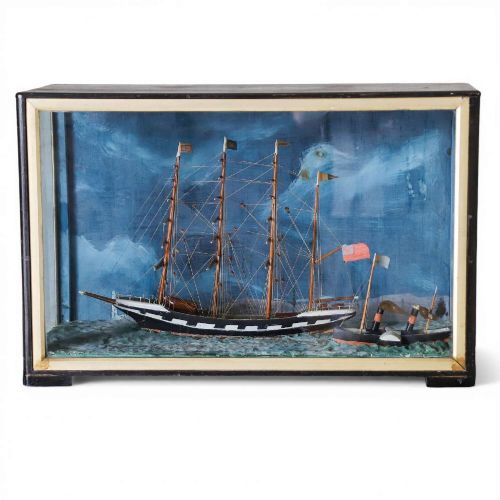
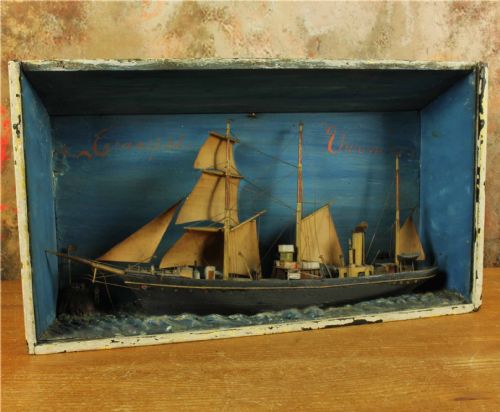
When searching for a model ship in case, collectors encounter a variety of maritime folk art and shadow box dioramas dating from the nineteenth and early twentieth centuries. These pieces typically depict named vessels, racing sailing ships, or detailed barques caught in painted seascapes. Most examples found on this page hail from the Victorian and Edwardian eras, showcasing the handiwork of dedicated makers.
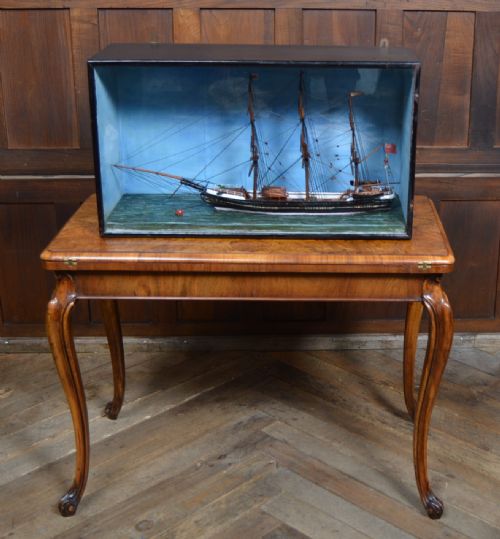
The primary forms include three-dimensional shadow box dioramas and cased scale models housed in wooden frames with original glass covers. Subjects range from French handmade boat models to scratch-built representations of historic vessels like the HMS Endeavour. Each diorama creates a convincing illusion of depth by combining carved wooden hulls with painted backgrounds.
How they were made
Makers constructed these maritime scenes using a combination of carved wood, canvas, paint, and thread to build the miniature rigging and hulls. Plaster and textured paint often formed the rolling waves of the seascapes, creating realistic movement within the confines of the box. Intricate details such as straw work were occasionally utilised to decorate the surrounding frames or surfaces.
The miniature vessels themselves scratch built from timber and rigged with fine thread, reflecting traditional nautical craftsmanship. Protective glass cases shielded the delicate fabric sails and painted elements from dust and damage over the decades.
Model Ship in Case Retail Price Guide 2026
Typical asking prices for model ship in case among the pieces listed under this phrase on Sellingantiques today, from the lower quarter to the upper quarter. They describe what is for sale here now, not the wider market.
Some nineteenth-century makers incorporated delicate straw work into their maritime diorama frames, turning simple box edges into shimmering displays.
What varies in quality
Quality in a model ship in case rests upon the precision of the rigging and the artistic depth of the painted background seascape. Pieces that integrate complex elements like straw work or multiple vessels racing display a higher level of artisan skill.
The preservation of the original wooden frame and glass case significantly impacts the overall desirability of the piece. Superior examples maintain intact textiles and vibrant paint without excessive fading or structural repairs.
The Model Ship in Case Glossary
- Diorama
- A three-dimensional scene featuring miniature models set against a painted background to create a sense of perspective. These are frequently enclosed in glass-fronted wooden boxes.
- Barque
- A sailing vessel with three or more masts having the fore-and-aft sails set only on the mizzenmast. They were common merchant ships during the nineteenth century.
- Scratch built
- A model constructed entirely from raw materials and components rather than assembled from a commercial kit. This method highlights the individual maker's technical skill.
- Shadow Box
- A deep, glass-fronted frame designed to display objects in relief. It protects delicate three-dimensional maritime artworks from environmental wear.
- Maritime Folk Art
- Decorative objects created by sailors or self-taught artisans focusing on nautical themes. These items often utilise readily available materials like wood, canvas, and thread.
Model Ship in Case: Frequently Asked Questions
What is a model ship in case?
A model ship in case is a miniature nautical vessel permanently housed within a protective wooden frame fitted with glass. These items combine sculpture and painting to depict ships at sea.
They serve as decorative objects that capture the aesthetic of nineteenth-century maritime culture and craftsmanship.
How were these dioramas displayed originally?
These pieces were typically hung on walls or placed on mantelpieces in homes and maritime offices. The enclosed glass protected the intricate rigging from dust.
Today, they require similar placement away from direct sunlight to preserve the painted canvas and fabric components.
How do I identify the period of a cased ship?
Dating relies on the style of the wooden frame, the materials used in the rigging, and construction techniques. Nineteenth-century examples often feature folk art elements and hand-painted seascapes.
Later pieces from the Edwardian era or the nineteen-thirties tend to show more refined scale model techniques.
Are the ships based on real vessels?
Many pieces represent specific historic ships, such as the Glynllifon or the Hippolyta, recorded by name on the diorama. Others portray generic sailing vessels, barques, or racing scenes.
Makers frequently captured notable ships of the period to commemorate their voyages.