
Mirrored Clothes Press
A mirrored clothes press offers deep storage with full-length glass, bringing both function and light into a bedroom.
Mirrored Clothes Press
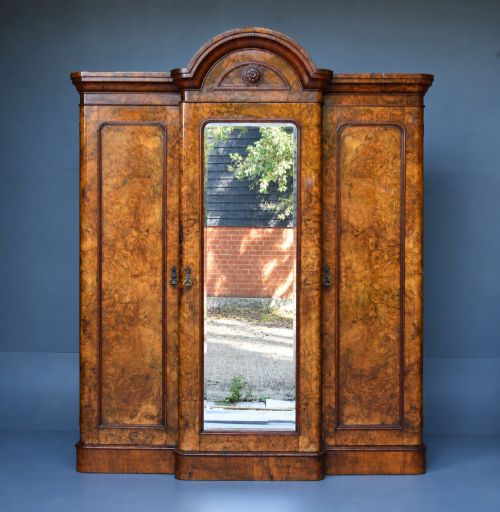
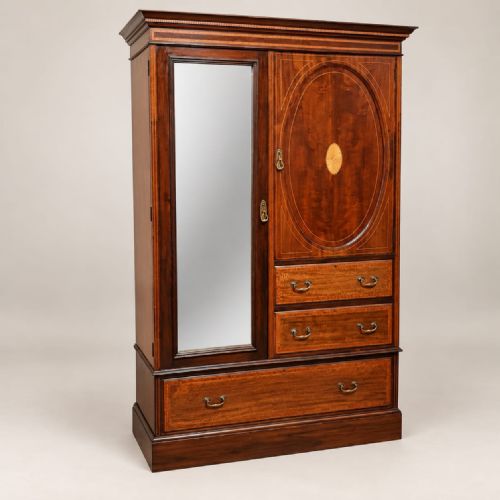
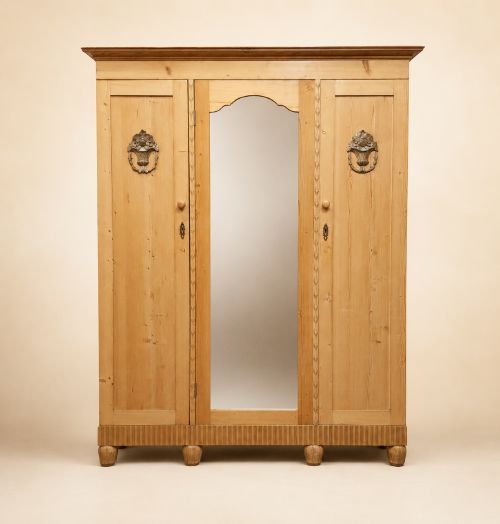
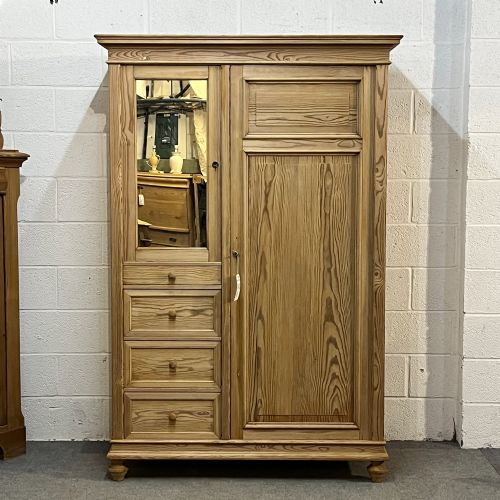
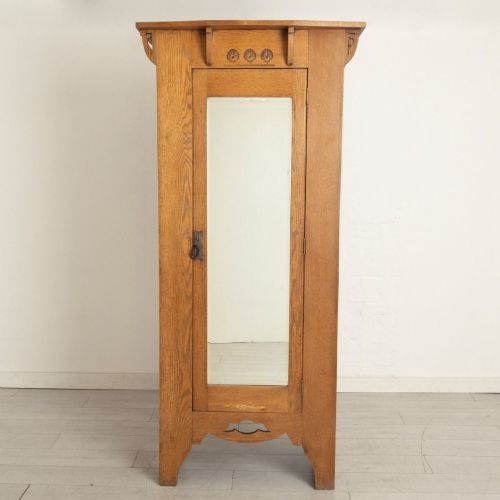
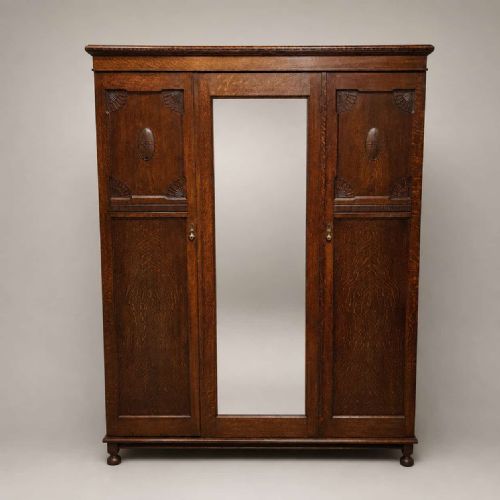
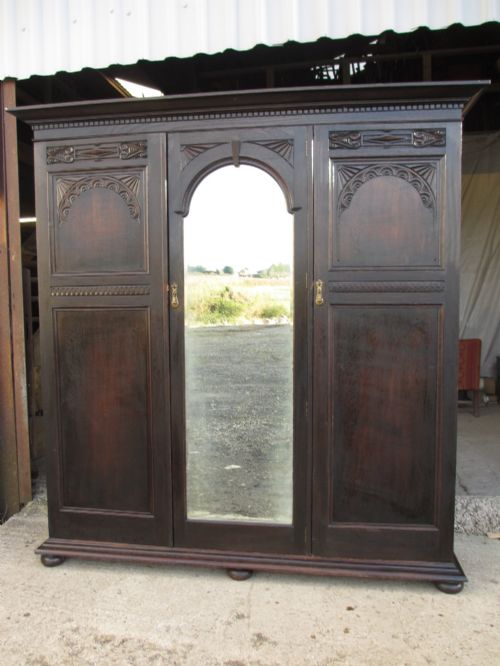
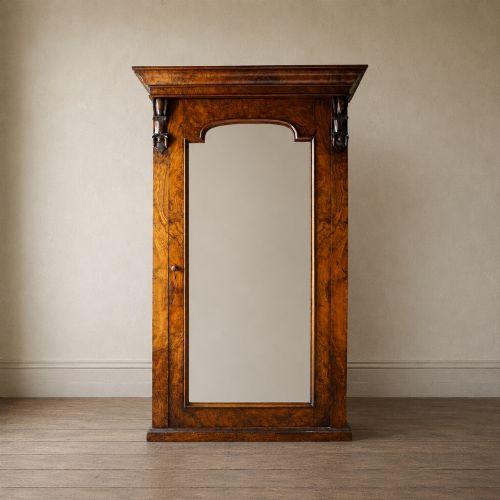
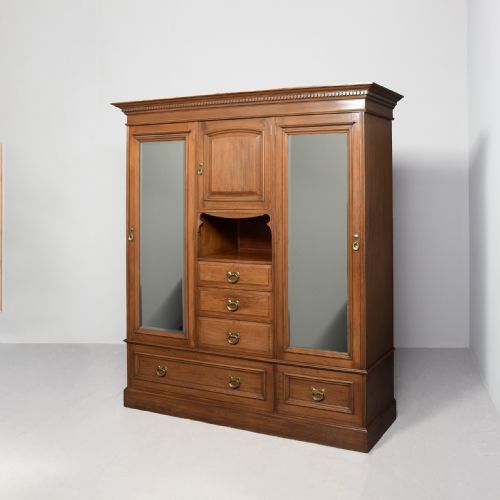
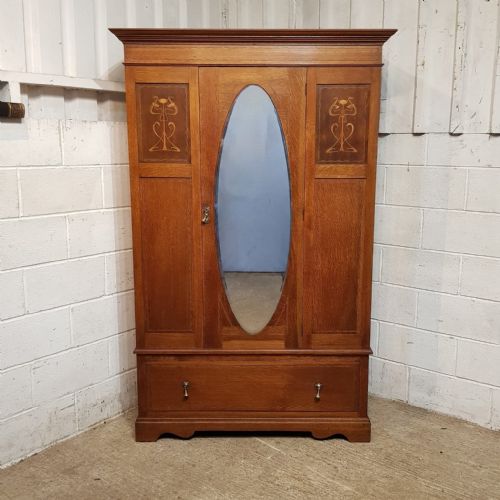
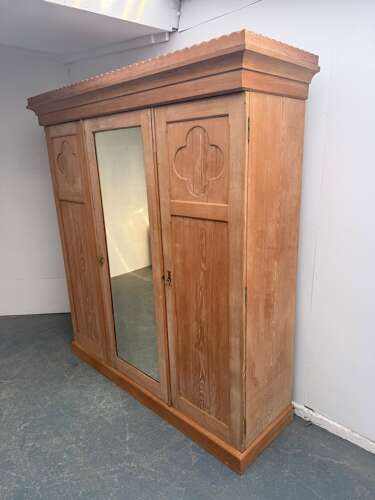
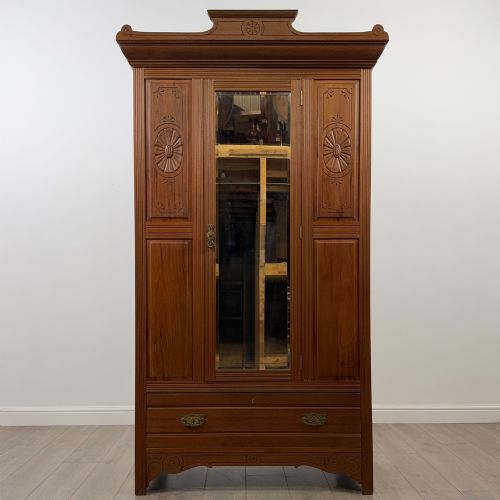
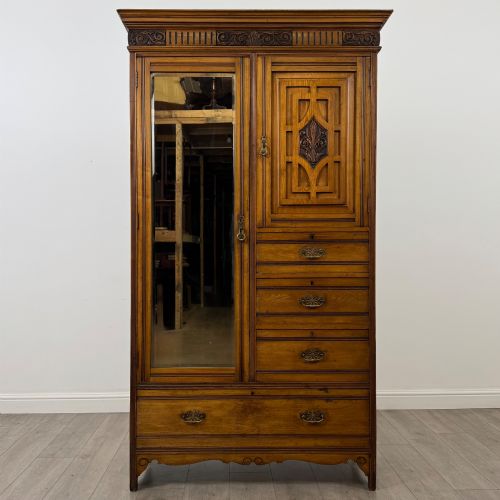
A mirrored clothes press combines large wardrobe compartments with reflective door panels, appearing frequently across Victorian and Edwardian examples. These pieces serve primarily for hanging garments and housing interior drawers or linen shelves.
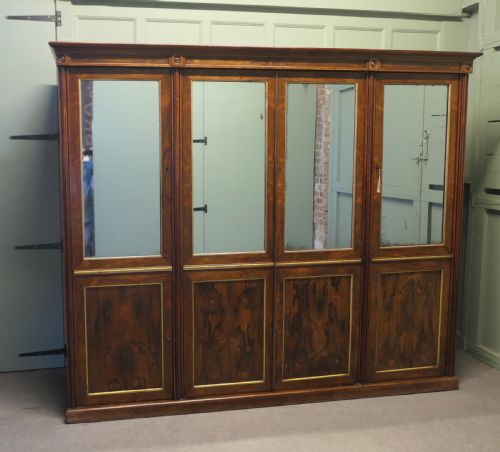
The selections span single, double, and triple configurations, often grouped with terms like wardrobes, armoires, and compactums. Most date from the nineteenth and early twentieth centuries, constructed from substantial timbers.
Origins include domestic British workshops as well as continental influences, shifting from heavy Victorian proportions to lighter Edwardian or Arts and Crafts designs.
How they were made
Makers utilised dense hardwoods such as mahogany, oak, walnut, and burr walnut, frequently applying mirror glass and brass hardware to large door frames.
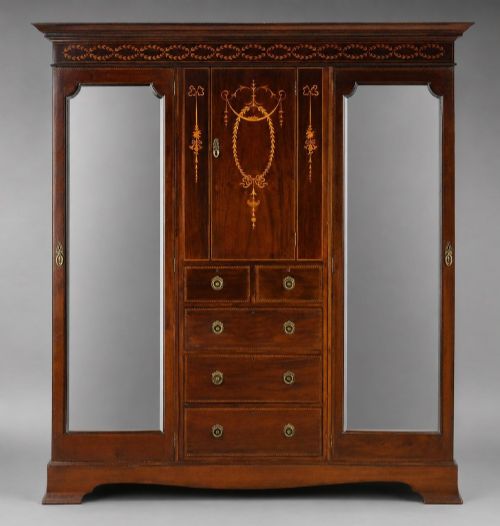
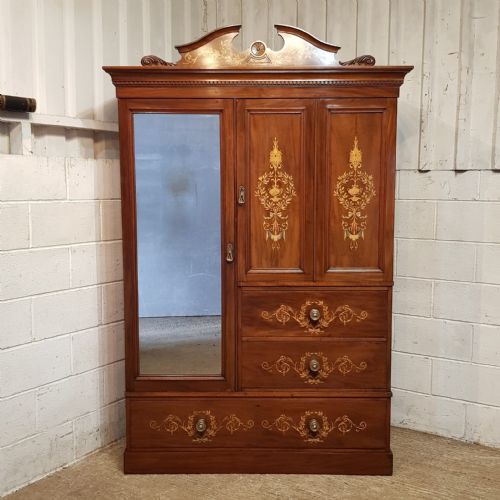
Construction methods involved panelled timber doors to support heavy glass plates, alongside hand-carved details, marquetry inlay, and occasionally gilt bronze ormolu mounts.
Several gentleman's compactums include hidden compartments designed specifically for stiff collars and pocket watches.
What varies in quality
The selection of timber veneers, such as figured walnut or satinwood, dictates the visual depth of the exterior surfaces.
The intricacy of hand-carved ornamentation, marquetry inlay, and the integration of internal compactum drawers distinguish standard production from finer workshop output.
Lamb of Manchester·Maple & Co·Wylie Lochhead of Glasgow
The Mirrored Clothes Press Glossary
- Compactum
- A multi-section wardrobe combining hanging space, shelves, and internal drawers. This layout maximises storage within a single footprint.
- Armoire
- A large standing cupboard with doors, often used interchangeably with wardrobe. French examples frequently incorporate decorative bronze mounts.
- Inlay
- A technique where contrasting woods or materials are set into the surface timber to form decorative patterns. This method enhances the visual detail of Edwardian cabinetry.
- Burr walnut
- Wood taken from the growth growths of a walnut tree, showing swirling grain patterns. Cabinetmakers prize this timber for high-status furniture fronts.
Mirrored Clothes Press: Frequently Asked Questions
How do I care for the mirror glass?
Clean the glass gently using standard glass cleaner applied to a cloth rather than sprayed directly onto the surface, which prevents moisture seeping behind the silvering.
Keep the surrounding wood conditioned with appropriate furniture wax to protect the joints and timber frame.
Are these wardrobes easy to dismantle?
Many large nineteenth-century examples feature modular construction with detachable cornice, sides, and base sections to facilitate transport and installation.
Checking the internal assembly reveals whether wooden pegs or modern screws hold the structural carcass together.
What is the difference between a press and a wardrobe?
A traditional press typically contains sliding trays or linen slides enclosed by doors, whereas wardrobes focus primarily on vertical hanging space.
Many surviving pieces combine both functions, leading to overlapping terminology in historical listings.
How do I identify an Edwardian piece?
Edwardian examples tend to display lighter timbers such as satinwood, ash, or inlaid mahogany, often reflecting simpler geometric or Arts and Crafts influences.
Heavier carved oak and dark burr walnut finishes are more commonly associated with earlier Victorian periods.