





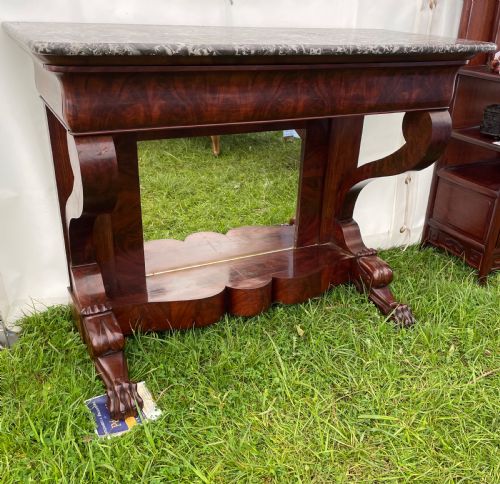

Mirrored Back Pier Table
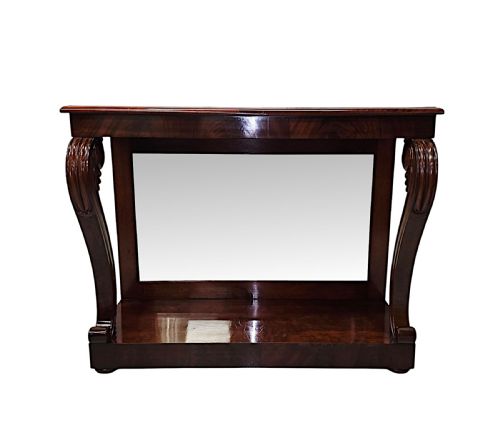
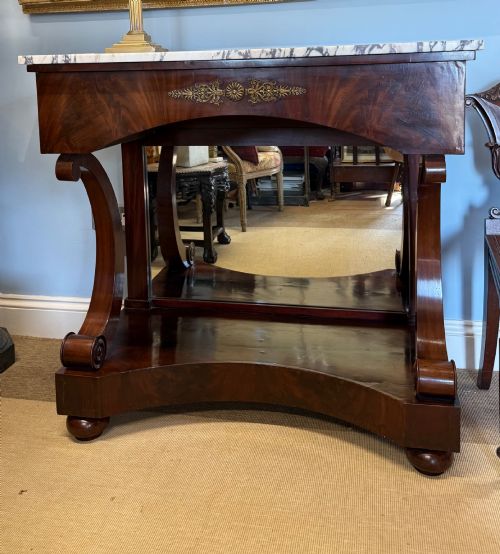
A mirrored back pier table brings architectural depth and reflective light into a room, combining rich timber and gleaming glass.
Mirrored Back Pier Table
A mirrored back pier table is fundamentally a console designed to sit against a wall, frequently between windows, incorporating a reflective backing that amplifies light within the space. These tables span several distinct eras, notably the Regency, William IV, and Victorian periods, alongside continental manifestations like the French Empire and Italian styles.
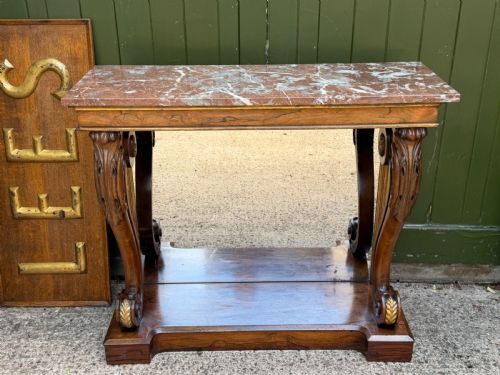
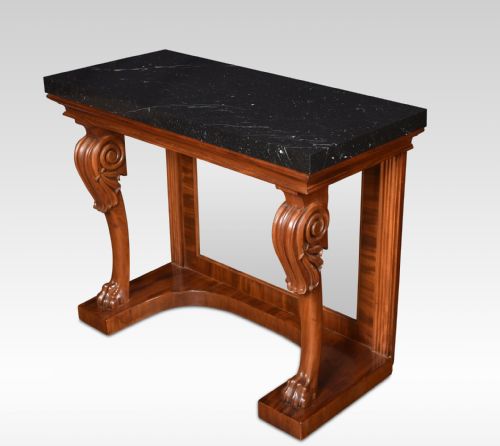
Most examples encountered on this page rely upon timbers such as mahogany and rosewood, frequently paired with heavy stone surfaces. The integration of mirror glass transforms a standard wall table into an optical centrepiece that doubles the visual volume of decorative objects placed upon it.
Forms vary from robust William IV mahogany constructions to ornate giltwood and parcel-gilt creations influenced by French design. Certain pieces manifest as console tables or chiffoniers, utilising marble tops and fitted mirror plates to achieve their characteristic silhouette.
How They Were Made
Makers utilised dense cabinet timbers, primarily mahogany and rosewood, often selecting figured veneers to create striking surface grain patterns. Parcel-gilt detailing and giltwood carving were applied to accentuate structural elements and provide metallic contrast against the dark wood.
Heavy stone slabs, specifically marble and carrara marble, were fitted to the upper surface to provide a durable and cool display area. Backings incorporated genuine mirror glass plates, secured within timber frames to reflect the room and bounce ambient light forward.
Mirrored Back Pier Table Retail Price Guide 2026
Typical asking prices for mirrored back pier table among the pieces listed under this phrase on Sellingantiques today, from the lower quarter to the upper quarter. They describe what is for sale here now, not the wider market.
Some nineteenth-century tables feature carved wooden dolphins acting as structural supports, proving that historical cabinetmakers possessed a wonderfully theatrical imagination.
What Varies in Quality
The refinement of the timber selection dictates much of the visual standard, with heavily figured flame mahogany and richly grained rosewood sitting at the upper end of the scale. The depth and crispness of carved wooden details, whether applied giltwood motifs or structural dolphin supports, reveal the hand of a more accomplished workshop.
The integration of the mirror plate and the weight of the marble top influence the overall gravitas of the piece. Superior examples exhibit harmonious proportions between the timber base, the stone surface, and the reflective backing, ensuring the unit reads as a cohesive architectural furnishing.
Gillingtons of Dublin·Donald Ross
The Mirrored Back Pier Table Glossary
- Pier table
- A table designed to stand against a wall, specifically between windows beneath a pier glass. These pieces are typically narrow to suit the wall space.
- Console table
- A table supported by wall brackets or console legs, functioning as a sideboard or decorative surface. Many incorporate a mirror backing to enhance interior light.
- Parcel-gilt
- Partially gilded woodwork where specific carved details or mouldings are covered in gold leaf. This technique highlights particular decorative motifs against a dark timber background.
- Giltwood
- Timber that has been carved and subsequently coated with gold leaf or a gilt finish. It was frequently employed in Regency and Victorian decorative furniture.
- Figured mahogany
- Timber exhibiting distinctive natural grain patterns, such as flame or fiddleback figures, valued for decorative cabinetwork. It provides a highly ornamental surface texture.
Mirrored Back Pier Table: Frequently Asked Questions
Where should I place a pier table?
These tables are traditionally positioned flat against a wall, frequently in a hallway, drawing room, or between two tall windows.
Their narrow depth allows them to occupy minimal floor space while making a strong visual statement through their reflective mirror backs.
What are the tabletops typically made from?
The upper surfaces predominantly consist of heavy stone, including standard marble and carrara marble.
This provided a practical, cool surface for displaying decorative items while anchoring the structural weight of the console base.
How do I distinguish Regency from Victorian examples?
Regency and related early nineteenth-century pieces often display cleaner classical lines, rosewood veneers, and restrained parcel-gilt highlights.
Victorian and later nineteenth-century interpretations tend towards heavier proportions, elaborate giltwood carving, and sometimes more exuberant revival styles.
Can these tables support heavy objects?
The solid timber frames and heavy marble tops provide a robust platform for lamps, clocks, and ceramic pieces.
However, because they are designed as wall tables, their stability relies on proper placement against a vertical surface rather than freestanding use.