

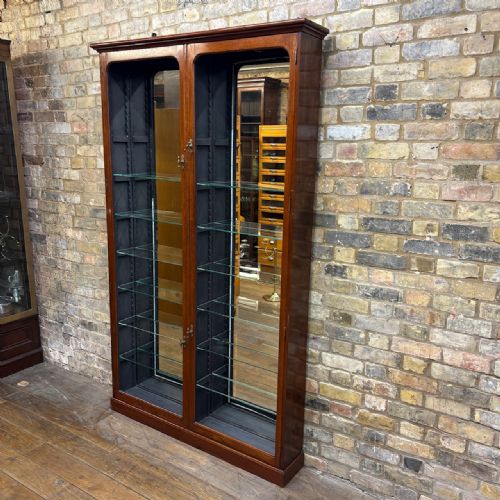
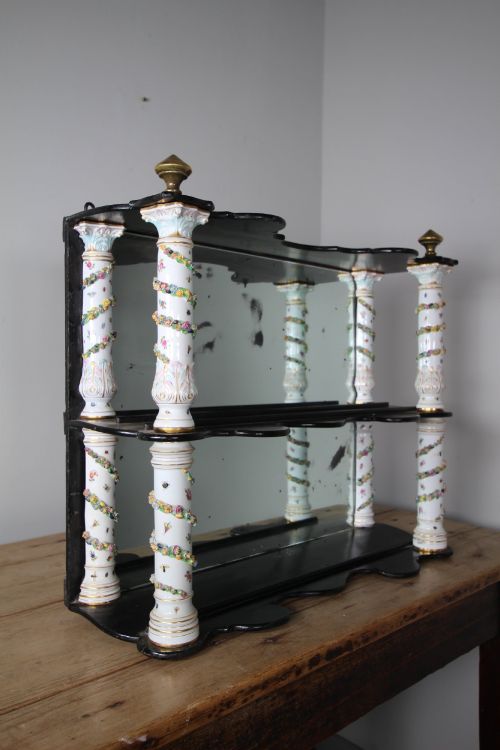
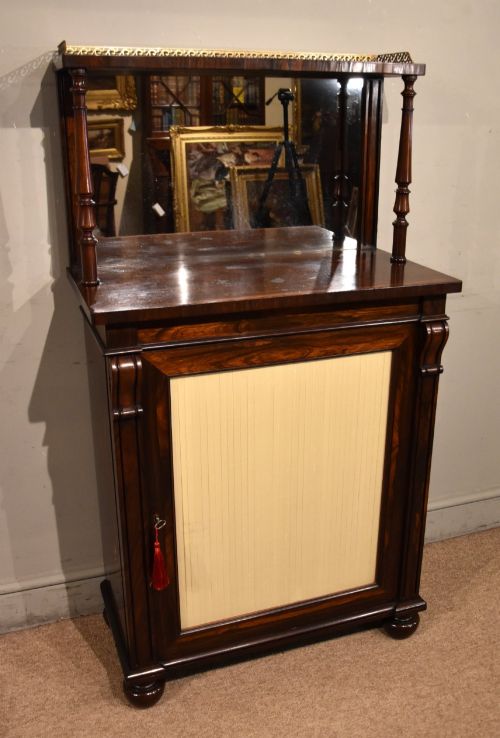
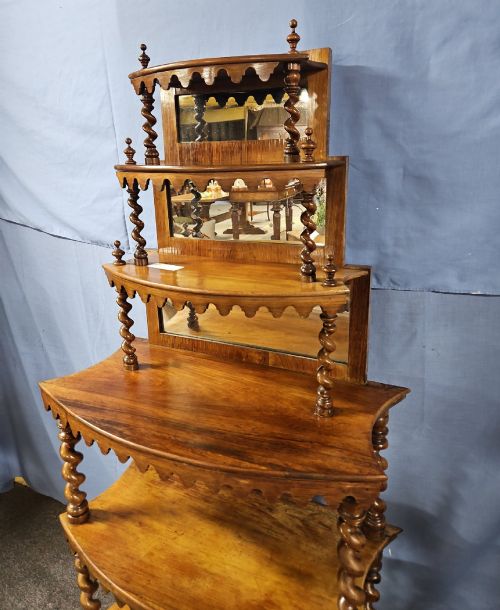
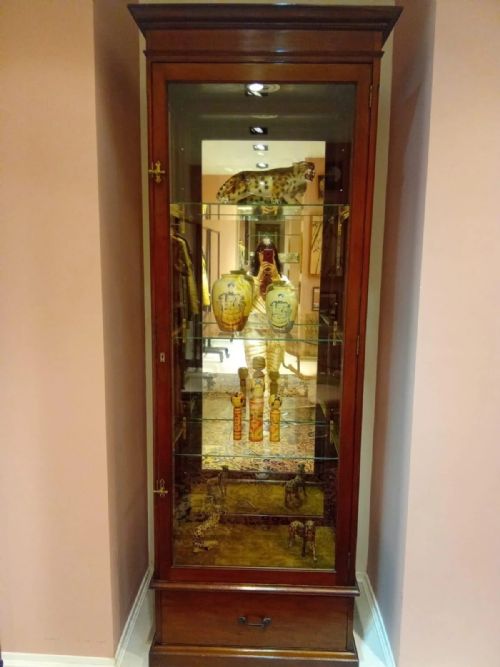
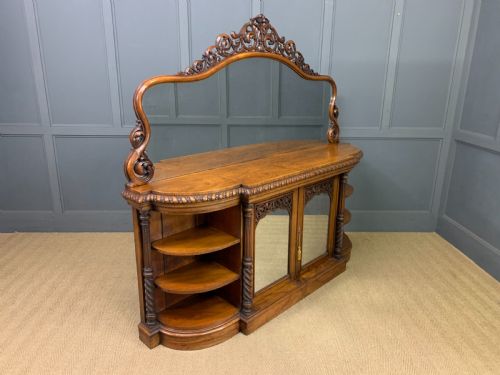
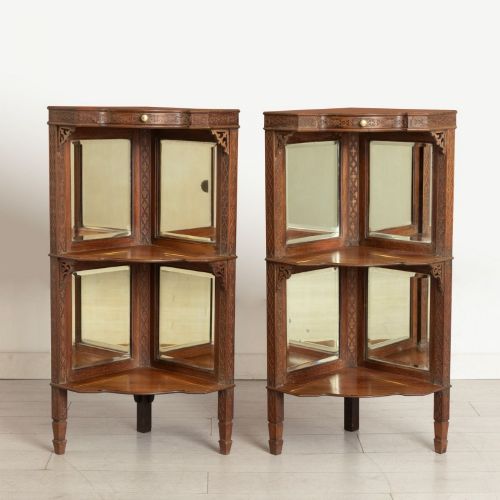


Mirror Back Shelf
A mirror back shelf combines reflective glass with timber display tiers to catch the light and brighten a room.
Mirror Back Shelf
A mirror back shelf brings together reflective glass panels and open or enclosed timber tiers designed for display. When you search for a mirror back shelf, you encounter pieces spanning the Georgian, Regency, Victorian, and Edwardian eras.
The format ranges widely across the inventory, appearing within larger forms such as chiffoniers, credenzas, and display cabinets, alongside dedicated wall-hung shelves and open bookcases. Rosewood, walnut, and mahogany provide the primary structural timbers for these pieces.
Victorian examples dominate the selection, often incorporating burr walnut, intricate inlays, and multiple tiers or drawers. Pieces stretch from modest wall brackets to large floor-standing display cabinets and sideboards.
Materials and Construction
Cabinet makers utilised dense hardwoods including rosewood, walnut, mahogany, and yew wood to build the foundational frames and display tiers. Burr walnut veneers frequently appear on Victorian cabinet doors and backboards to create rich figuring.
Reflective mirror glass forms the backing of these pieces, designed to bounce light across the room and highlight objects placed on the shelves. Secondary details such as brass mounts, ormolu, porcelain plaques, and parcel gilt finishes enhance the decorative scheme.
Mirror Back Shelf Retail Price Guide 2026
Typical asking prices for mirror back shelf among the pieces listed under this phrase on Sellingantiques today, from the lower quarter to the upper quarter. They describe what is for sale here now, not the wider market.
Listings span from the Georgian period through Victorian and Edwardian eras, utilising rosewood, walnut, mahogany, and mirror glass.
Evaluating Quality
Quality rests upon the selection of timber veneers and the depth of the cabinet work, with burr walnut and rosewood versions showing superior grain patterning. The integration of the mirror glass into the backboard structure dictates the overall finish.
Maker attribution elevates certain pieces, particularly those bearing stamps or signatures from established firms. Refined details like hand-cut inlays, barley twist supports, and ormolu mounts separate standard production from exceptional examples.
Edwards and Roberts·Town and Emanuel·Pauly et Cie
The Mirror Back Shelf Glossary
- Chiffonier
- A low sideboard cabinet, often featuring a mirror back and enclosed shelving below display tiers.
- Credenza
- A decorative side cabinet used for storage and display, frequently fitted with glass doors and mirrored backs.
- Whatnot
- A set of open display shelves supported by slender pillars, utilised for ornaments and books.
- Ormolu
- Gilt bronze mounted onto furniture as a decorative embellishment during the nineteenth century.
- Parcel gilt
- Woodwork finished with partial gilding applied to carved highlights or mouldings.
Mirror Back Shelf: Frequently Asked Questions
How were mirror back shelves used historically?
These pieces served as functional display furniture in principal reception rooms, holding porcelain, silver, and decorative objects. The mirrored glass plate functioned to reflect candle or gas light and brighten dark corners.
Larger variations combined storage cupboards below with open display tiers above. Smaller wall-hung versions provided compact display space for intimate collections.
What woods are commonly found?
Makers relied heavily on rich hardwoods such as rosewood, walnut, and mahogany. Burr walnut veneers frequently supplied decorative figuring on Victorian cabinet surfaces.
Secondary woods like oak and pine appear inside carcases and drawer linings. Accents of yew wood, parcel gilt, and exotic veneers also occur across the periods.
How do I date a mirror back shelf?
Dating relies on stylistic clues, timber choice, and construction methods. Georgian and Regency examples display clean classical lines in mahogany or rosewood, while Victorian pieces often feature heavier proportions, burr walnut, and elaborate carvings.
Edwardian items frequently adopt lighter aesthetic forms and refined inlays. Examining the silvering on the mirror glass and the joinery methods provides further chronological markers.
Can I hang a wall shelf safely?
Hanging wall shelves requires careful assessment of the wall structure and the weight of the timber and glass. Professional fixings suited to the specific wall type are essential to support the load securely.
Due to the presence of heavy mirror glass and hardwood frames, checking the structural integrity of the hanging points before installation prevents accidents.