







Miniature Clock Case
A miniature clock case houses time in miniature, offering a compact focal point for a desk or mantel.
Miniature Clock Case
A miniature clock case holds a small time-keeper, protecting the delicate mechanism while providing a decorative object for a desk, mantel, or table. When you search for miniature clock case, you encounter housings created to hold small carriage clocks, boudoir timepieces, and scaled-down longcase or grandfather clocks.
The versions most commonly met on this page span the nineteenth century into the early twentieth century. These pieces reflect Victorian, Edwardian, and Regency tastes, alongside French and English workshop traditions.
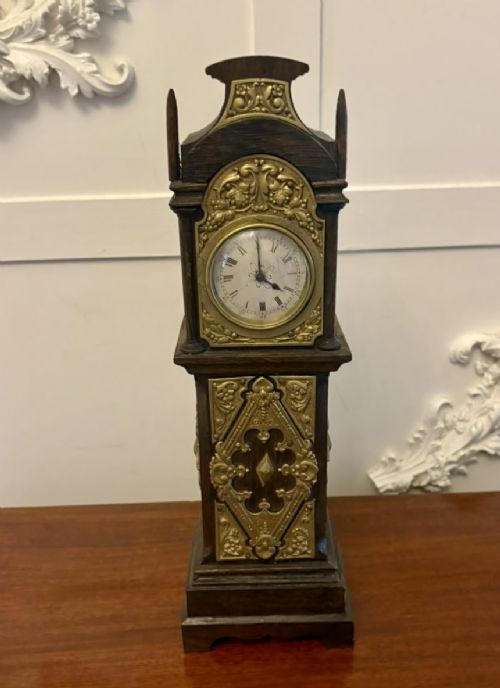
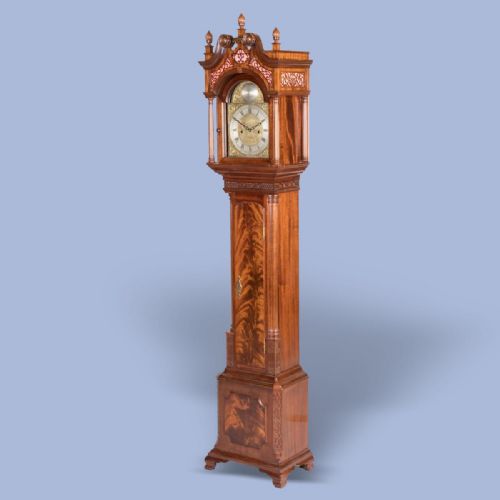
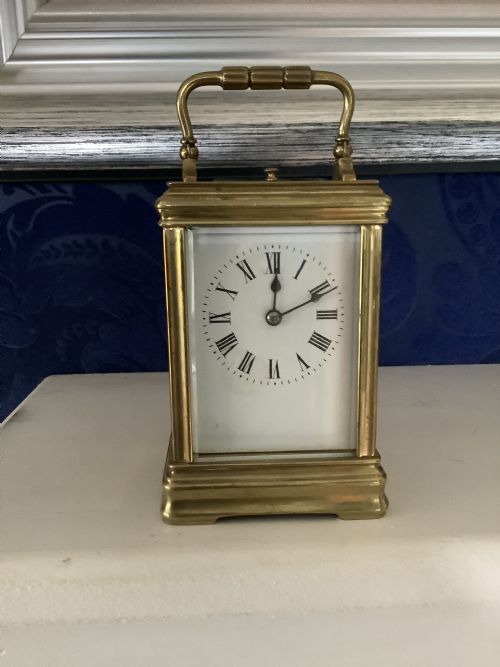
Forms range from small glass-paneled brass carriage frames with travelling leather cases to diminutive oak and mahogany longcase floor models. Each style adapts full-sized horological architecture into a portable scale.
How they were made
Metals form the structural core of many examples, utilising brass, gilt brass, bronze, ormolu, and silver to create rigid frameworks that support glass panels or chased decorative surfaces. Enamel panels and dials add colourful detail, while leather provides durable outer protection for travelling variants.
Timber cases employ oak and mahogany, shaped into miniature grandfather and granddaughter proportions. Joinery and cabinet-making techniques mirror those used in full-sized furniture, scaled down with precise proportions.
Miniature Clock Case Retail Price Guide 2026
Typical asking prices for miniature clock case among the pieces listed under this phrase on Sellingantiques today, from the lower quarter to the upper quarter. They describe what is for sale here now, not the wider market.
Some miniature grandfathers stand proudly at a fraction of their normal height, proving that grand presence needs very little floor space.
What varies in quality
Quality separates through the crispness of metal chasing, the clarity and beveling of glass panels, and the weight of the brass or silver used in the frame. Higher tier pieces display finely hand-engraved surfaces and robust movement housing rather than cast repetition.
In wooden examples, the grain selection and the fidelity of the miniature proportions dictate the calibre of the piece. Well-balanced woodwork and intact original leather travelling cases elevate the standing of a specimen.
Richard co maker·Dent of London·McCabe London
The Miniature Clock Case Glossary
- Carriage clock
- A portable spring-driven timepiece originally designed for travel, typically featuring a brass frame with glass sides and a swinging handle above.
- Fusee
- A conical pulley used in mechanical clocks to ensure even force from the mainspring as it unwinds.
- Ormolu
- Gilded bronze or brass applied to decorative objects and clock mounts to give a rich golden surface.
- Boudoir clock
- A small timepiece intended for a private sitting room or bedroom, often housed in an ornate silver or enamelled case.
- Granddaughter clock
- A small floor-standing pendulum clock styled after a full-size longcase clock, typically standing under six feet tall.
Miniature Clock Case: Frequently Asked Questions
What is a miniature clock case made of?
These housings utilise a range of materials depending on the style and origin of the piece. Common examples feature brass, gilt brass, silver, bronze, and glass, alongside timber varieties constructed from oak and mahogany.
Leather also appears frequently as an outer covering for protective travelling outer cases accompanying carriage clocks.
How do I date a miniature clock case?
Dating relies on observing the prevailing style, construction methods, and materials used in the housing. Pieces from the nineteenth century often display Victorian or Regency revival motifs, while Edwardian examples introduce floral enamelling and simpler silhouettes.
Maker signatures and hallmarks stamped on silver or brass elements provide further chronological markers.
Where should I place a miniature clock case?
These compact pieces suit small surfaces where full-sized horology would overwhelm the space. Desks, mantelpieces, bookshelves, and bedside tables offer ideal settings for viewing the detailed metalwork or woodwork up close.
Position them away from direct sunlight and moisture to preserve glass, enamel, and leather components.
What is the difference between a carriage clock and a boudoir clock?
Carriage clocks traditionally feature a brass frame with glass panels and a carrying handle, originally engineered for portability during travel. They often include mechanical complications such as alarms.
Boudoir clocks focus more on decorative refinement, frequently utilising silver cases, floral enamelling, or ornate frames intended for stationary interior display.