


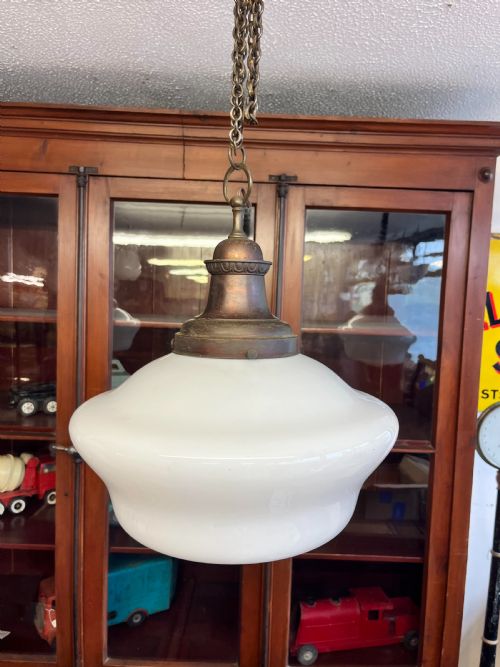


Milk Glass Pendant
These milk glass pendant lamps bring an honest, diffused glow to a room, drawing on decades of utilitarian and decorative design.
Milk Glass Pendant
A milk glass pendant delivers a clean and uniform spread of light, making it a practical choice for task lighting or general illumination. These ceiling lights appear in forms ranging from simple conical shades to voluminous chapel globes and pear-shaped vessels.
The pieces on this page span several decades, crossing Victorian, Edwardian, and Art Deco periods alongside industrial and mid-century modern examples. You are most likely to encounter early twentieth-century fixtures, particularly from the 1920s and 1930s, utilising opaque white glass.
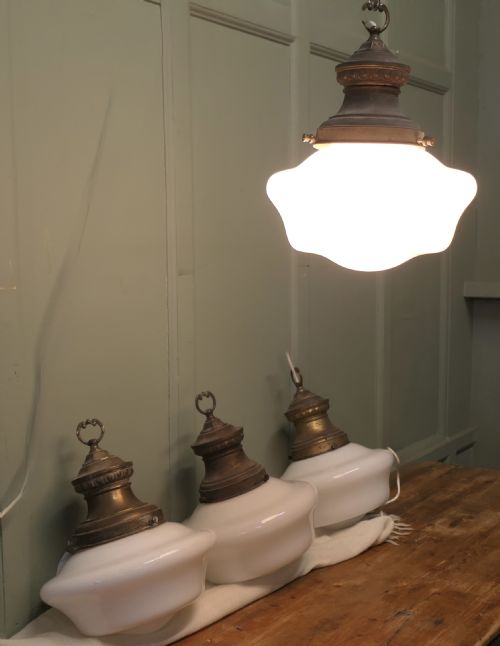
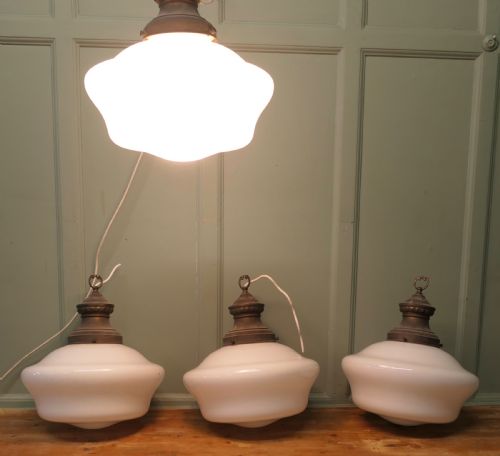
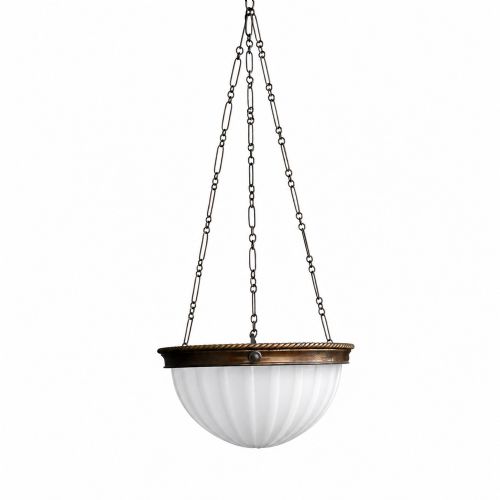
Makers utilised these glass shades in commercial, domestic, and institutional settings, including pharmacies and chapels. Surviving examples retain various mounts, from brass galleries to simple metal chains and ceiling plates.
Materials and construction
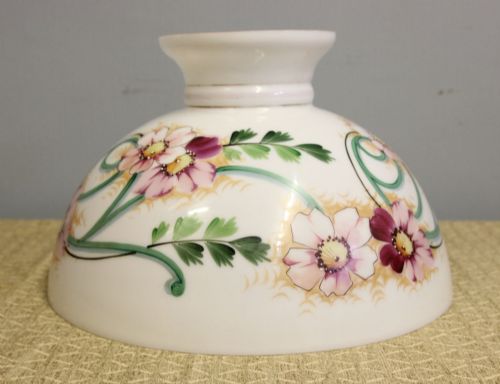
The primary material is opaque glass, referred to across the listings as milk glass, opaline, moonstone, or opal glass. This glass achieves its dense, milky white opacity through the addition of various minerals during the melting process.
Supporting metalwork typically incorporates brass, chrome, steel, and painted iron. Galleries and ceiling plates hold the glass shades securely, often showing the marks of utilitarian manufacture from the early twentieth century.
The documented periods span from Victorian and Edwardian eras through to the 1920s, 1930s, and mid-century modern.
Assessing quality and proportion
Quality in these pendants rests upon the weight and density of the glass, alongside the integrity of the original metal components. Thicker opaline or moonstone glass yields a softer, more consistent diffusion of light when illuminated.
Proportion and scale also separate standard fixtures from exceptional ones, such as unusually large chapel pendants or diminutive specialised shades. The presence of matching sets or original brass galleries adds significant character to an installation.
The Milk Glass Pendant Glossary
- Milk Glass
- Opaque white glass first popularised in Venice and later produced widely across Europe and America. It mimics porcelain while remaining slightly translucent.
- Opaline
- A type of semi-translucent glass that displays subtle shifts in tone, often appearing slightly blue or pink when viewed against the light.
- Moonstone Glass
- A descriptive term for glass with a soft, milky appearance resembling the gemstone. It scatters light evenly without harsh glare.
- Gallery
- The metal collar or ring that grips the top of a glass shade and connects it to the suspension rod or chain.
- Chapel Pendant
- A hanging light fixture of substantial scale, originally designed to illuminate large religious or civic interiors.
Milk Glass Pendant: Frequently Asked Questions
How do I hang a milk glass pendant?
These fixtures suspend from ceilings using chains, cords, or rigid rods attached to matching ceiling plates. Professional installation ensures the weight distributes correctly across the ceiling joists.
Heavier examples, such as large chapel pendants or multi-light fixtures, require reinforced fixings to support the combined weight of the glass and metal components safely.
How do I clean an opaline shade?
Wash the glass gently in warm, soapy water using a soft cloth to remove dust and household grime. Avoid abrasive scouring pads that might scratch the surface.
Metal galleries require separate maintenance depending on whether they are brass, chrome, or painted iron, taking care to keep moisture away from any electrical parts.
What rooms suit a milk glass pendant?
The neutral white glass and simple geometric forms suit kitchens, hallways, and dining spaces where functional illumination matters. Their clean silhouette pairs easily with both traditional and industrial interiors.
Larger conical or pear-shaped shades work effectively as single focal points over tables, while smaller opaline fixtures suit narrower corridors.