

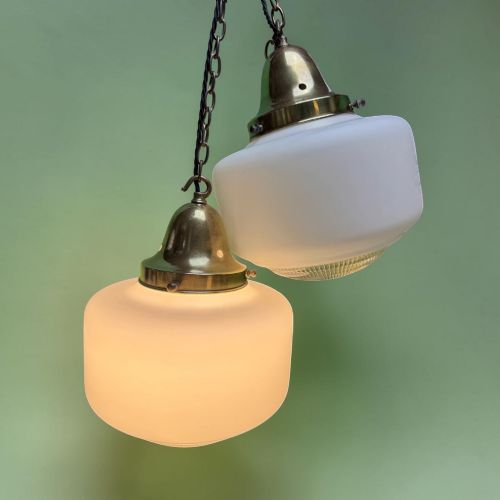


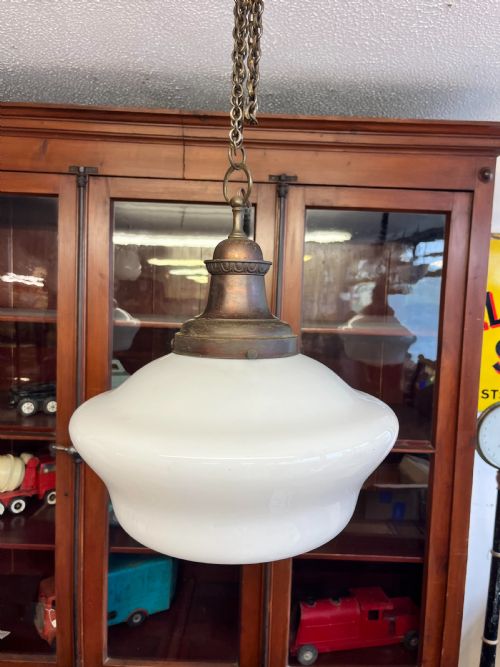


Milk Glass Fixture
These milk glass fixture examples bring genuine period character to a room, offering soft illumination through opal, moonstone, and opaline glass.
Milk Glass Fixture
When you search for a milk glass fixture, you encounter lighting designed to diffuse light evenly through pale, milky glass panels and shades. The pieces gathered here span pendant lights, oil lamps, ceiling lights, and chandeliers.
You are most likely to meet pendant lights and oil lamps from the Victorian, Edwardian, and 1930s periods. Forms range from pear-shaped shades and reeded designs to large chapel lights and pharmacy pendants.
The origins represented cover industrial workshops, domestic interiors, and ecclesiastical settings. Styles stretch from Gothic Revival and Late Victorian to Art Deco, Industrial, and Mid-Century Modern.
How they were made
Makers shaped the characteristic milky appearance using opaline glass, opal glass, and moonstone glass. These translucent materials soften glare while dispersing a warm glow across a space.
Metal components utilise brass, chrome, steel, and iron to mount and suspend the glass shades. Structural elements occasionally incorporate ceramic bases and hand-painted surface decoration.
Milk Glass Fixture Retail Price Guide 2026
Typical asking prices for milk glass fixture among the pieces listed under this phrase on Sellingantiques today, from the lower quarter to the upper quarter. They describe what is for sale here now, not the wider market.
Some Victorian oil lamps retain the faint, nostalgic scent of paraffin after a century of quiet retirement.
What varies in quality
Subtlety in the glass mix and evenness of distribution set the better examples apart from standard production. Superior pieces display a dense, milky opacity that diffuses light without harsh hot spots.
Metalwork execution dictates overall grade, visible in the weight of brass mounts and the crispness of reeded detailing. Hand-painted motifs and well-preserved finishes elevate the standing of Victorian and Edwardian items.
The Milk Glass Fixture Glossary
- Opaline glass
- A pale, translucent glass created by adding bone ash or metal oxides to the melt. This recipe yields the characteristic milky opacity prized in vintage lighting.
- Pendant light
- A solitary light fixture suspended from the ceiling by a cord, chain, or metal rod. These hang downwards to direct illumination over a specific area.
- Reeded design
- A surface pattern composed of parallel, convex ridges running along the body of the glass shade. This texture catches the light and adds visual depth.
- Chapel light
- A large hanging light fixture originating from religious or institutional buildings. They provide substantial scale and diffused illumination.
- Oil lamp
- A domestic lighting device that burns liquid fuel via a wick before the advent of widespread electricity. Many period examples are later converted for electrical use.
Milk Glass Fixture: Frequently Asked Questions
What is a milk glass fixture?
A milk glass fixture is a lighting piece utilising opaque white or tinted translucent glass to soften and diffuse illumination.
These items encompass pendant lights, oil lamps, and ceiling fittings dating from the Victorian era through the 1930s.
How do I date a milk glass fixture?
Dating relies on examining the fitting style, metal components, and glass manufacturing characteristics. Victorian pieces often feature heavy brass and ceramic elements, while 1930s examples lean towards industrial opaline shades.
Construction methods and mounting hardware provide further clues to whether a piece belongs to the Edwardian period or the early twentieth century.
Were these fixtures originally electric?
Many early pieces, particularly from the Victorian period, started as oil lamps burning paraffin before electricity reached most homes. These are frequently converted to hold modern electrical wiring while retaining their original burners and glass reservoirs.
Other forms, such as pharmacy pendants and chapel lights, were designed specifically for suspended illumination from their inception.
How do I clean an opaline shade?
Cleaning requires warm soapy water and a soft cloth to remove dust and grime from the glass surface without scratching. Avoid harsh abrasives that might damage the finish or any hand-painted details.
Metal mounts should be cleaned separately using appropriate metal polish, taking care to keep liquids away from old electrical components.