



Military Watercolor Art
Military watercolor art records uniforms, campaigns, and individual soldiers from the eighteenth century onwards on paper and card.
Military Watercolor Art
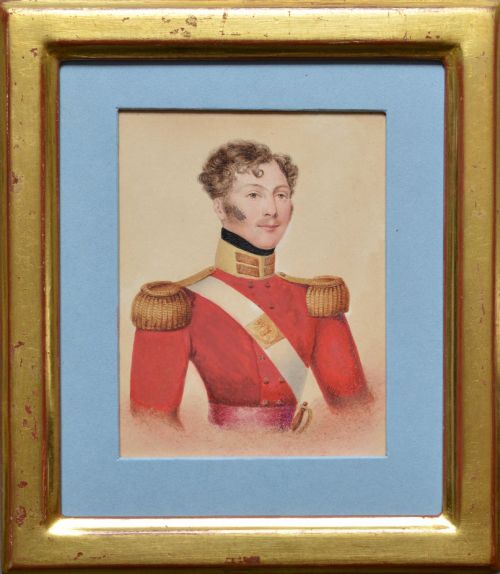
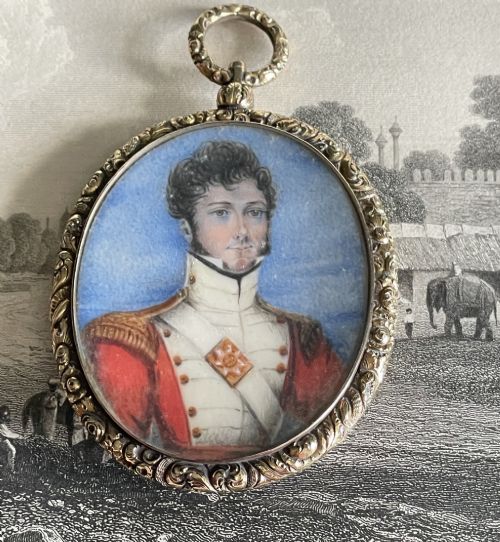
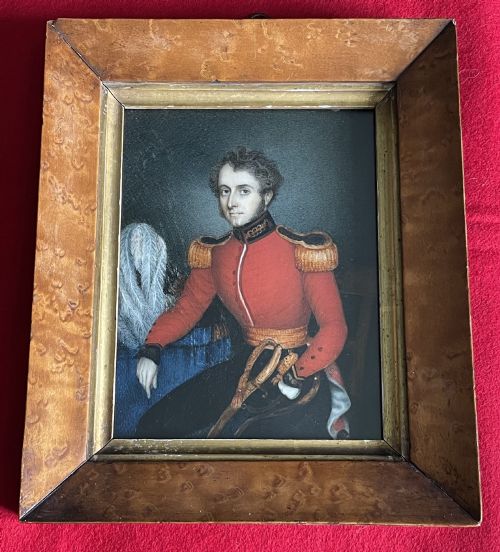
Military watercolor art captures portraits of officers, regimental studies, and battlefield scenes produced from the eighteenth to the twentieth centuries. When searching this phrase, a buyer encounters everything from intimate portrait miniatures on paper and agate panels to large framed illustrations of campaigns and naval vessels.
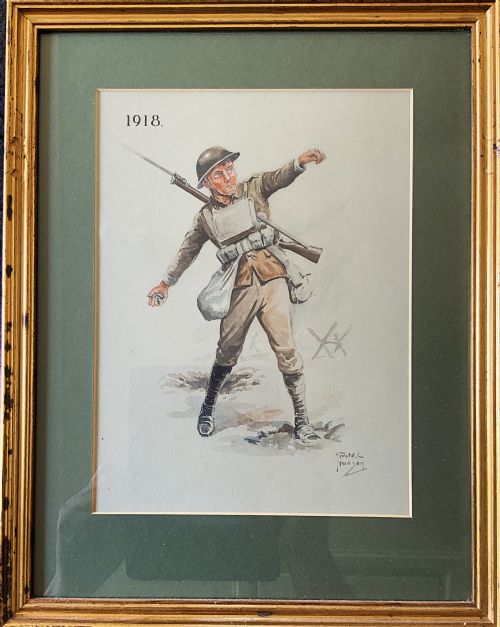
The material spans the Georgian, Regency, Victorian, and Edwardian periods, stretching into the First World War. Portraits of named officers sit alongside anonymous studies of privates, sailors, and cavalrymen painted by contemporary hands or recorded by named artists.
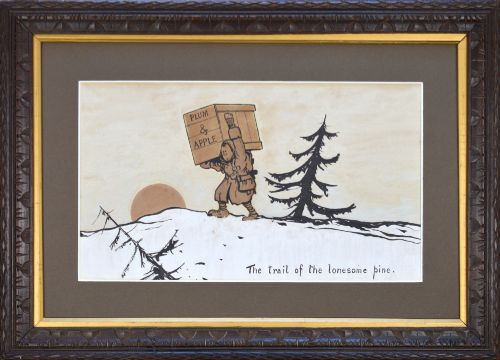
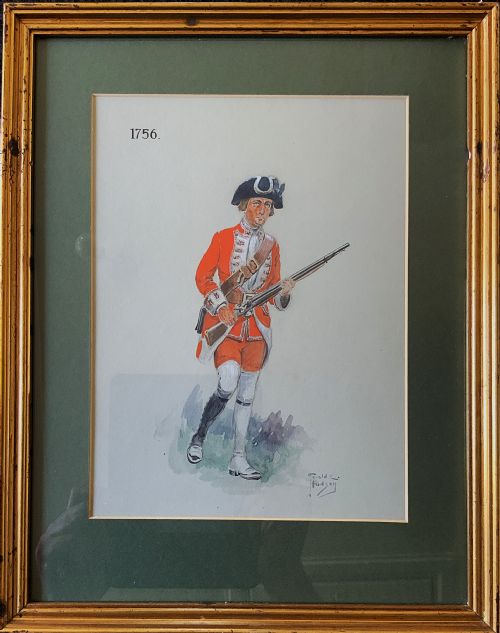
Works on this page range from detailed watercolor and wash depictions of eighteenth-century soldiers to humorous or satirical military illustration and sentimental sailor tributes. They arrive in various formats, including individual framed sheets, paired soldier studies, and sets of cavalry sketches.
Materials and technique
These works rely primarily on watercolor, wash, and ink applied to paper sheets or prepared card surfaces, occasionally augmented with bodycolour or gouache for highlights. Artists utilised fine sable brushes to render intricate details on uniform lace, medals, and facial expressions.
Many examples are preserved behind glass within wooden, giltwood, or gilt metal frames, while smaller portrait miniatures incorporate specialised supports such as agate panels or gold mounts. The combination of translucent watercolor washes and crisp ink line work defines the visual character of the period.
Military Watercolor Art Retail Price Guide 2026
Typical asking prices for military watercolor art among the pieces listed under this phrase on Sellingantiques today, from the lower quarter to the upper quarter. They describe what is for sale here now, not the wider market.
Materials documented in these artworks include watercolour, paper, glass, wood, ink, giltwood, and gilt metal.
Distinctions in quality
Quality rests upon the precision of the draughtsmanship, particularly in the accurate rendering of regimental uniforms, insignia, and human anatomy. The best examples display a confident command of line and wash that brings an individual officer or historic engagement to life without stiffness.
The survival of the paper support and the clarity of the pigments dictate condition and visual impact. Works protected behind glass away from direct light retain their original tonal depth, whereas pieces with heavy foxing or fading lose the fine contrasts intended by the artist.
Bruce Bairnsfather·J Hardy·Thomas Mackay·Frank Dadd·Edward Pugh·Frederick Tayler·Sir William John Newton·Leslie Moore·Sir William Charles Ross·Wiliam Ousey Lindley
The Military Watercolor Art Glossary
- Watercolour
- A painting method where fine pigment is suspended in a water-soluble binder and applied to paper. It provides transparent washes of colour that allow the white of the paper to illuminate the composition.
- Gouache
- An opaque water-based paint containing pigment mixed with a binding agent and a white filler such as chalk. It creates solid, matte highlights often used in military art to render gleaming metalwork and uniform details.
- Wash
- A thin, fluid layer of diluted watercolor or ink spread evenly across paper. Artists employ this technique to establish atmospheric backgrounds or broad shadow areas behind portrait subjects.
- Portrait miniature
- A small, highly detailed painting executed on paper, card, or panel. These intimate works often captured officers and gentlemen for family retention.
- Giltwood
- Wood carved and coated with a thin layer of gold leaf or metallic gilt powder. It is commonly found framing nineteenth-century military pictures.
Military Watercolor Art: Frequently Asked Questions
What periods do these paintings cover?
The works span from the eighteenth century through the Victorian and Edwardian eras up to the First World War. They reflect the changing styles of military dress and artistic depiction across multiple decades.
Earlier pieces often feature detailed portrait miniatures of named officers, while later works include operational sketches and illustrative campaign scenes.
How were these artworks originally displayed?
Many smaller pieces, such as portrait miniatures, were designed to be kept in private domestic settings, sometimes mounted in gold frames or kept in personal cases. Larger watercolors were typically framed in wood or giltwood for hanging on parlour or study walls.
Sailors and soldiers often kept sentimental tributes or ship portraits as personal mementoes of their service and comrades.
How should I care for antique watercolours?
Keep works on paper away from direct sunlight to prevent the pigments and washes from fading over time. Maintaining stable indoor humidity prevents foxing and paper deterioration.
Ensure framing is secure and uses acid-free backing materials to protect the delicate paper support for the future.
How do I identify a military portrait?
Look for specific clues in the uniform, such as regimental facings, lace, epaulettes, and headwear that correspond to historical British or foreign military dress. Inscriptions on the mount or reverse often name the sitter, rank, or regiment.
Artists frequently documented specific campaigns or stationed regiments, providing a clear historical anchor for the date of the work.