



Military Style Furniture
Military style furniture is built to travel, offering robust timbers and brass hardware that lend any room a purposeful edge.
Military Style Furniture
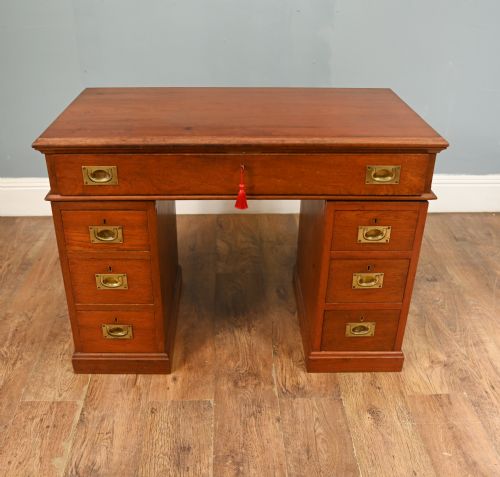
Military style furniture encompasses pieces designed for transport and field use, marked by structural adaptability and recessed hardware. Buyers encountering this group will frequently find desks, trunks, coffee tables, and chests that reflect nineteenth-century campaign origins or later interpretations.
The materials span dense hardwoods such as mahogany, oak, rosewood, camphorwood, and yew wood, often reinforced with brass corners and strapping. Forms range from heavy pedestal desks and compact lockers to folding games tables and blanket chests.
Origins stretch across the eighteenth, nineteenth, and early twentieth centuries, including Victorian iterations and later 1930s revivals. These works prioritize functional rigidity and ease of movement above fixed domestic ornamentation.
Construction and materials
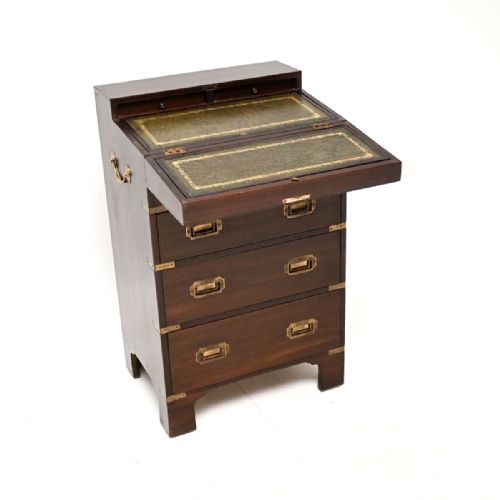
Construction relies heavily on durable timbers like mahogany, oak, camphorwood, and yew wood, selected for their resilience against splitting during transit. Makers utilised sectional building methods, allowing larger items like chests of drawers and desks to separate into manageable blocks for carriage.
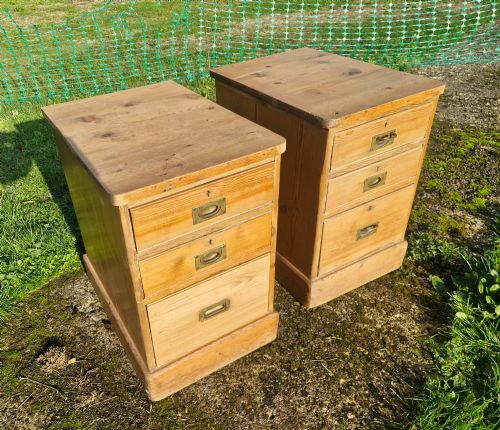
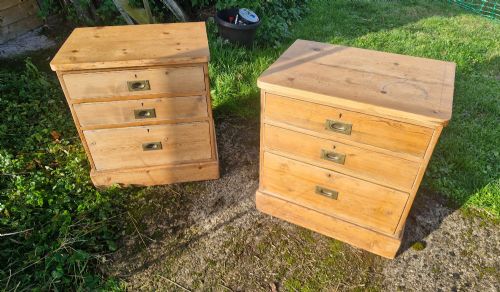
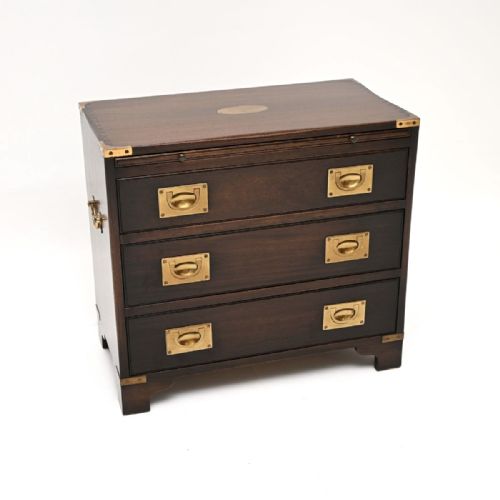
Brass corners, strapwork, and recessed flush handles were fitted into the wood to prevent catching and to protect vulnerable edges from impact. Leather inserts on writing surfaces and textile elements added utility while keeping overall weight strictly managed.
Military Style Furniture Retail Price Guide 2026
Typical asking prices for military style furniture among the pieces listed under this phrase on Sellingantiques today, from the lower quarter to the upper quarter. They describe what is for sale here now, not the wider market.
Materials appearing across the inventory include solid mahogany, oak, camphorwood, yew wood, and rosewood paired with brass.
Assessing quality
Quality reveals itself in the precision of the brass work and how tightly the recessed mounts sit flush against the timber. Superior pieces display crisp joinery and well-fitted internal partitions rather than superficial surface decoration.
The choice of solid timber versus secondary woods alters the integrity of a piece, with denser hardwoods commanding greater structural longevity. Original brass fittings and functioning locks distinguish finer examples from later replacements.
J. Herbert McNair
The Military Style Furniture Glossary
- Campaign handle
- A metal pull designed to fold flat into a recess so it does not project beyond the face of a drawer during transport. This prevents snagging on canvas covers or packing crates.
- Brass bound
- Edges and corners reinforced with brass plates and strips to withstand rough handling on the march or at sea. It adds structural strength to heavy timber boxes.
- Camphorwood
- An aromatic timber frequently used for campaign trunks and chests because its scent naturally deters insects. It provides a lightweight yet tough shell.
- Pedestal desk
- A heavy writing table supported by two vertical banks of drawers, sometimes made in modular sections for field use. These provide substantial surface area and storage.
Military Style Furniture: Frequently Asked Questions
What is military style furniture?
Military style furniture comprises portable pieces designed for officers on campaign, featuring robust timbers, reinforced brass corners, and folding or sectional elements.
These items were built to withstand rough transport while providing domestic convenience in temporary quarters.
How do I identify campaign handles?
Campaign handles are hinged drawer pulls that drop flush into a recess carved into the wood. This design ensures nothing protrudes to catch on ropes or packing materials during a journey.
On older pieces, these are usually made of brass and held in place by small screws.
Where was camphorwood used?
Camphorwood was primarily utilised for making travelling trunks and chests intended for tropical service. The natural oils in the timber helped protect stored uniforms from moths and damp conditions.
Such trunks often retain a distinct herbal scent even after many decades of use.
How do I style these pieces?
These works suit both traditional and contemporary interiors, acting as focal points in studies, living rooms, or hallways. Their dark timbers and metallic accents pair well with neutral walls and tactile fabrics.
Keep surrounding decor uncluttered to let the structural lines and brass details stand out.