






Military Officer Sea Chest
A military officer sea chest is a robust travel trunk designed for naval and land service, offering rugged utility and historic character.
Military Officer Sea Chest
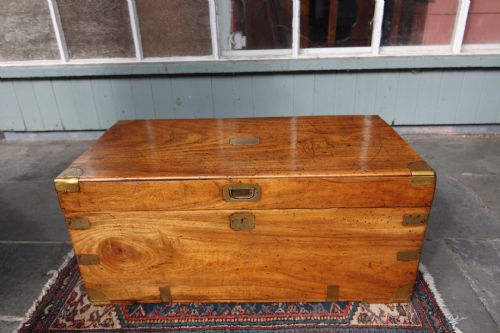
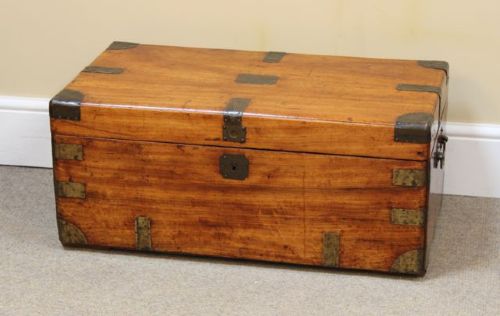
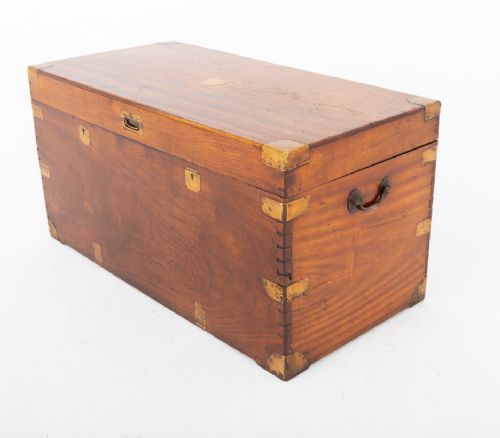
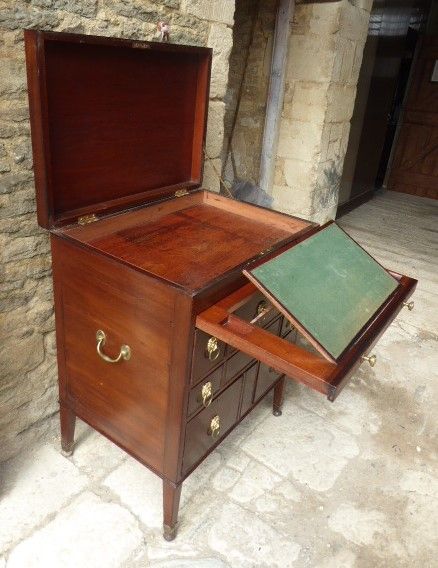
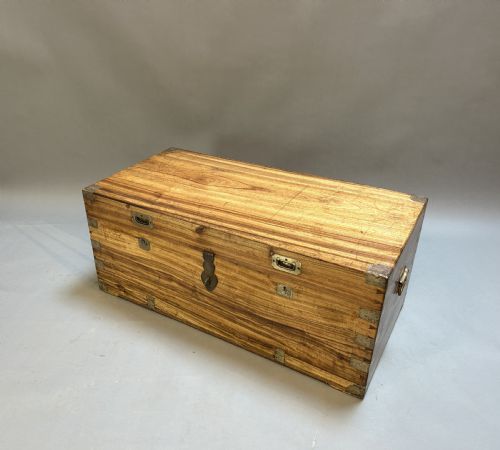
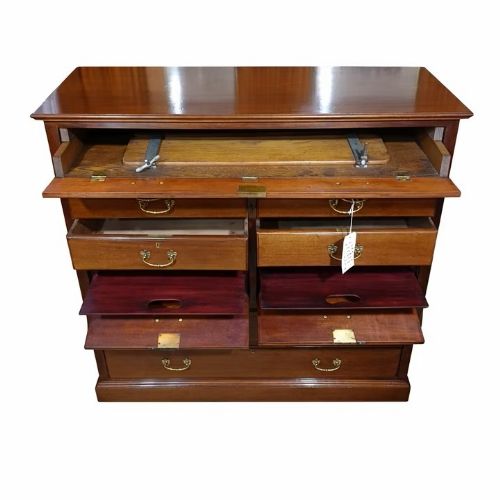
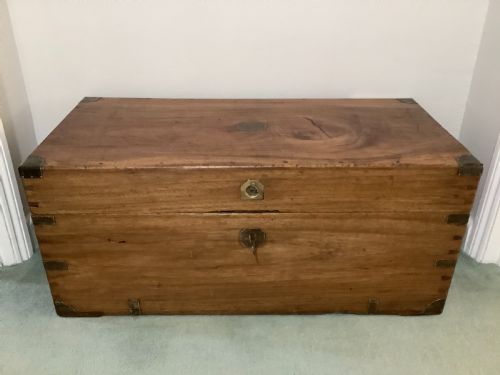
A military officer sea chest is a practical storage trunk constructed for service officers on the move during the eighteenth, nineteenth, and early twentieth centuries. These pieces appear most frequently in camphor wood and mahogany, often featuring distinctive sectional designs meant for easy transport by ship or carriage. Buyers will encounter various configurations ranging from simple blanket boxes to fitted desks and chests of drawers.
The materials selected for these trunks served a distinct purpose in protecting belongings from moisture and rough handling during long campaigns. Camphor wood provided a natural insect repellent property while mahogany offered durability and a formal appearance suitable for an officer's quarters. Brass mountings and recessed handles protected vulnerable corners and provided secure grip points for lifting heavy loads.
How they were made
Makers constructed these trunks using dense timbers such as camphor wood and mahogany, joined to withstand the strains of travel. Pine occasionally appears as a secondary timber for internal framing or subsidiary panels.
Brass fittings and corner brackets were screwed firmly into place to reinforce the structure against impacts. Iron straps and hinges provided additional strength, while baize linings occasionally protected delicate contents inside.
Materials recorded across the inventory include brass, iron, pine, and baize alongside primary tropical hardwoods.
What varies in quality
The refinement of the brass work and the choice of primary timber separate standard utility trunks from finer officer pieces. Solid camphor wood or well-figured mahogany combined with heavy brass mounts indicate a higher grade of construction intended for senior personnel.
Internal arrangement also distinguishes better examples, where clever partitioning and integrated drawers reveal meticulous cabinetmaking. The crispness of the joinery and the survival of original inscriptions or keys further elevate the standing of an individual chest.
The Military Officer Sea Chest Glossary
- Campaign chest
- A portable piece of furniture designed to dismantle or travel easily during military operations. These items typically feature flush handles and reinforced corners to endure transit.
- Camphor wood
- An aromatic timber prized for its resistance to insects and damp conditions. It formed the primary material for many tropical service chests.
- Brass mounting
- Protective metalwork applied to the corners, edges, and handles of travel chests. This reinforcement absorbed knocks and prevented splitting.
- Baize
- A coarse woollen material used to line the interiors of trunks and desks. It provided a soft surface for storing uniforms and personal effects.
- Recessed handle
- A grip set flush into the surface of the wood so it does not project beyond the sides. This design allowed chests to pack tightly into the hold of a ship.
Military Officer Sea Chest: Frequently Asked Questions
How were sea chests used?
Officers utilised these chests to transport uniforms, maps, and personal belongings across oceans and battlefields. The sturdy construction ensured contents remained protected from rough seas and damp weather.
Inside, the space accommodated daily necessities, while the exterior design allowed handlers to rope and hoist the trunks onto carts and vessels with ease.
Where were campaign chests placed?
These trunks served dual purposes as travelling storage and temporary furniture inside campaign tents or ship cabins. Officers often used the flat top as a surface for writing or resting equipment.
When stationary, the chest sat at the foot of a cot or within an officer's quarters, keeping essential gear organised and accessible.
How do I care for camphor wood?
Camphor wood requires minimal maintenance, benefiting from occasional dusting with a dry cloth. Avoid placing the chest in direct sunlight or near intense heat sources to prevent the timber from drying out.
The natural aromatic oils within the wood remain active over time, continuing to protect the interior without requiring chemical treatments.
Are these chests waterproof?
While the dense timbers and fitted lids offered strong resistance to rain and spray, they were not entirely watertight submersible containers. The construction aimed to repel moisture rather than endure complete immersion.
Rubber seals did not exist in this era, so reliance fell upon tight joinery and the natural density of woods like mahogany and camphor.