
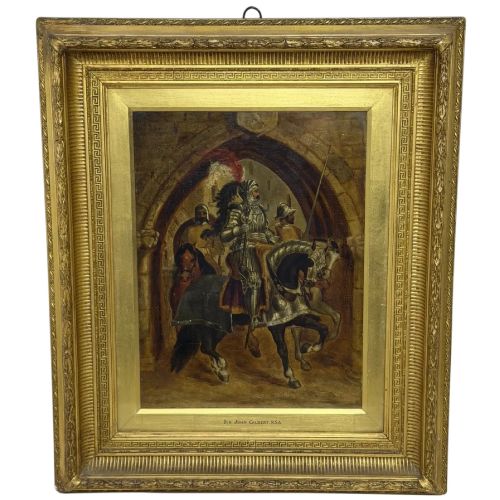


Military Equestrian Picture
A military equestrian picture brings centuries of cavalry charges, regimental portraits, and battlefield skirmishes straight to your wall.
Military Equestrian Picture
A military equestrian picture depicts horses and riders in regimental, sporting, or campaign settings, capturing the historical link between cavalry and mounted forces. You will encounter works spanning the eighteenth, nineteenth, and early twentieth centuries, reflecting changing artistic approaches to military subjects.
The selections available here range from detailed nineteenth-century watercolours of named regiments to eighteenth-century oil paintings of cavalry skirmishes. Individual portraits of horses and depictions of garrison life also appear frequently across paper, canvas, and porcelain mediums.
Framed artworks and wall plaques dominate the form, preserving historical uniform details and spirited animal studies. These pieces bridge British sporting art with military history, offering a distinct visual record of past horsemanship.
Materials and methods
Artists relied primarily on oil paint on canvas or watercolour on paper, applying pigments to capture the dynamic movement of horses and the intricate details of military uniforms. Gilt wood frames frequently complement these works, adding a formal structure to the composition.
Porcelain served as an alternative medium for wall plaques, offering a durable surface for painted military subjects. Artisans combined traditional drawing and painting techniques to ensure accurate depictions of regimental attire and equestrian anatomy.
Several horses in these military scenes possess more distinct expressions than the soldiers riding them.
Assessing quality and execution
Quality rests on the precision of the draughtsmanship and the artist's ability to render the anatomy of both horse and rider with anatomical conviction. Superior works demonstrate a confident handling of light and atmosphere, particularly in complex battle or garrison scenes.
The fidelity of historical uniform details and the condition of the paper, canvas, or porcelain surface further distinguish finer examples. Original framing and attribution to recorded artists elevate the standing of a piece within this genre.
Sir John Gilbert RA·Gilbert Scott Wright·Thomas Mackay·Snaffles·George Cattermole
The Military Equestrian Picture Glossary
- Watercolour
- A painting method where fine pigment is suspended in water-based solution, typically applied to paper. It allows for delicate washes and precise detailing found in many military sketches.
- Oil paint
- A slow-drying paint made with pigments suspended in a drying oil, commonly linseed. This medium provides rich colour depth and durability on canvas.
- Giltwood
- Wood carved and covered with a thin layer of gold leaf or gold paint. Frames utilising this finish are standard for framing fine paintings.
- Wall plaque
- A decorative object designed for mounting on a vertical surface. Examples in this category employ porcelain to display painted military scenes.
- Cavalry
- Soldiers who fought on horseback. This military branch is the central subject of many equestrian artworks.
Military Equestrian Picture: Frequently Asked Questions
What periods do these pictures cover?
The selections span from the eighteenth century through the Victorian era and into the early twentieth century.
Most items date from the nineteenth and early twentieth centuries, reflecting the height of British military art production.
How were these artworks originally displayed?
Many oil paintings and watercolours were framed for display in officer messes, regimental headquarters, or private country homes.
Smaller prints and watercolours were often kept in portfolios or hung in domestic studies to honour military service.
Are these works signed by the artists?
Several pieces feature signatures, monograms, or studio attributions linking them to known military and sporting artists.
Unsigned works often rely on stylistic evidence, subject matter, and period framing to indicate their origin.
What mediums are most common?
Watercolour and oil paint represent the primary mediums used to capture these equestrian and military subjects.
Paper, canvas, and porcelain support the painted imagery, housed within traditional wooden or gilt frames.