
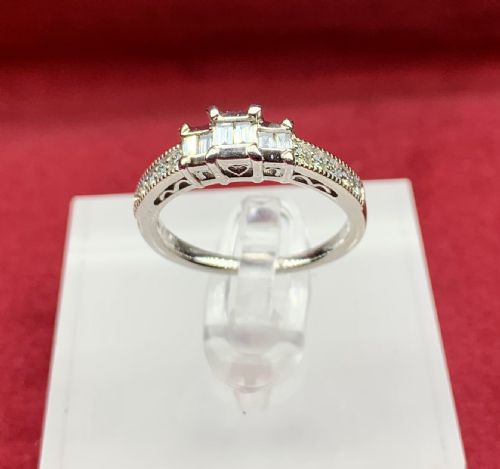
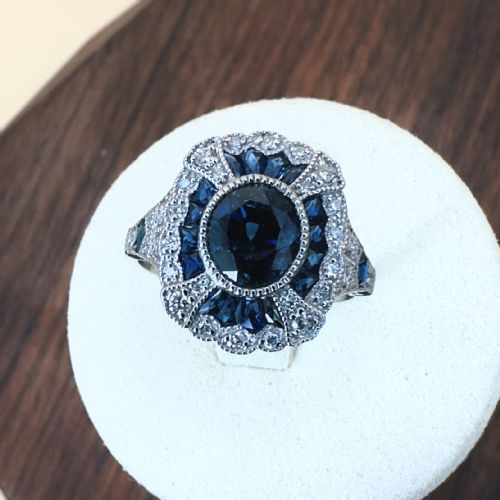


Milgrain Diamond Dress Ring
A milgrain diamond dress ring brings together delicate beaded metalwork and sparkling stones, offering a distinctive period aesthetic that collectors prize for everyday wear or evening elegance.
Milgrain Diamond Dress Ring
A milgrain diamond dress ring is defined by its characteristic textured border of tiny metal beads that frames the gems. These pieces frequently appear in cluster, panel, and three-stone formations from the Art Deco era through the mid-twentieth century.
The most common examples on this page date from the nineteen-thirties, showcasing platinum or white gold settings alongside old cut diamonds and sapphires. Buyers seek these items for their geometric symmetry and the intricate craftsmanship typical of early twentieth-century jewellery workshops.
Mid-century and later variations also emerge in the selection, maintaining the classic cluster arrangement while introducing newer design influences. Each piece functions primarily as a dress or cocktail ring, designed to catch the light from across a room.
How these rings were made
Makers constructed these rings predominantly in platinum and eighteen-carat white gold, metals chosen for their strength and ability to hold fine detail. The distinctive milgrain edge was applied using a specialised knurling tool that raised tiny beads of metal along the stone borders.
Diamonds used in these pieces are largely old cut, transitional cut, or rose cut, paired with coloured gems including sapphires, pink sapphires, emeralds, and rubies. Artisans set these stones by hand into precise bezels or claw mounts, integrating geometric motifs such as baguettes and round cuts.
Several rings include secret sapphire shoulders designed to wink at anyone sitting beside you at dinner.
What varies in quality
Quality in these rings rests upon the crispness of the milgrain work and the structural integrity of the metal setting around each stone. Superior examples display uniformly spaced beads and securely seated gems that show no looseness within their bezels.
The choice and cut of the central diamonds and accompanying sapphires or emeralds dictate the upper tier of the range. Better pieces maintain original geometric proportions without heavy thinning of the band or clumsy re-tipping of the claws.
The Milgrain Diamond Dress Ring Glossary
- Milgrain
- A decorative edging technique featuring a line of tiny, raised metal beads. This finish creates a soft border that catches light and softens the transition between metal and skin.
- Old Cut Diamond
- A diamond cut by hand before modern machinery standardised proportions, typically featuring a small table and a high crown. These stones exhibit a distinctive chunky facet pattern.
- Cluster Ring
- A ring style featuring a central stone surrounded by a group of smaller stones. This arrangement maximises visual impact and creates a flower-like or geometric silhouette.
- Transition Cut
- A diamond cut used during the period when cutters moved from old European cuts to modern brilliants. It bridges the older hand-cut aesthetic with modern symmetry.
- Baguette
- A step-cut gemstone, usually rectangular, with straight parallel facets. Jewelers utilise these stones to create sharp linear contrasts in Art Deco designs.
Milgrain Diamond Dress Ring: Frequently Asked Questions
How do I care for my milgrain diamond dress ring?
Clean your ring gently using warm water, mild soap, and a soft brush to remove dust from around the milgrain beads and stone settings. Avoid harsh chemical dips that can damage softer coloured stones like emeralds.
Store the ring separately in a fabric-lined box to prevent the platinum or gold settings from scratching against other items in your collection.
Can these rings be resized?
Most platinum and gold rings from this era can be altered by a skilled jeweller who works with antique pieces. The process requires care to preserve any delicate engraving or milgrain work near the shoulders.
Consult a specialist who understands vintage construction methods to ensure the structural integrity of the band remains intact after adjustment.
How do I identify an Art Deco ring?
Art Deco rings are characterised by geometric motifs, symmetry, and the use of white metals such as platinum paired with contrasting coloured sapphires, emeralds, or rubies. The settings often incorporate calibré-cut stones and fine milgrain borders.
Examine the construction for hand-finished details and older diamond cuts that differ from modern brilliant-cut stones.
Are these rings suitable for daily wear?
These pieces function well for everyday wear provided they are checked periodically by a jeweller for loose stones or worn claws. Platinum and eighteen-carat gold offer good durability for daily use.
Take the ring off during heavy manual tasks or sports to protect the delicate milgrain edges and gemstone settings from impact.