



Middle Eastern Wood Table
A middle eastern wood table brings intricate geometry and rich surface inlay into a room, offering functional beauty crafted to catch the eye.
Middle Eastern Wood Table
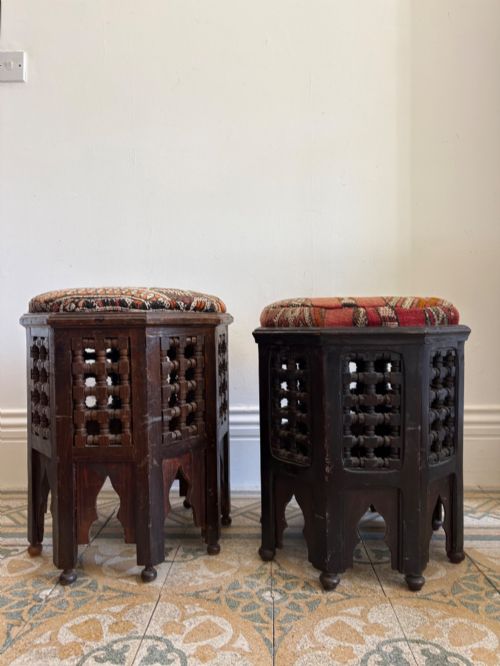
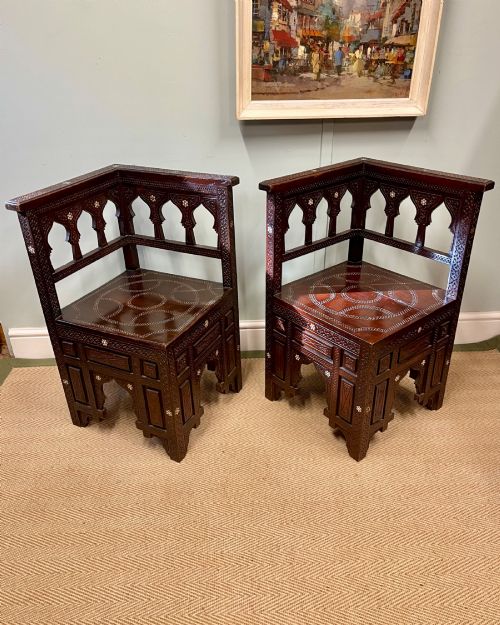
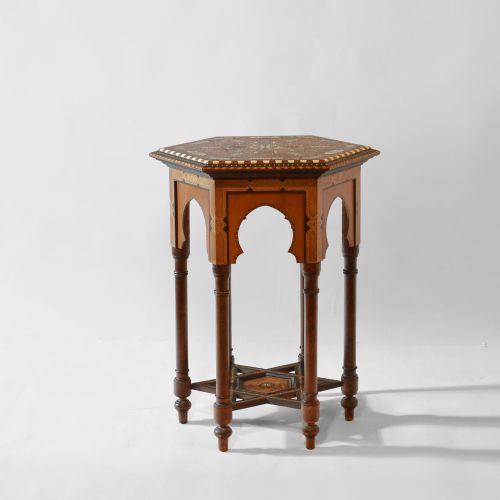
A middle eastern wood table spans low stools, occasional stands and games tables originating from the nineteenth and early twentieth centuries. These pieces encompass Moorish Revival, Syrian, Ottoman and Persian design traditions, reflecting varied regional aesthetics from the wider region.
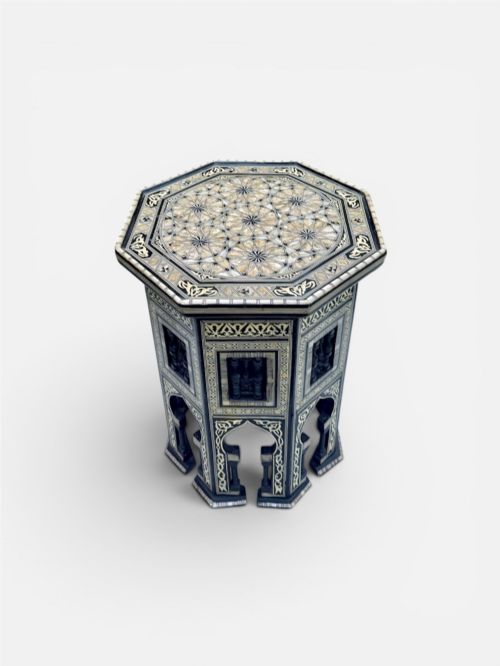
Octagonal and hexagonal side tables dominate the selection, frequently accompanied by pairs of low stools and specialised coffee or games tables. The forms serve practical purposes as lamp stands, tea tables or display surfaces while introducing distinct architectural silhouettes.
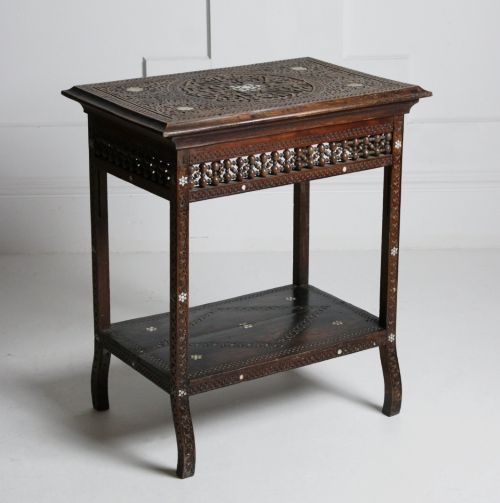
Most examples date from the late nineteenth century up through the nineteen-thirties, showing enduring craftsmanship across decades of production for both domestic use and export. Collectors encounter diverse structural formats ranging from two-tier stands to folding or fixed octagonal frames.
How they were made
Construction relies upon dense hardwoods and walnut as the primary structural body, providing a stable foundation for complex decorative schemes. Artisans shaped these timbers through meticulous hand carving to establish geometric panels and supportive frames.
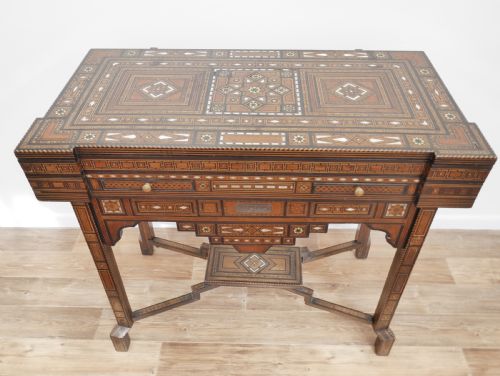
Surface ornamentation integrates natural materials such as bone and mother-of-pearl, inlaid in detailed mosaic patterns across the wood. Additionally, hammered brass tops frequently feature engraved motifs, including zodiac signs, contrasting with the warm tones of the timber framework.
Some tables come fitted with seats covered in woven kilim fabric, merging textile arts directly with functional wooden seating.
What varies in quality
The precision and density of the inlay work dictate the visual impact of a piece, with tighter geometric tessellation representing higher workshop standards. Complete retention of bone and mother-of-pearl elements without modern replacements preserves the integrity of the original surface.
Depth and crispness of the hand carving separate standard production items from finer artistic commissions. Subtle variations in timber selection, from plain hardwoods to rich walnut bases, further distinguish individual examples within the broader stylistic traditions.
The Middle Eastern Wood Table Glossary
- Octagonal
- Having eight sides. This geometric plan is characteristic of many traditional tables and stools in this category.
- Mother-of-pearl
- The iridescent inner layer of mollusc shells. Artisans cut this material into small geometric tesserae for surface inlay.
- Moorish Revival
- An architectural and decorative style popular in the nineteenth century. It reinterprets traditional Islamic design motifs for Western interiors.
- Damascus
- Pertaining to the city in Syria renowned for woodwork and inlay. Tables bearing this attribution display distinct regional joinery and decorative layouts.
- Two-tier
- Featuring an upper surface and a lower shelf. This configuration provides additional display space while maintaining a compact footprint.
Middle Eastern Wood Table: Frequently Asked Questions
How do I clean a pearl inlay table?
Dust the surface regularly with a soft, dry cloth to prevent dirt accumulation within the intricate geometric joints. Avoid liquid cleaners and harsh chemical polishes, which can loosen historical adhesives or damage delicate bone and shell elements.
Condition the exposed wood sparingly using appropriate natural waxes if the timber appears dry. Gentle maintenance preserves the fragile materials embedded in the wooden framework over time.
Are these tables sturdy enough for daily use?
Most occasional tables and stools function reliably for holding lamps, small objects or drinks during regular social gatherings. Their solid hardwood construction provides adequate stability for everyday domestic placement.
Avoid placing excessively heavy items on folding or multi-tiered variants to protect their historical joinery. Thoughtful placement ensures these decorative objects remain functional within a modern home.
How do I distinguish Syrian from Persian pieces?
Syrian items frequently showcase dense geometric micro-mosaic inlay utilising mother-of-pearl and bone set into walnut or hardwood structures. These pieces emphasise intricate surface patterning across octagonal and hexagonal tops.
Persian examples often incorporate engraved brass trays or surfaces mounted onto folding wooden bases. Understanding these material combinations helps identify the regional workshop traditions behind specific tables.
Where should I place an octagonal table?
An octagonal stand functions effectively as a bedside table, a corner display piece or beside a low seating arrangement. Its multifaceted shape allows it to integrate smoothly into varied room layouts without dominating the floor space.
The compact proportions of these tables make them versatile additions to hallways or studies. Their decorative surfaces draw the eye naturally when paired with simple surrounding decor.