





Middle Eastern Scene Art
Middle Eastern scene art captures historic vistas and figures through period watercolours, oils, and prints.
Middle Eastern Scene Art
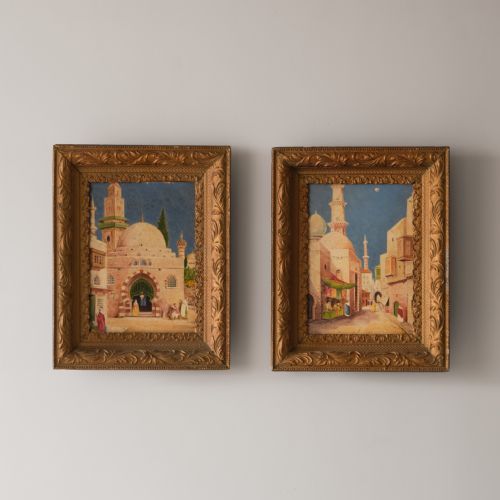
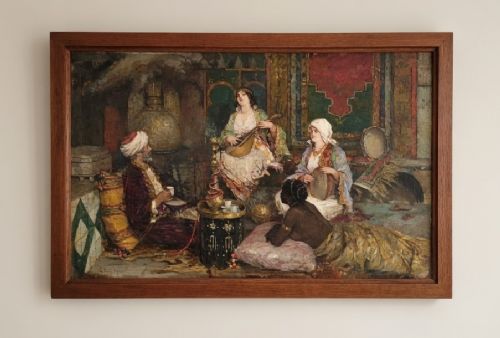
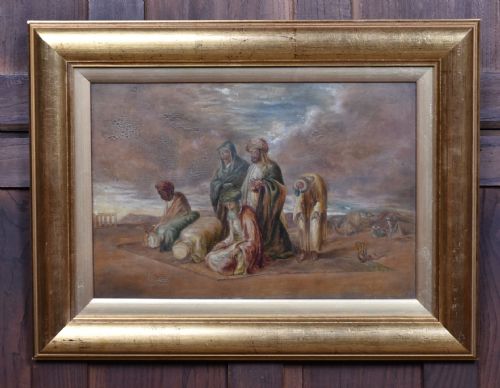
When you search for middle eastern scene art, you enter a world of nineteenth and twentieth-century paintings and prints documenting landscapes, towns, and figures. These works range from naive depictions of old Bagdad to detailed watercolours and oils depicting Egyptian buffalo, Bedouin tribesmen, and the Suez Canal.
You will encounter pieces executed in watercolours, gouache, oils on canvas or board, and framed prints. Styles stretch from Victorian Orientalism and naive art to mid-century impressionism, reflecting diverse artistic interpretations of the region over multiple decades.
Materials and Techniques
Artists captured these subjects using paper, watercolour, gouache, and oil on canvas or board. Frames often utilise wood, gilt wood, gilded wood, or ebonised finishes to house the works.
Techniques span precise impressionist brushwork and detailed watercolour washes to naive painting styles. Surviving pieces demonstrate the enduring application of traditional pigments upon canvas and paper substrates.
Middle Eastern Scene Art Retail Price Guide 2026
Typical asking prices for middle eastern scene art among the pieces listed under this phrase on Sellingantiques today, from the lower quarter to the upper quarter. They describe what is for sale here now, not the wider market.
Camels and buffalo share the artistic stage with bustling town markets across the decades.
Factors of Quality
Quality rests upon the skill of the brushwork and the accuracy of the regional depiction. Works by documented artists display superior handling of light and architectural detail compared to naive pieces.
The condition of the original paper or canvas, alongside the integrity of period wooden and gilt frames, influences the overall standing of each painting.
Edwin Lord Weeks·Gabriel Puig Roda·William James Muller·V. Zirakian·Otto Pilny·Hugo Vogel·Richard Wilson
The Middle Eastern Scene Art Glossary
- Orientalism
- Artistic style depicting scenes and people of the Middle East, popular during the nineteenth and twentieth centuries.
- Gouache
- An opaque water-based paint that provides solid areas of colour in works on paper.
- Impressionism
- A style focusing on light and spontaneous brushstrokes rather than rigid detail, seen in mid-century examples.
- Naive art
- Characterised by a childlike simplicity in perspective and proportion, visible in certain regional paintings.
Middle Eastern Scene Art: Frequently Asked Questions
What periods do these paintings span?
The available pieces stretch from the eighteenth century through the nineteenth century and into the mid-twentieth century.
Most examples originate from the nineteenth and early twentieth centuries, reflecting the height of Orientalist art production.
What mediums were used?
Artworks are executed in watercolour, gouache, and oil on canvas or board, accompanied by period prints.
Frames constructed from wood, gilt wood, and ebonised materials frequently accompany the paintings.
How do I care for these works?
Keep watercolours and prints away from direct sunlight to prevent fading of the paper and pigments.
Maintain stable indoor humidity levels to protect wooden frames and canvas supports from environmental damage.
What subjects typically appear?
Common subjects include Arabian landscapes, village scenes, the Pyramids at Gizeh, and the Suez Canal.
Figurative compositions frequently depict Bedouin tribesmen with camels, farmers with buffalo, and town life.