


Middle Eastern Occasional Table
A middle eastern occasional table brings intricate geometric warmth and rich inlaid textures to a quiet corner.
Middle Eastern Occasional Table
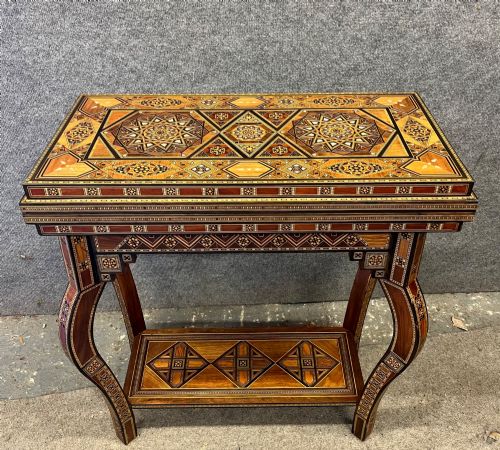
A middle eastern occasional table spans compact side surfaces, folding Damascus pieces, and substantial centre stands built for various rooms. These pieces emerge predominantly from the nineteenth century through the early decades of the twentieth century.
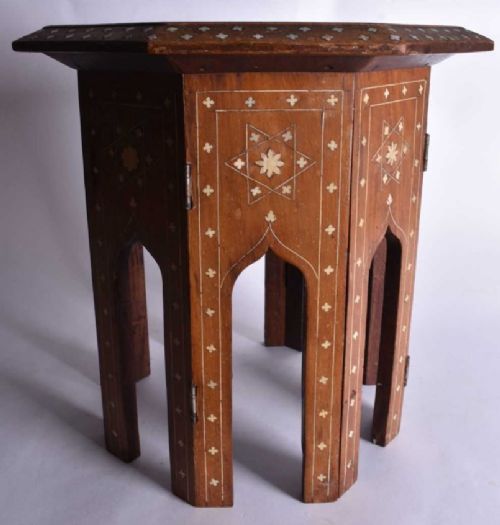
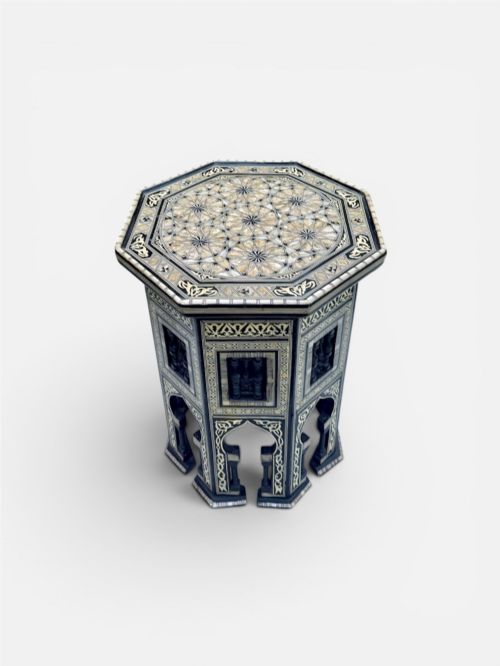
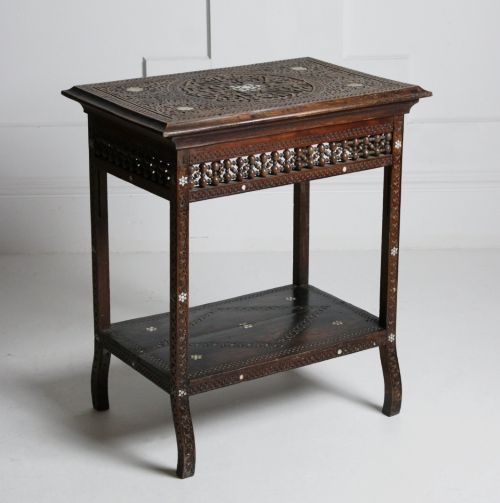
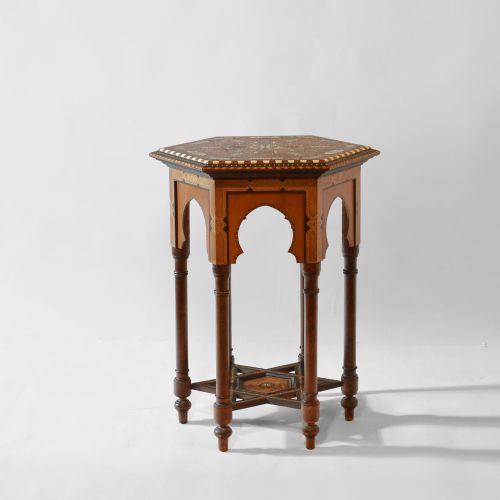
The octagonal side table represents the most common form encountered here, alongside hexagonal kursi tables and two-tier Syrian designs. Makers shaped these items for practical domestic use as games tables, tea stands, or Quran supports.
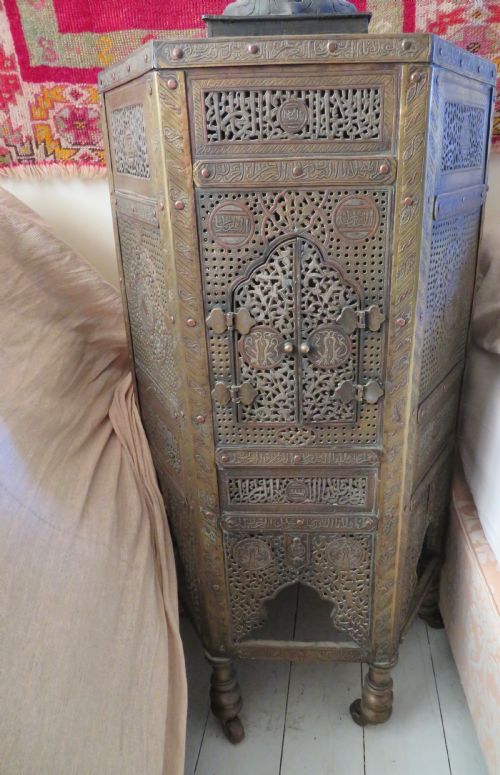
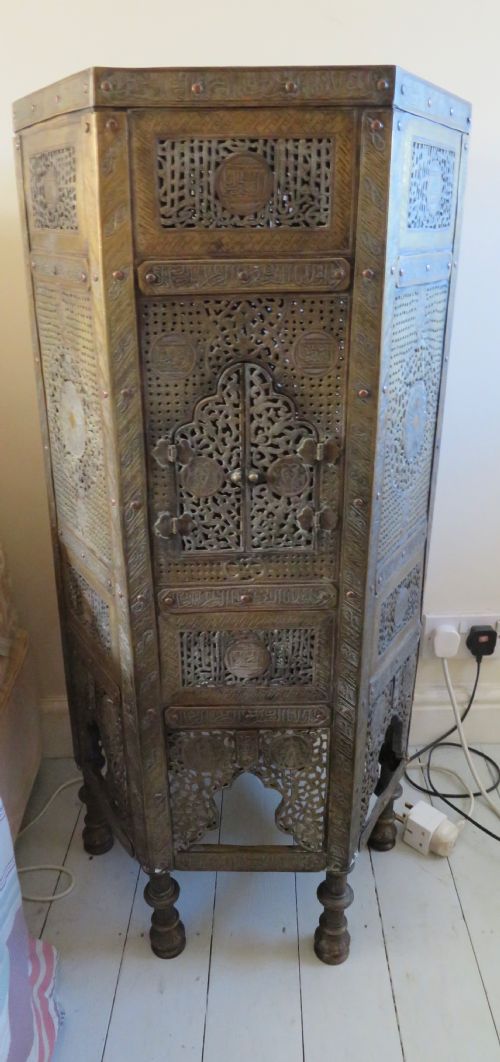
Geographic influences cross stylistic boundaries, drawing on Mamluk Revival, Moorish Revival, Syrian Ottoman, and Persian traditions. Buyers encounter everything from intricately carved hardwood frames to heavy brass surfaces.
Surfaces demonstrate remarkable geometric ambition, utilising octagonal and hexagonal tops designed to catch the light in a hallway or drawing room. Each piece reflects the specific decorative vocabulary of its regional workshop origin.
Materials and Construction
Carpenters constructed the structural frames using walnut, hardwood, and collapsible folding elements that allow the top to lift off cleanly. These timbers provide a sturdy foundation for extensive decorative surface work.
Artisans inlaid mother-of-pearl, bone, and white metal into the wood to create complex geometric tessellations and star patterns. Metalworkers also hammered brass and copper bases, applying openwork details and intricate inlay directly onto the alloy.
Carvers worked the timber by hand, cutting deep recesses for the delicate shell panels and securing them with traditional adhesives. Brass tables often feature mixed-metal inlay techniques, combining copper and white metal on a dark brass ground.
The documented objects span side tables, games tables, centre tables, and dedicated Quran stands originating between the nineteenth century and nineteen-thirty.
Assessing Quality and Execution
Quality rests upon the precision of the geometric inlay and the density of the mother-of-pearl or bone panels used across the surface. Finer examples maintain tight joints where individual wooden or shell tesserae meet without excessive filler.
The depth and clarity of the hand-carved woodwork distinguish standard production from superior craftsmanship. Heavy brass tables show distinction in the crispness of the openwork piercing and the permanence of the copper and white metal inlay.
Structural integrity matters significantly, particularly in folding tables where hinges and interlocking wooden panels must align correctly over decades of use. Tables retaining their complete original inlay display a higher level of preservation.
The Middle Eastern Occasional Table Glossary
- Kursi
- A low hexagonal or octagonal table or stand traditionally used in Middle Eastern domestic interiors. It often serves as a support for a tray, Quran, or decorative object.
- Damascus table
- An occasional table originating from or styled after the traditions of Damascus, typically featuring extensive geometric inlay on walnut or hardwood. These pieces frequently employ folding bases.
- Cairoware
- Metalwork originating from Cairo, typically constructed from brass and inlaid with copper and silver or white metal. The style gained popularity during the late nineteenth and early twentieth centuries.
- Mamluk Revival
- A design style inspired by the art and architecture of the Mamluk Sultanate, characterised by bold geometric patterns and intricate metalwork. It saw a significant revival during the Victorian era.
- Octagonal
- A geometric shape possessing eight sides, which forms the predominant top configuration for these side and occasional tables. This layout accommodates complex mosaic inlay patterns.
Middle Eastern Occasional Table: Frequently Asked Questions
How do I clean a mother of pearl inlaid table?
Dust the surface regularly with a soft, dry cloth to prevent particles from settling into the intricate geometric crevices. Avoid harsh liquid cleaners or excessive moisture, which can loosen the natural shell and bone elements from their wooden beds.
Apply a tiny amount of microcrystalline wax to the timber if the wood appears dry, but keep polish away from porous inlay materials. Gentle care preserves the historical patina and prevents damage to the adhesive holding the tesserae.
Are folding Damascus tables structurally stable?
The folding mechanism relies on interlocking wooden panels that form a rigid base when the top is placed on top. They are designed for regular domestic use as side or occasional surfaces rather than heavy weight-bearing duties.
Check that the wooden hinges and slots align properly without excessive wobble when assembled. Careful handling during movement ensures the delicate joints remain secure over time.
What is the difference between Syrian and Cairo ware tables?
Syrian tables generally feature wooden frames heavily inlaid with mother of pearl, bone, and contrasting timbers in geometric star patterns. They emphasise carpentry and mosaic surface work.
Cairo ware tables consist primarily of brass, copper, and white metal, featuring hammered surfaces and intricate openwork. They derive their visual impact from metal inlay rather than shell mosaic.
Where should I place an octagonal occasional table?
An octagonal table functions well as a lamp stand, a bedside table, or a freestanding accent piece in a sitting room. The eight-sided top allows it to fit neatly beside seating without dominating the floor space.
Keep these pieces away from direct heat sources and strong sunlight to protect the aged timber and natural inlay materials. Their compact proportions make them versatile additions to various interior layouts.