




Mid Century Wood Shelving
Mid century wood shelving brings practical display to a room through bookcases, étagères, and wall brackets constructed from rosewood, mahogany, and oak.
Mid Century Wood Shelving
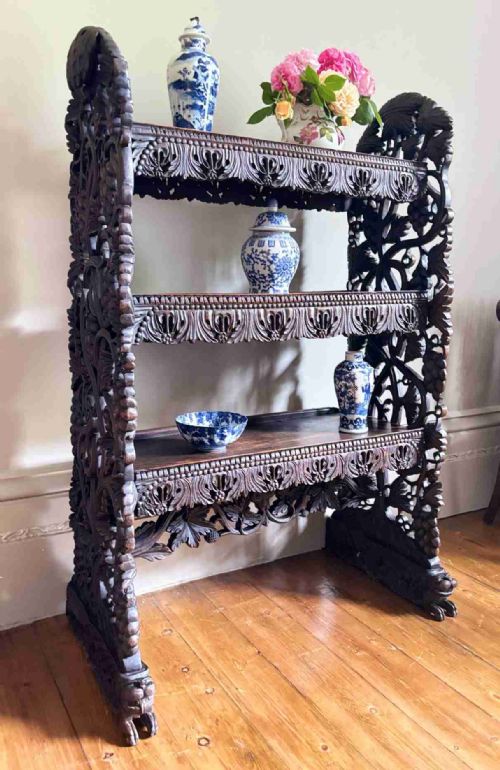
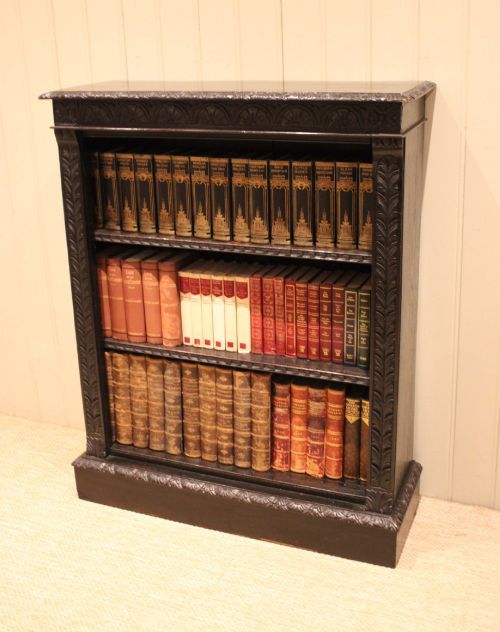
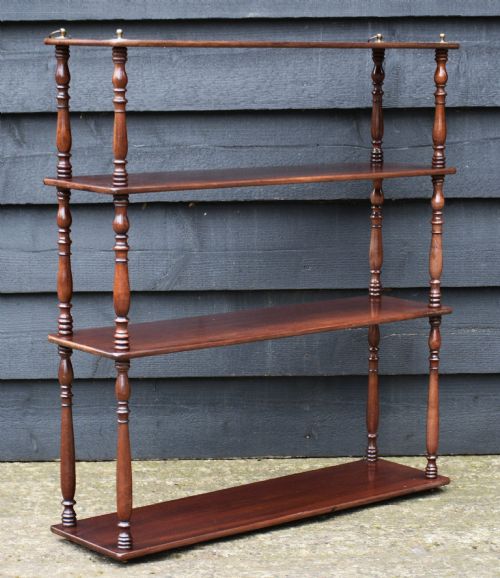
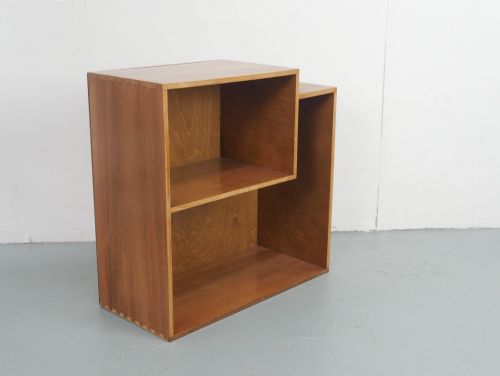
Mid century wood shelving encompasses a variety of open storage forms, ranging from towering bookcases to tiered étagères and wall-hanging brackets. Buyers seeking these pieces will frequently encounter Victorian examples from the mid nineteenth century alongside later twentieth century items.
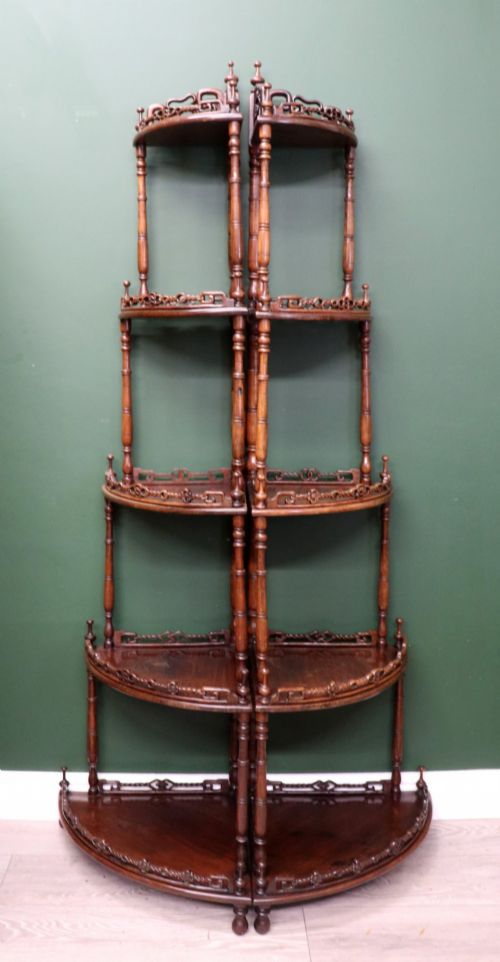
The selection includes specialised storage such as corner whatnots, breakfront bookshelves, and multi-tiered dumb waiters designed for display and utility. These forms originate from distinct periods spanning the Victorian era through the Art Deco movement and the early twentieth century.
Rosewood and mahogany dominate the earlier nineteenth century items, often featuring carved corbels or brass mounts in the French manner. Later twentieth century additions introduce simpler oak constructions and designs associated with specific stylistic manners.
Materials and Construction
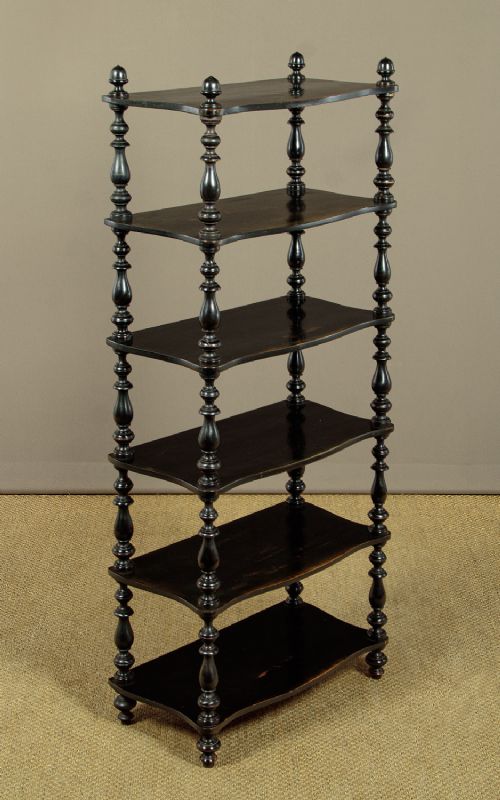
Makers utilised dense hardwoods such as rosewood, mahogany, walnut, and dark oak to build robust frames capable of supporting heavy volumes and display objects. Stained timber and ebonised wood offered alternative finishes that altered the visual weight of the shelving units.
Decorative metal elements, including brass mounts, punctuate the woodwork on pieces influenced by French design aesthetics. Structural detailing relies on carved corbels and tiered tier arrangements joined securely to form stable bookcases, etageres, and wall shelves.
Mid Century Wood Shelving Retail Price Guide 2026
Typical asking prices for mid century wood shelving among the pieces listed under this phrase on Sellingantiques today, from the lower quarter to the upper quarter. They describe what is for sale here now, not the wider market.
Listings feature woods including rosewood, mahogany, walnut, oak, and ebonised timber, spanning periods from the Victorian era to the Art Deco movement.
Distinctions in Craftsmanship
Quality reveals itself in the selection of timbers, where richly figured rosewood or dense mahogany elevate a bookcase above standard utilitarian versions. The execution of carved details, such as corbels or applied mouldings, demonstrates the level of care invested by the maker.
Integration of secondary materials like brass mounts and glass panels distinguishes finer étagères and display stands from plain shelving units. Structural integrity depends on how well the tiers, uprights, and wall brackets join together to withstand daily loading.
The Mid Century Wood Shelving Glossary
- Étagère
- A set of open shelves for displaying small objects or ornaments, often constructed with multiple tiers. These pieces stand independently or hang upon a wall.
- Whatnot
- A movable piece of furniture consisting of several shelves above one another, used for books or ornaments. The form gained popularity during the Victorian period.
- Corbel
- A structural piece of stone or wood projecting from a wall to carry a weight. In shelving, carved wooden versions support the upper tiers or cornices.
- Breakfront
- A piece of furniture whose central section projects forward from the flanking sections. This configuration adds architectural depth to large bookcases.
- Dumb Waiter
- A tiered stand traditionally used for holding food or utensils, adapted in furniture collections for multi-level display. Six tier variations provide substantial vertical shelving.
Mid Century Wood Shelving: Frequently Asked Questions
What is an etagere?
An étagère is an open shelving unit designed specifically for displaying ornaments, small collections, and decorative objects. These pieces rely on multiple tiers to maximise display space without dominating floor area.
Historically used in formal drawing rooms, they provide versatile storage that suits modern living spaces for exhibiting books or ceramics.
How do I style open bookcases?
Open bookcases benefit from a balance of vertical book stacks and horizontal decorative objects to prevent visual clutter. Varying the depth and placement of items creates an engaging arrangement.
Allowing negative space around prized volumes or small sculptures lets the timber grain and construction details of the shelf remain visible.
Where should I place wall brackets?
Wall brackets and hanging shelves require secure fixing points into solid masonry or wall studs to support their wooden structure safely. They function well in narrow hallways or above sideboards where floor space is limited.
Positioning them at eye level draws the gaze upward and creates functional display zones in compact rooms.
How do I care for rosewood furniture?
Rosewood requires protection from direct sunlight and extreme humidity fluctuations to prevent the dense timber from drying or fading. Regular dusting with a soft, dry cloth maintains the polished surface.
Applying occasional appropriate wood waxes preserves the natural lustre of the grain without building up heavy chemical residues.