




Mid Century Pedestal Desk
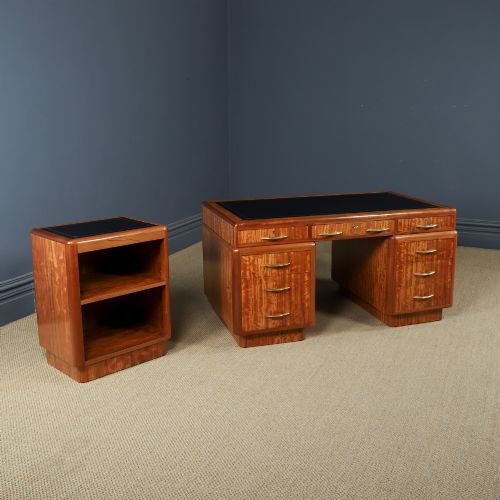
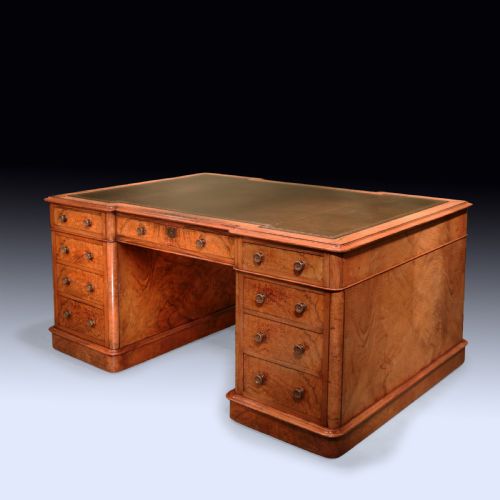
A mid century pedestal desk organises a study with twin banks of drawers and a central workspace, combining functional heft with striking grain.
Mid Century Pedestal Desk
A mid century pedestal desk organises a study with twin banks of drawers flanking a central kneehole, offering both storage and a substantial writing surface. The form encompasses robust office furniture and refined library pieces built for daily service.
Buyers meet examples spanning several eras here, notably mid nineteenth century mahogany and burr walnut iterations alongside 1930s Art Deco oak designs. These pieces range from compact kneehole configurations to expansive double pedestal formats.
The selection includes specialised variants such as military desks, Davenport forms, and exhibition quality pieces featuring inset leather tops. Each provides a distinct architectural presence suited to traditional and modern interiors alike.
How they were made
Cabinetmakers constructed these desks using dense timbers such as mahogany, oak, and walnut, often applying burr veneers or birdseye maple to the primary display surfaces. These woods provided structural stability while showcasing elaborate natural grain patterns.
Brass hardware, including campaign handles and escutcheons, fastened drawers and doors while adding metallic contrast to the dark timber. Secondary linings utilised lighter woods, and writing surfaces frequently incorporated inset tooled leather.
Mid Century Pedestal Desk Retail Price Guide 2026
Typical asking prices for mid century pedestal desk among the pieces listed under this phrase on Sellingantiques today, from the lower quarter to the upper quarter. They describe what is for sale here now, not the wider market.
What varies in quality
The sophistication of the timber selection largely dictates the standing of a desk, with matched burr walnut and figured mahogany commanding greater attention than plain utility oak. Exhibition grade pieces exhibit meticulous grain continuity across multiple drawer fronts.
Construction detail separates standard workshop production from exceptional craftsmanship, visible in hand-cut dovetail joints and original brass fittings. The presence of makers' labels or attribution to known designers elevates the historical interest of the piece.
Étienne Kohlmann
The Mid Century Pedestal Desk Glossary
- Pedestal desk
- A heavy freestanding writing table supported by two separate stacks of drawers forming the pedestals. This configuration creates a central kneehole for the seated user.
- Kneehole desk
- A compact variant of the pedestal desk featuring a recessed central space beneath the writing surface, often flanked by narrow banks of small drawers.
- Burr walnut
- Timber taken from the gnarled growths of a walnut tree, highly prized for its swirling, decorative grain pattern. Cabinetmakers sliced it into thin veneers for statement furniture.
- Birdseye maple
- Hard maple wood exhibiting small, circular eye formations caused by depressed growth rings. It creates a distinctive, mottled surface texture on nineteenth-century pieces.
- Davenport
- A small compact writing desk featuring a sloping, hinged desktop above a set of side drawers. It emerged during the late eighteenth century as a space-saving luxury.
Mid Century Pedestal Desk: Frequently Asked Questions
What is a pedestal desk?
A pedestal desk is a large freestanding writing table supported by two vertical columns of drawers that flank a central space for seating.
These desks provide substantial work surfaces and extensive drawer storage, making them traditional centerpieces for libraries and studies.
How do I care for a leather desk top?
Leather writing surfaces require gentle cleaning with a slightly damp cloth followed by occasional application of neutral leather cream.
Avoid using harsh chemical cleaners or placing hot cups directly on the leather to preserve the original gilt tooling and supple texture.
How do I tell Victorian desks apart from earlier styles?
Victorian desks often display heavier proportions and darker mahogany or walnut timbers compared to the lighter, cleaner lines of eighteenth-century Georgian pieces.
Examine the construction methods inside the drawers and the style of the brass hardware to help determine the period of manufacture.
Can I use an antique desk for daily computer work?
These robust desks accommodate modern technology well, offering ample surface area and sturdy construction for daily professional use.
Ensure that the kneehole height and overall desk dimensions match your seating requirements before positioning computer equipment.