



Mid Century Ladies Watch
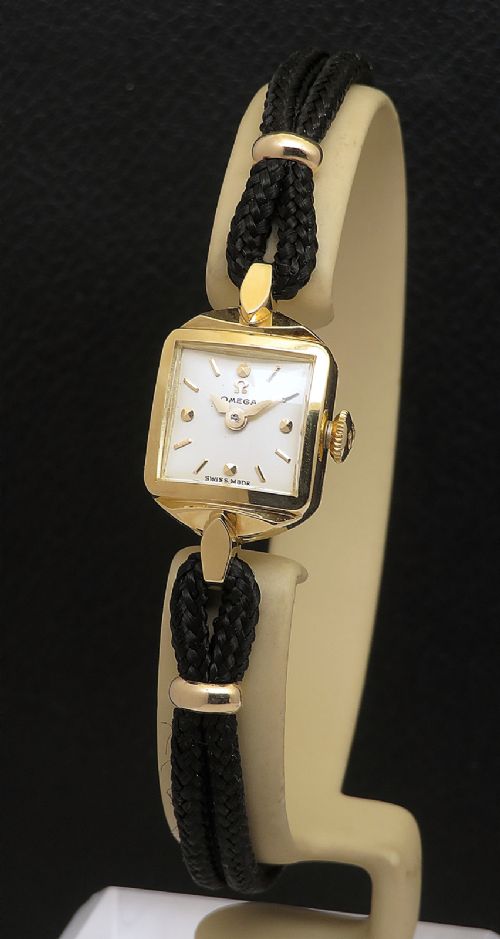
These mid century ladies watch examples are elegant timepieces in gold, platinum, and diamonds, offering refined style and mechanical charm for daily wear or evening events.
Mid Century Ladies Watch
A mid century ladies watch encompasses wristwatches and cocktail watches primarily from the nineteen-fifties and sixties, alongside earlier Art Deco pieces from the nineteen-twenties. These items function as both accurate timekeepers and delicate pieces of jewellery designed for the wrist.
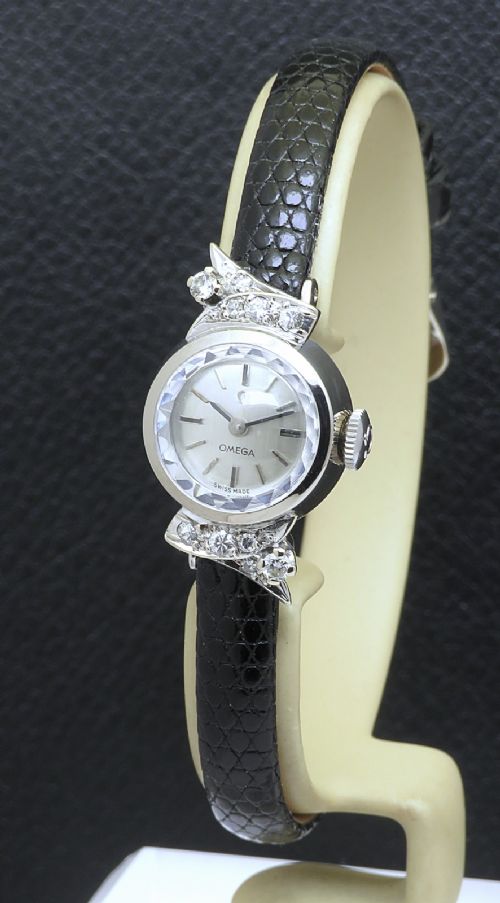
The most common examples on this page are cocktail watches fashioned from white gold or yellow gold, frequently set with diamonds and paired with slender bracelets or straps.
Makers such as Omega, Rolex Tudor, Lanco, Movado, Vertex, Tissot, and Longines dominate the selections, demonstrating the fine watchmaking standards of the period.
How they were made
Watchmakers utilised precious metals including eighteen-carat gold, eighteen-carat white gold, fourteen-carat gold, and platinum to form the cases and integrated bracelets.
Gemset pieces incorporate diamonds mounted securely into platinum or white gold settings, complemented by manual wind mechanical movements housed inside the metal casing.
Straps and bands utilise alternative materials such as leather and fabric to secure the watch head comfortably to the wrist.
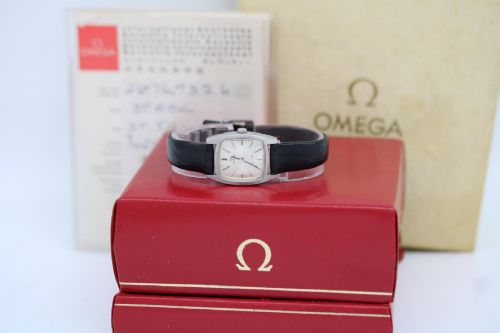
Some watches arrived complete with their original velvet-lined presentation boxes, preserving the exact moment they were first unwrapped decades ago.
What varies in quality
The grade of materials sets the foundation for the piece, distinguishing solid platinum and eighteen-carat gold housings set with substantial diamond carat weights from simpler stainless steel or lower carat gold variants.
The presence of original accessories like fitted boxes and papers elevates the completeness and historical integrity of the watch.
The reputation of the maker, from established houses like Omega and Longines to specialised firms, influences the horological significance and overall desirability of the item.
Omega·Rolex Tudor·Lanco·Movado·Vertex·Tissot·Longines
The Mid Century Ladies Watch Glossary
- Cocktail watch
- A small, decorative ladies watch designed primarily for evening wear, frequently resembling a bracelet and heavily set with diamonds. These pieces prioritise ornamental elegance alongside timekeeping.
- Manual wind
- A mechanical watch movement that requires the owner to turn the crown by hand to tension the mainspring. This traditional mechanism powers the watch without the need for a battery.
- Platinum
- A dense, durable, and naturally white precious metal utilised for high-end watch cases and secure gemstone settings. It offers exceptional strength while retaining a bright, enduring lustre.
- Art Deco
- A design style spanning the nineteen-twenties characterised by geometric lines, stylised motifs, and sleek elegance. Pieces from this era often feature symmetrical patterns and angular gemstone cuts.
- Case
- The metal housing that protects the internal watch movement, dial, and hands from dust and moisture. Cases are shaped from gold, platinum, steel, or white gold.
Mid Century Ladies Watch: Frequently Asked Questions
How do I wind a manual watch?
Gently turn the small crown on the side of the watch case clockwise between your thumb and forefinger until you feel slight resistance. Stop turning immediately once you meet this resistance to avoid overwinding and damaging the internal spring.
Perform this action at the same time each day if you wear the watch regularly to keep the mechanical movement running accurately.
Can I wear a cocktail watch daily?
Cocktail watches were originally designed for evening events and formal occasions rather than rugged daily tasks. Their delicate bracelets and gemstone settings require careful handling during everyday activities.
Reserve these decorative pieces for special outings or light social wear to preserve their precious metal finishes and secure stone settings.
How do I tell Art Deco from mid-century?
Art Deco pieces from the nineteen-twenties typically display sharp geometric angles, linear symmetry, and stark contrasts in design. Mid-century items from the nineteen-fifties and sixties often adopt softer organic curves and integrated bracelet designs.
Examining the overall case silhouette and bracelet integration usually reveals the distinct aesthetic priorities of each era.