



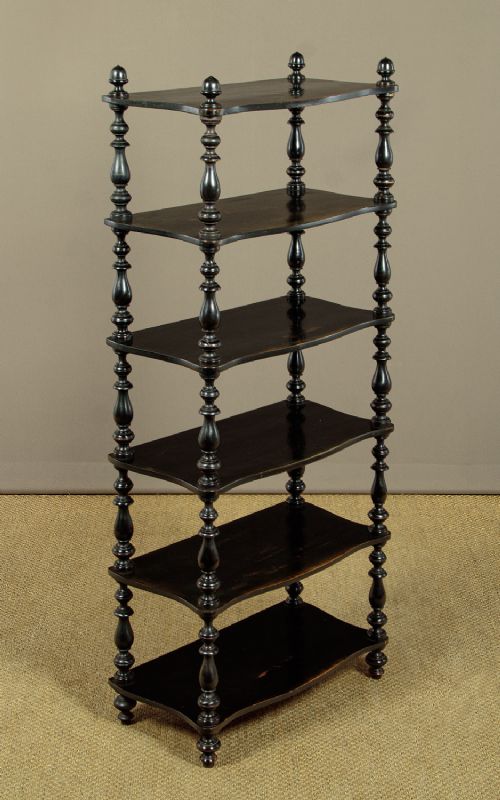


Mid Century Etagere
A mid century etagere brings tiered display space to a room, offering open shelving for books, glassware, and decorative objects.
Mid Century Etagere
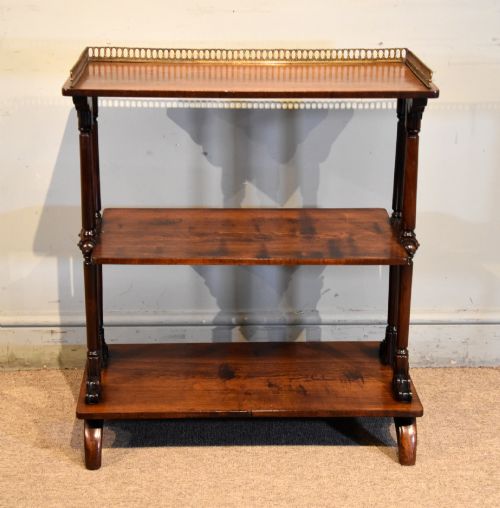
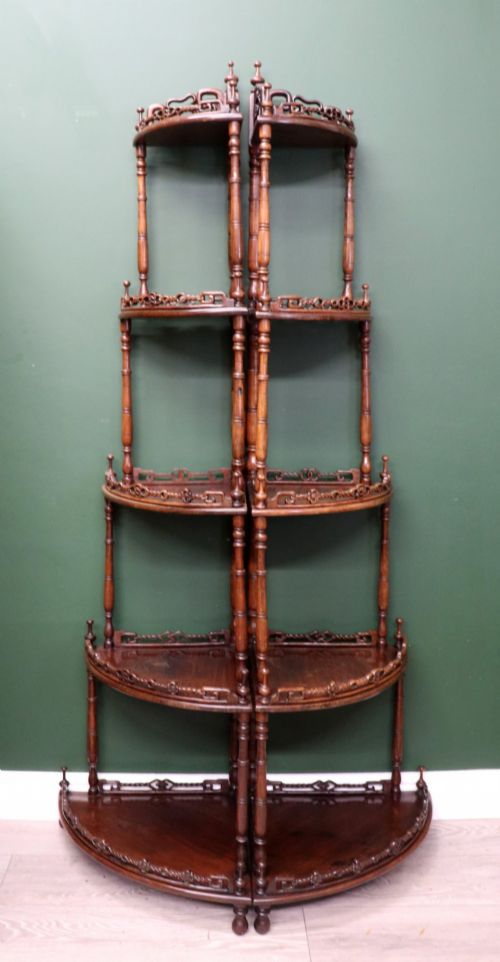
A mid century etagere encompasses open shelving units, display stands, and whatnots designed for tiered storage and display. The selection relies heavily on nineteenth-century forms, including corner units, side tables, and multi-tiered cabinets.
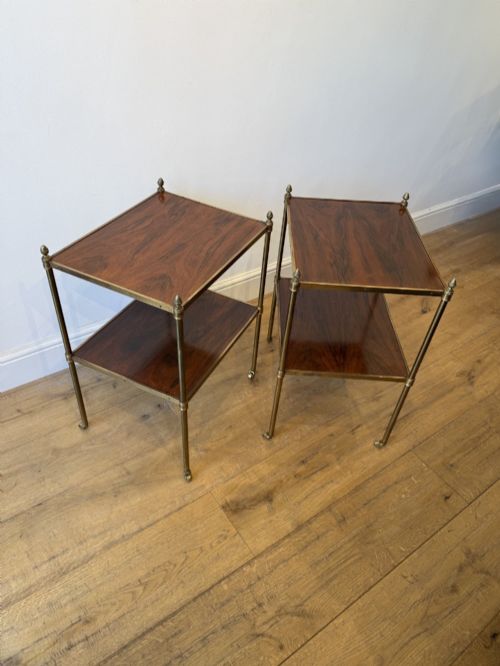
Buyers encounter walnut, mahogany, rosewood, and padauk structures, alongside brass-mounted frameworks and glass tiers. These pieces span Victorian, Anglo-Indian, and neoclassical revival styles.
How they were made
Cabinetmakers utilised dense timbers such as mahogany, rosewood, walnut, and padauk for the structural uprights and shelves. Ebonised wood and lacquered brass provided contrasting finishes for specific revival styles.
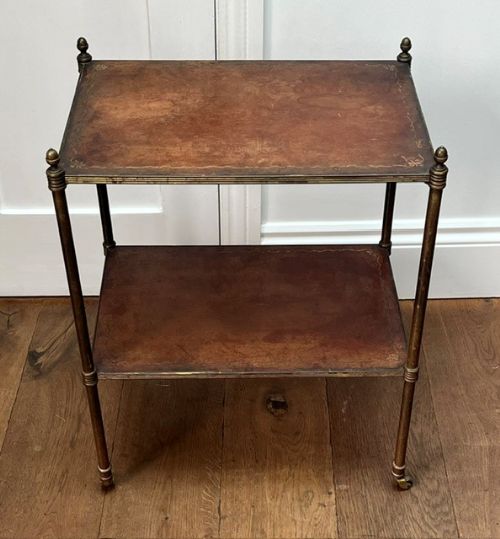
Construction involved joining multiple tiers with turned supports, brass mounts, and occasional drawers. Glass inserts and tooled leather surfaces appeared on specific occasional tables and drinks trolleys.
Mid Century Etagere Retail Price Guide 2026
Typical asking prices for mid century etagere among the pieces listed under this phrase on Sellingantiques today, from the lower quarter to the upper quarter. They describe what is for sale here now, not the wider market.
One grand walnut etagere arrived bearing the distinct hallmarks of Holland and Sons, ready to hold centuries of accumulated curiosities.
What varies in quality
The choice of timber and the complexity of the tiers dictate the overall standard of construction. Finely figured rosewood, mahogany, and padauk distinguish superior examples from simpler utilitarian shelving.
Refined brass mounts, glass integration, and specialised decorative elements such as ebonising or lacquer work separate standard pieces from high-status furniture.
Mallett of London·Holland & Sons
The Mid Century Etagere Glossary
- Etagere
- A piece of furniture consisting of a set of open shelves for displaying small objects or ornaments. It originates from French design and serves as a prominent display stand.
- Whatnot
- A nineteenth-century open shelving unit with multiple tiers supported by slender pillars. It functions similarly to an etagere for holding books and ornaments.
- Padauk
- A heavy tropical hardwood valued for its rich reddish-brown colour. It appears frequently in Anglo-Indian furniture.
- Ebonised
- Wood treated with a dark finish to imitate ebony. This technique creates a stark, formal appearance on nineteenth-century frames.
Mid Century Etagere: Frequently Asked Questions
What is an etagere?
An etagere is an open-shelved piece of furniture designed for displaying decorative objects, books, or tableware across multiple tiers.
These pieces function as focal points in reception rooms, providing vertical storage without closing off the surrounding space.
How do you style an etagere?
Styling involves balancing books, ceramics, and glassware across the open shelves to create visual interest without clutter.
Heavier items find a secure base on lower tiers, while lighter decorative objects occupy the upper shelves.
What materials are used?
Makers constructed these pieces using dense hardwoods like mahogany, rosewood, walnut, and padauk, often complemented by brass and glass.
Some examples incorporate ebonised wood or lacquered brass for decorative contrast.
How to identify a whatnot?
A whatnot is characterised by its tiered open shelving supported by vertical pillars or corner posts, designed for displaying ornaments.
Nineteenth-century versions often include small drawers or corner configurations to fit specific room layouts.