





Mid 19th Century Needlework
These mid 19th century needlework pieces combine domestic industry with lasting textile art, offering tactile historical character to any interior.
Mid 19th Century Needlework
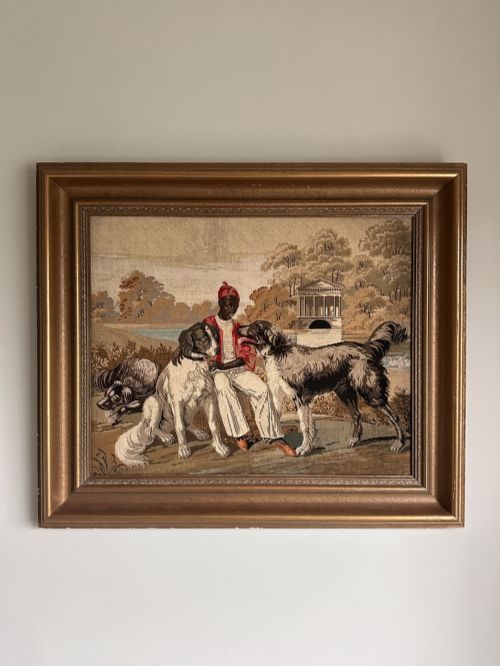
When you search for mid 19th century needlework, you encounter a diverse range of items spanning framed wall art, samplers, textiles, and functional furniture such as sewing tables and work boxes. The selection here leans heavily towards Victorian examples, encompassing everything from Berlin wool work tapestries to intricately stitched silkwork pictures and detailed gros-point panels.
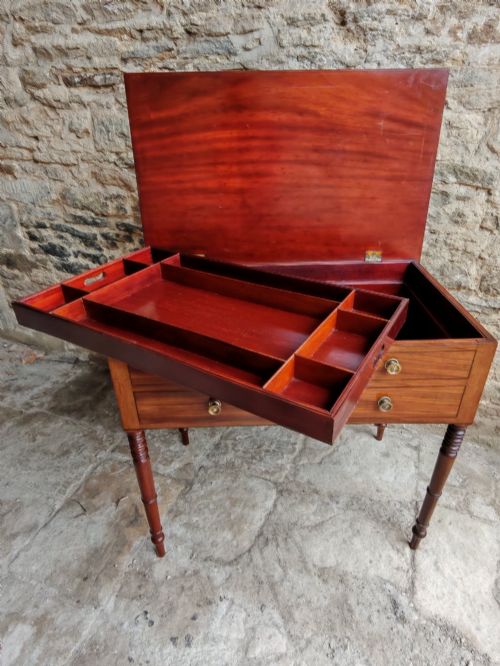
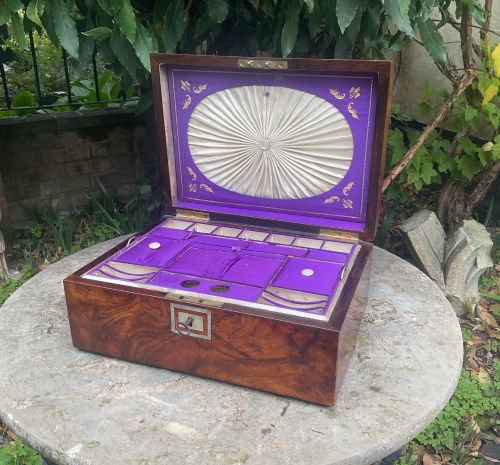
Makers of this era produced both decorative pieces meant for display and utilitarian objects designed for needlecraft storage. You will find wall hangings and framed artwork alongside mahogany, walnut, rosewood, and burr walnut sewing tables that house original needlework tops and compartments.
The aesthetic bridges domestic education and elaborate interior decoration, reflecting the craft standards of the period. Pieces range from youthful samplers by makers like Margaret Ann Blackow to Central Asian Suzanis and large European tapestries.
Materials and construction
The textile components utilise wool, silk, and fabric threads worked onto canvases and foundations using stitches such as gros-point. These textures are often paired with substantial timber frames in mahogany, walnut, rosewood, and burr walnut for furniture and wall displays.
Accessory elements incorporate brass fixtures, glass protection, and occasionally silver for items like scissors and sheaths. Structural assembly relies on period cabinet-making techniques to house delicate textile art securely within tables, boxes, and ottomans.
Mid 19th Century Needlework Retail Price Guide 2026
Typical asking prices for mid 19th century needlework among the pieces listed under this phrase on Sellingantiques today, from the lower quarter to the upper quarter. They describe what is for sale here now, not the wider market.
One young maker recorded her progress in thread at age twelve, leaving a permanent biographical marker in wool.
Judging quality in mid 19th century needlework
Quality rests upon the execution of the stitching, the complexity of the design, and the preservation of the fibres. Fine Berlin wool work or detailed silk embroidery displays tight, uniform tension and subtle colour gradation that elevate the visual depth of the image.
For pieces integrated into furniture, the standard of the timber framing, the retention of original fittings, and the structural integrity of the sewing table or box determine the overall grade. Superior examples combine well-preserved needlework with high-grade cabinet woods like burr walnut or rosewood.
The Mid 19th Century Needlework Glossary
- Berlin wool work
- A popular type of counted-thread embroidery using wool on canvas, charted on grid paper, which became widespread during the nineteenth century.
- Gros-point
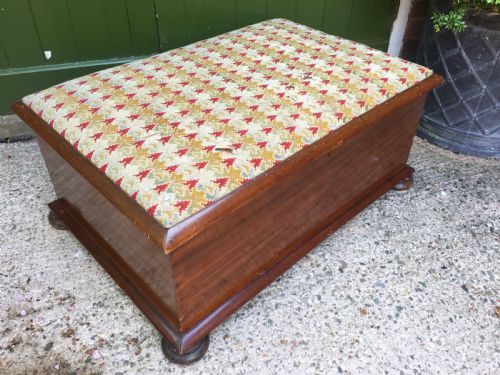
- A coarse needlepoint stitch executed on canvas, often used for durable upholstery on furniture tops and ottomans due to its sturdy texture.
- Sampler
- A piece of needlework produced by a beginner or child to demonstrate proficiency in various stitches and alphabets, frequently bearing a name and age.
- Suzani
- A type of embroidered tribal textile originating from Central Asia, typically featuring bold floral motifs worked in silk on a cotton or linen ground.
- Work table
- A specialised piece of nineteenth-century furniture equipped with drawers, bags, or compartments specifically designed to hold sewing and needlework supplies.
Mid 19th Century Needlework: Frequently Asked Questions
How do I care for antique needlework?
Keep textile pieces away from direct sunlight to prevent silk and wool fibres from fading and degrading over time. Gentle surface cleaning with a soft brush helps remove dust without disturbing delicate stitches.
For framed wall art or tapestries, maintain a stable indoor humidity level to protect both the fabric and the original timber frames from warping or mildew.
Were sewing tables used exclusively for needlework?
While these tables were specifically designed with compartmentalised drawers and hanging silk bags to store threads, needles, and unfinished projects, they also functioned as general side tables in Victorian drawing rooms.
Their versatile size and attractive mahogany or rosewood surfaces made them suitable for holding books, writing letters, or displaying decorative objects.
What distinguishes Berlin wool work from other tapestries?
Berlin wool work is characterised by its use of brightly coloured wools stitched onto canvas following pre-printed squared paper patterns. This technique allowed makers to create highly pictorial, shaded designs such as landscapes and figural scenes with great precision.
Unlike traditional freehand embroidery, these pieces have a distinct geometric regularity due to the canvas grid underlying the dense stitches.
How can I tell the period of a textile piece?
Dating relies on identifying the specific combination of materials, stitching styles, and framing techniques typical of the mid nineteenth century. Examining the backing fabrics, the type of wool or silk, and any associated maker details or signatures provides further context.
Furniture pieces can be dated by their secondary woods, turning styles, and the method by which the needlework top is integrated into the structure.