

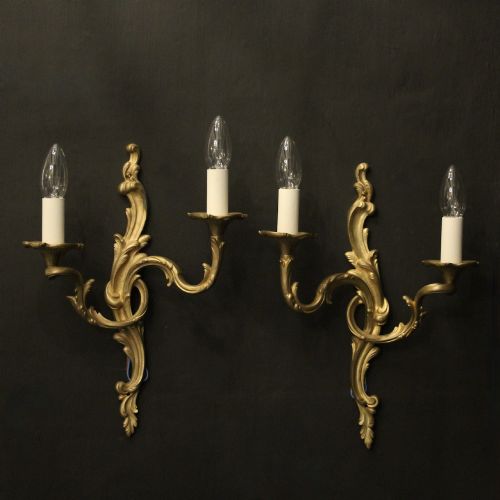
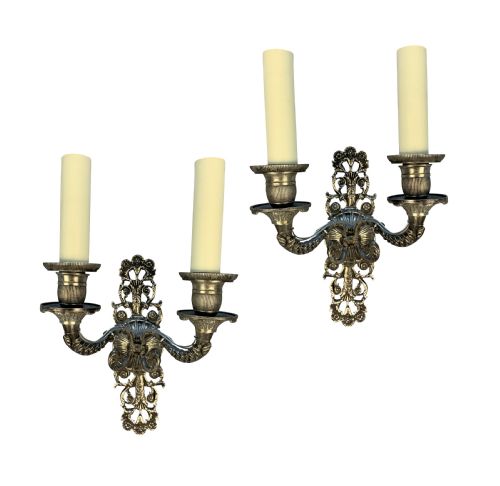
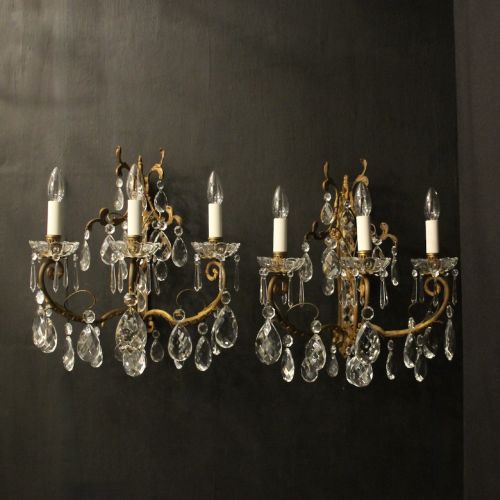
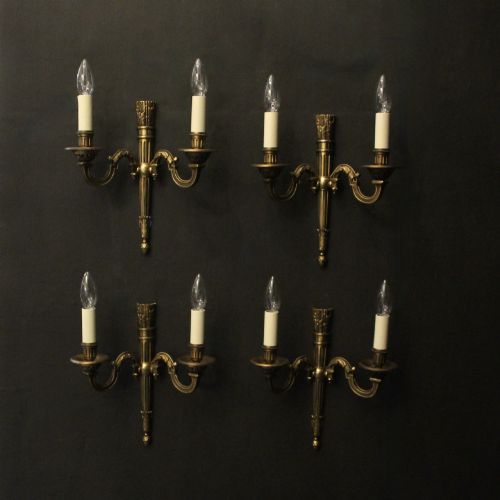
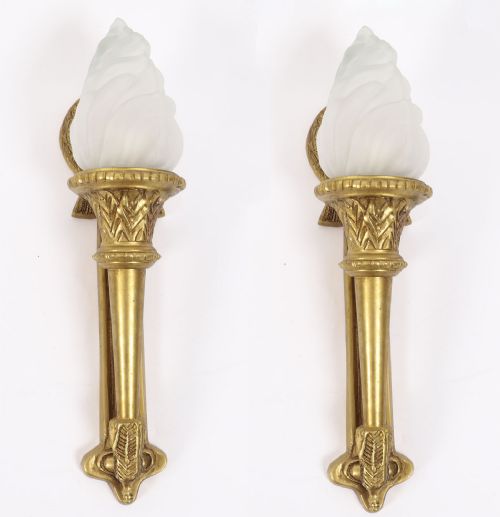

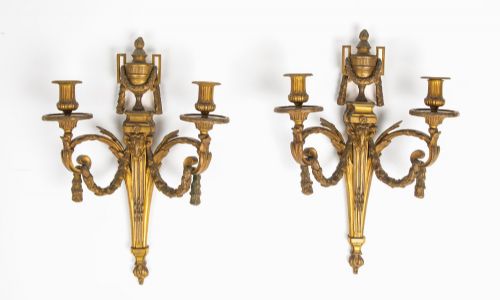

Metal Wall Appliques
Metal wall appliques bring period illumination to interiors through cast bronze, brass, and gilt finishes.
Metal Wall Appliques
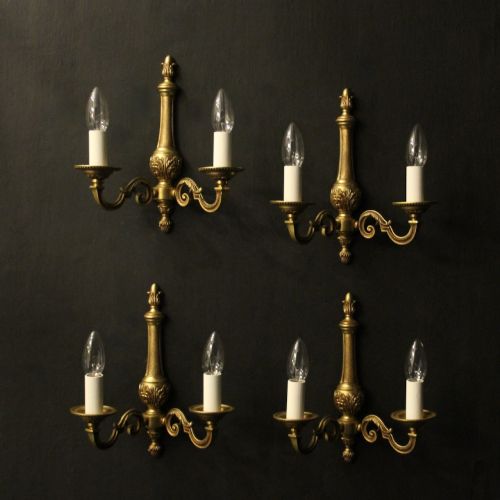
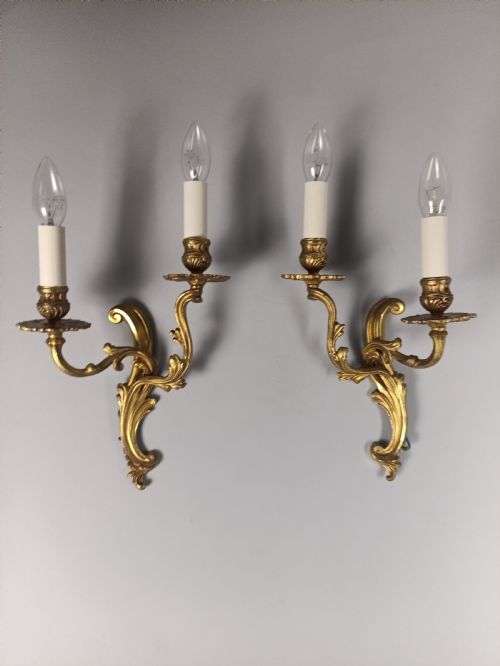
Metal wall appliques encompass wall lights, wall sconces, and candelabra designed to mount directly onto vertical surfaces for interior illumination. Buyers seeking these fixtures encounter French lighting forms spanning the eighteenth century through the early twentieth century, with numerous examples originating in the nineteen-twenties and nineteen-thirties.
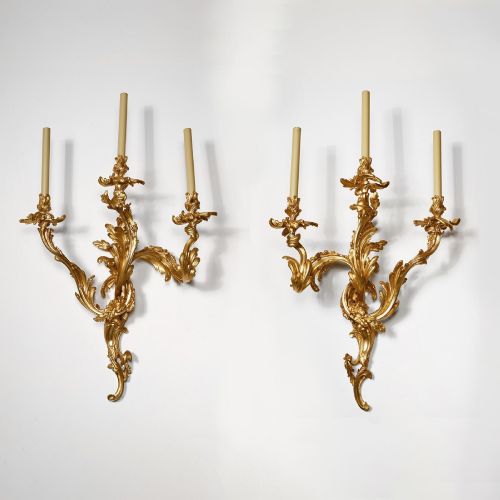
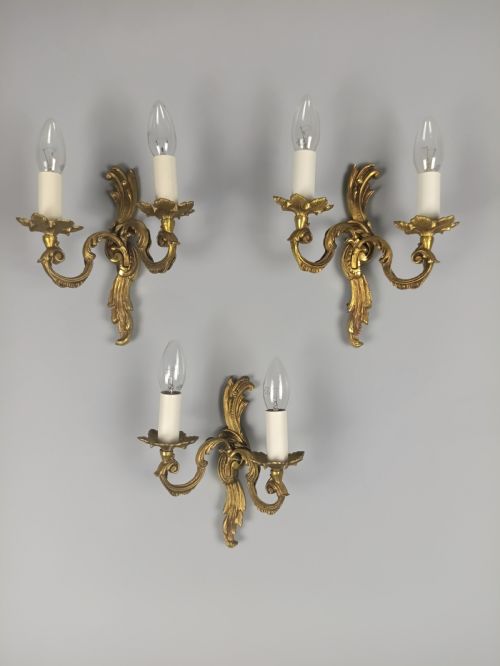
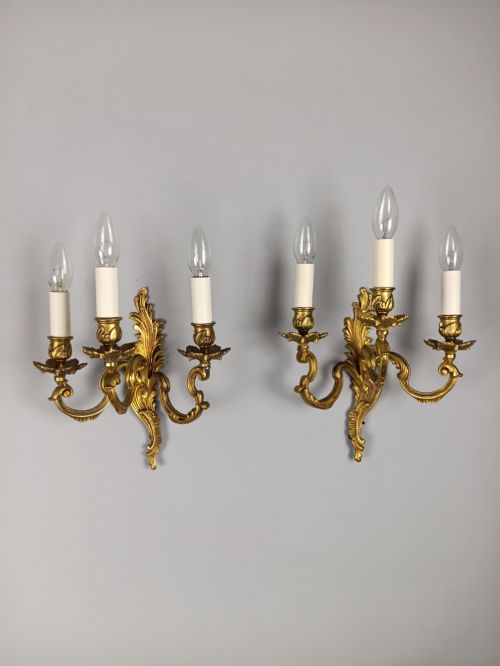
The selection centres heavily on matched pairs and sets, predominantly executed in French styles such as Rococo, Empire, Louis XV, Louis XVI, and Neoclassical. These lighting pieces utilise single, twin, triple, or multiple arms configured to hold candles or electrical fittings upon walls.
How they were made
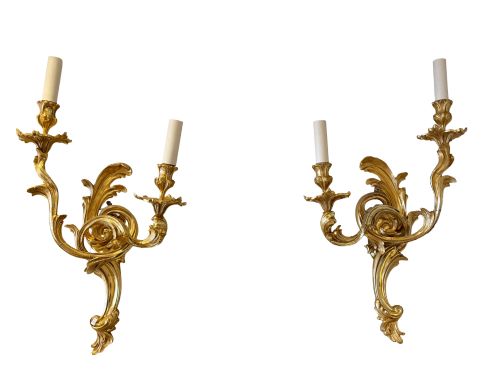
Manufacturers shaped these fixtures using metals such as bronze, brass, wrought iron, and toleware, frequently applying gilt, silver plating, or ormolu surface treatments. Artisans cast bronze and brass components to form intricate scrollwork, ram's head masks, and floral motifs characteristic of classical and rococo designs.
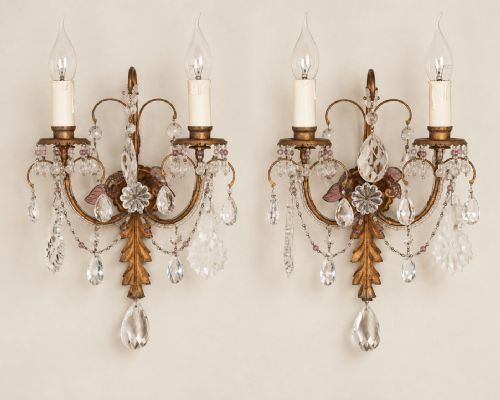
Construction methods also incorporated applied crystal, glass elements, and giltwood to enhance the decorative presence of the wall lights. Metalwork was chased, polished, or painted by hand to achieve the finished appearance seen in period lighting.
Metal Wall Appliques Retail Price Guide 2026
Typical asking prices for metal wall appliques among the pieces listed under this phrase on Sellingantiques today, from the lower quarter to the upper quarter. They describe what is for sale here now, not the wider market.
Listings feature periods spanning from the eighteenth century through the nineteen-thirties, dominated by French stylistic influences.
What varies in quality
Quality differences emerge in the crispness of the casting and the depth of the metal ornamentation, where finely chased details on bronze or ormolu display superior craftsmanship compared to simpler stampings. The execution of classical motifs, such as acanthus leaves or figural masks, determines the refinement of the piece.
The integrity of the gilt or plated surface and the weight of the base metal indicate the standard of manufacture. Pairs and sets that retain their original matched components and unified patination demonstrate higher desirability among collectors.
Maison Baguès
The Metal Wall Appliques Glossary
- Ormolu
- Gilded bronze produced through a mercury amalgamation process, yielding a rich golden finish on decorative metalwork. This technique was widely utilised in fine French decorative arts.
- Toleware
- Painted or lacquered sheet metal items, often decorated with floral patterns in domestic lighting and accessories. It offers a softer, coloured visual texture compared to bare bronze.
- Wall sconce
- A decorative lighting fixture fixed to a wall, designed to project light outwards into a room using candles or bulbs. These fixtures typically feature one or more extending arms.
- Louis XVI style
- A neoclassical design vocabulary characterised by straight lines, symmetry, classical urns, and geometric restraint. It emerged in France during the eighteenth century and influenced later revival pieces.
- Candelabra
- A branched candlestick holder designed to support multiple candles from a single base or wall mounting. These branch structures often form elaborate focal points on period walls.
Metal Wall Appliques: Frequently Asked Questions
How are metal wall appliques mounted?
These fixtures secure directly to wall surfaces using concealed brackets or screw fixings integrated into the backplate.
Wiring paths or candle positions project forward from this mounting point to illuminate the surrounding space.
Are these wall lights wired for electricity?
Many period wall sconces have been adapted for electrical use while retaining their original metal frames and candle drip pans.
Original candle-only versions also appear among eighteenth and nineteenth-century examples.
How do I identify French Empire style?
French Empire style fixtures incorporate classical military motifs, laurel wreaths, sphinxes, and symmetrical geometric arrangements.
These pieces typically utilise gilt bronze or brass to project an austere, monumental appearance.
What is the difference between ormolu and gilt brass?
Ormolu specifically denotes high-grade mercury gilding applied to cast bronze, producing a deep, warm metallic lustre.
Gilt brass applies gold coloration over a lighter yellow metal alloy base, often with simpler surface tooling.