





Metal Walking Stick Stand
A metal walking stick stand keeps hallways orderly while bringing substantial Victorian and Edwardian weight to an entrance.
Metal Walking Stick Stand
A metal walking stick stand serves as a practical hallway receptacle for umbrellas, parasols, and walking canes. These pieces emerge predominantly from the nineteenth century and the Edwardian era, bearing the robust utilitarian design typical of those periods.
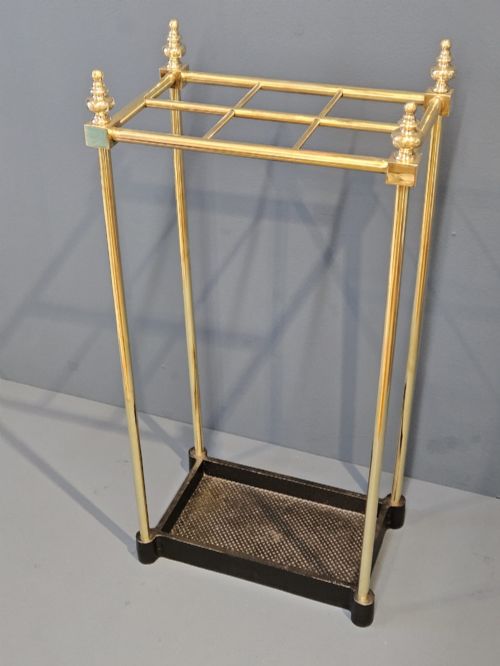
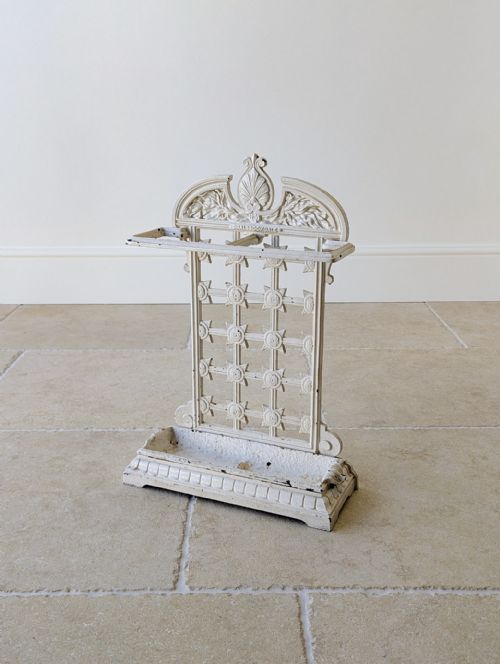
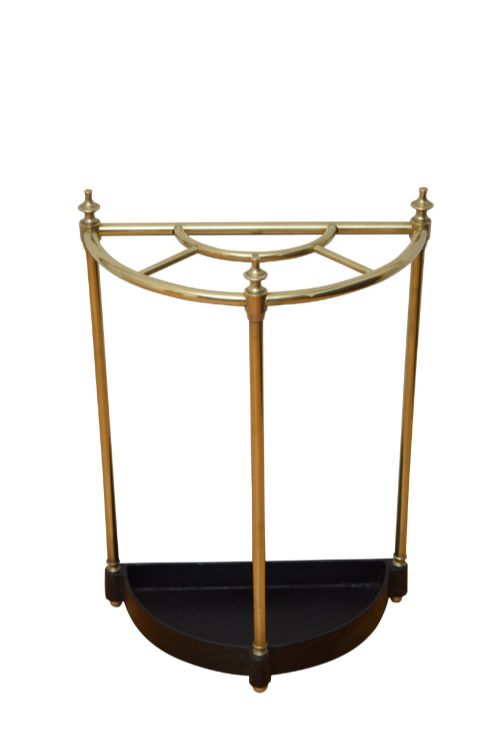
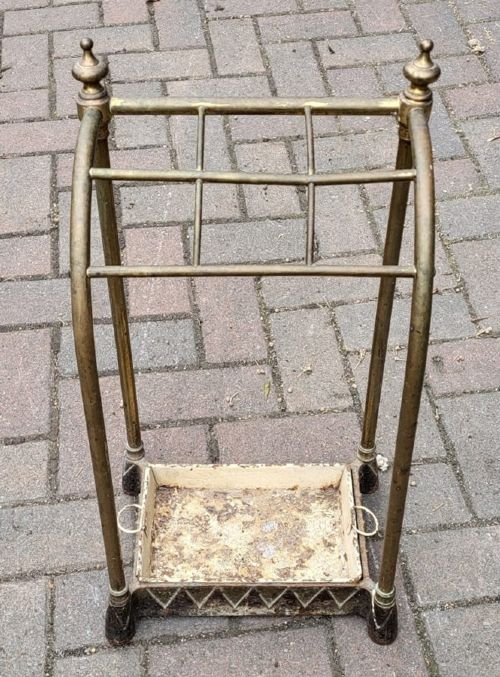
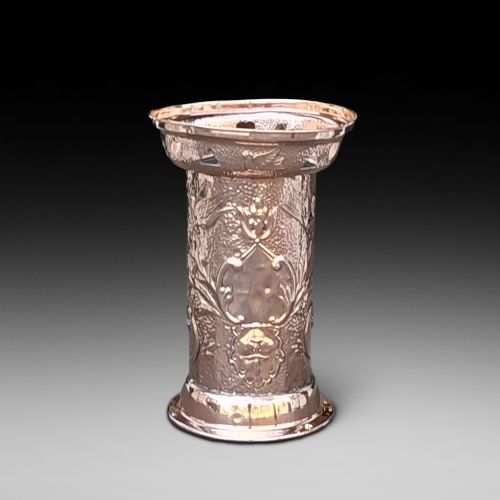
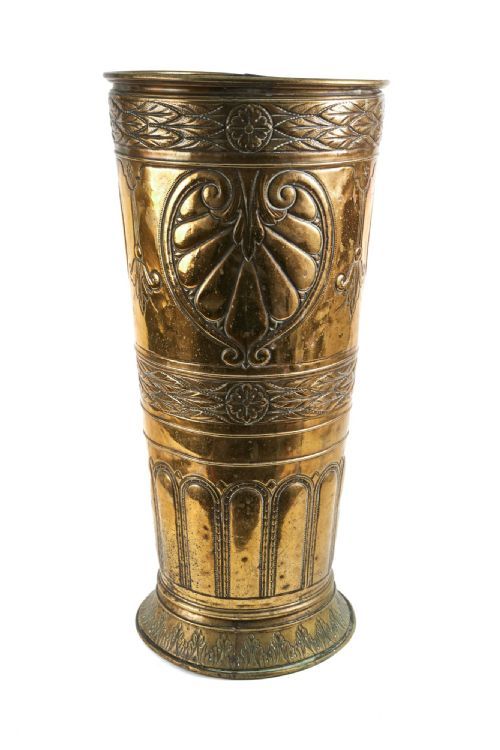
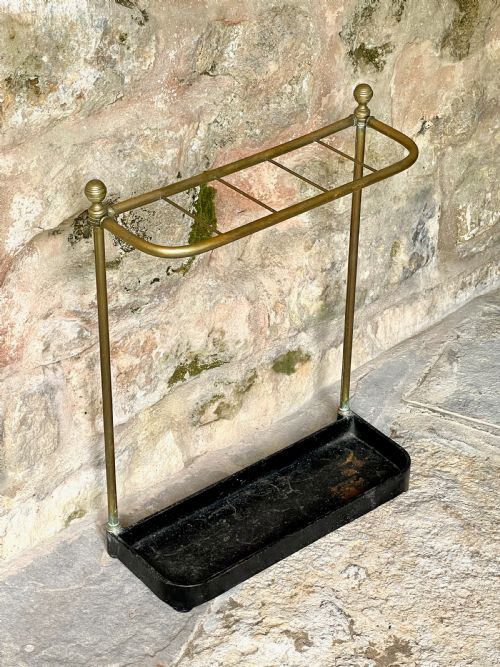
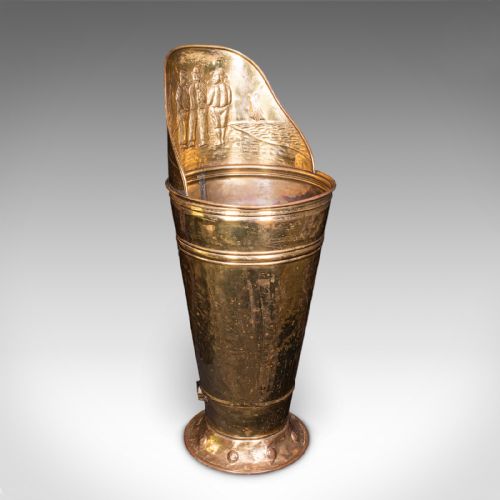
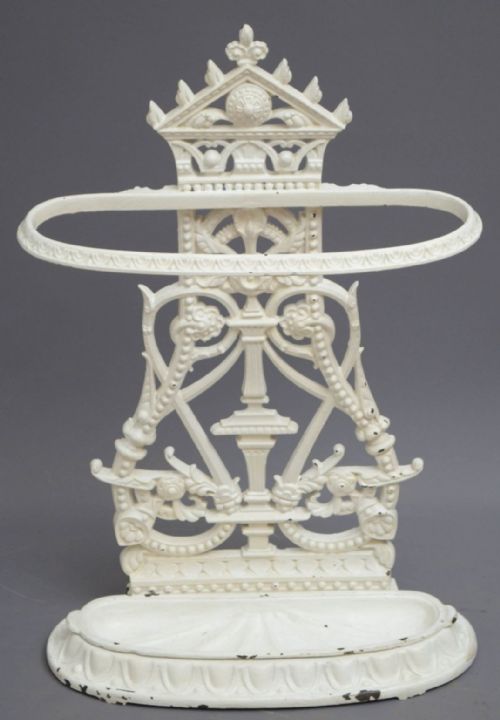
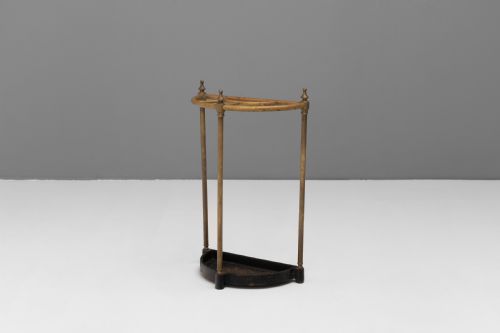
Buyers meet a variety of forms on this page, ranging from semicircular demi-lune hall stands to substantial oval and cylindrical vessels. Many examples combine cast iron frames with brass rails or incorporate copper buckets designed to catch rainwater.
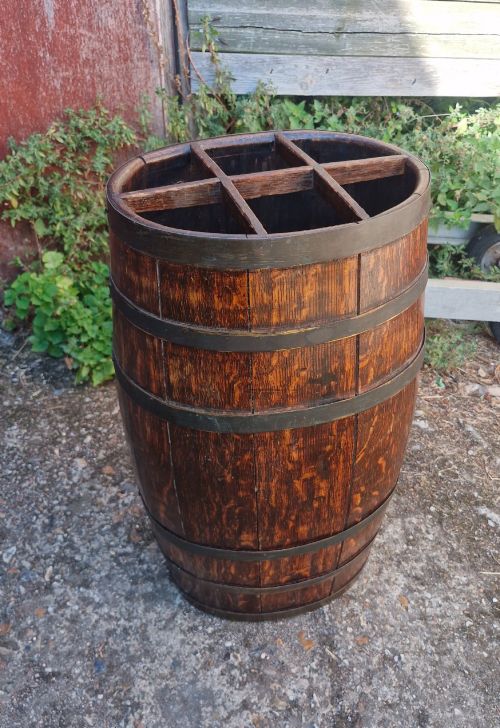
The inventory leans heavily towards Victorian and Edwardian manufacturing, encompassing regional English workshops as well as Dutch traditional designs. Pieces frequently integrate oak or walnut elements bound in metal, bridging heavy industry and domestic hall furniture.
How they were made
Foundry work dominates construction, utilising heavy cast iron for stable bases and structural frames that prevent tipping under heavy loads. Iron components are often paired with spun copper or beaten brass to form the primary holding buckets.
Sheet brass and copper are worked through piercing, hammering, and rivetting to create decorative panels and pierced rims. Oak and walnut barrels gain structural integrity through the application of iron and metal hoops.
Surface finishes include painted coatings on cast iron and polished patinations on brass and copper elements. Faux bamboo mouldings and applied brass loops demonstrate the versatility of Victorian metalworking techniques.
Metal Walking Stick Stand Retail Price Guide 2026
Typical asking prices for metal walking stick stand among the pieces listed under this phrase on Sellingantiques today, from the lower quarter to the upper quarter. They describe what is for sale here now, not the wider market.
Several stands double as umbrella buckets featuring twelve distinct divisions for an entire household's walking sticks.
What varies in quality
The distinction between standard utility items and finer hall furnishings lies in the ambition of the casting and metalworking. Finely pierced brass galleries, crisp decorative mouldings, and substantial gauge metals elevate an object above plain foundry production.
Maker attribution and stylistic alignment introduce further variation, particularly pieces associated with known foundries or specific design movements like Arts and Crafts or Art Nouveau. The integrity of internal drip trays and the original fastening of metal hoops to wooden barrels also influence overall standing.
Coalbrookdale·Falkirk Ironworks
The Metal Walking Stick Stand Glossary
- Demi-Lune
- A half-moon shape commonly utilised for hall stands designed to sit flush against a wall. This profile maximises floor space in narrow hallways.
- Falkirk Ironworks
- A notable Scottish foundry producing heavy metal goods during the nineteenth century. Their output includes structural ironwork and utilitarian vessels.
- Christopher Dresser
- A pioneering industrial designer whose aesthetic influenced late nineteenth-century metalwork. His style often combined geometric clarity with functional utility.
- Aesthetic Movement
- A late Victorian design phase emphasising visual and material beauty over strict narrative utility. Pieces from this movement often feature stylised natural motifs.
- Faux Bamboo
- A decorative technique mimicking bamboo stalks carved into wood or cast into metal. This finish reflects nineteenth-century enthusiasm for imported oriental aesthetics.
Metal Walking Stick Stand: Frequently Asked Questions
Where should I place a metal stick stand?
These pieces suit entrance halls and boot rooms where umbrellas and walking canes accumulate. Their heavy bases provide stability on both timber floorboards and tiled entryways.
Positioning them near the main entrance ensures practical daily use while making a strong decorative statement upon entering the home.
How do I clean brass and copper?
Maintenance requires gentle dusting and occasional cleaning with appropriate metal care products to preserve the surface. Avoid abrasive scourers that strip the historic patination accumulated over generations.
Keeping the interior dry prevents corrosion and protects the original metal surfaces from sustained moisture exposure.
Are these stands suitable for daily use?
Constructed from durable cast iron, brass, and copper, these stands were built to withstand heavy everyday handling. Their robust frames easily support multiple walking sticks and heavy wet umbrellas.
Using modern plastic drip inserts inside older copper buckets helps protect original bases from standing water damage.
How do I identify a Victorian stand?
Victorian examples frequently display heavy cast iron framing, structural brass divisions, and distinct registration marks or foundry stamps. Stylistic cues include Gothic revival motifs, faux bamboo, and Aesthetic movement copperwork.
Examining the construction methods, such as hand-riveted joints and heavy gauge metals, helps distinguish nineteenth-century production from later reproductions.