



Metal Umbrella Rack
A metal umbrella rack controls the hallway clutter with industrial weight and architectural form.
Metal Umbrella Rack
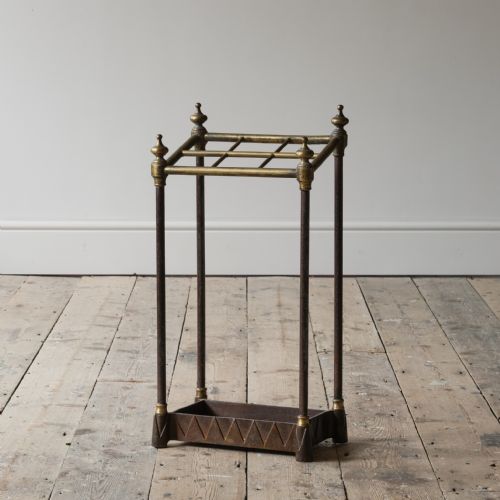
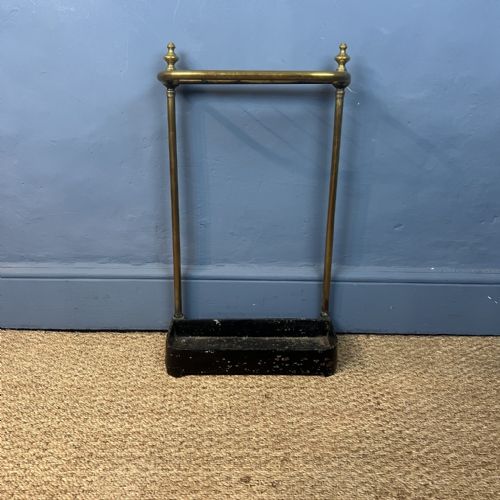
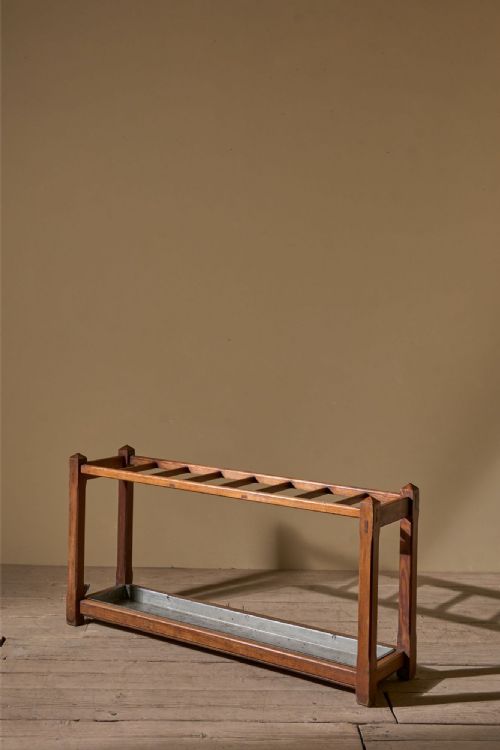
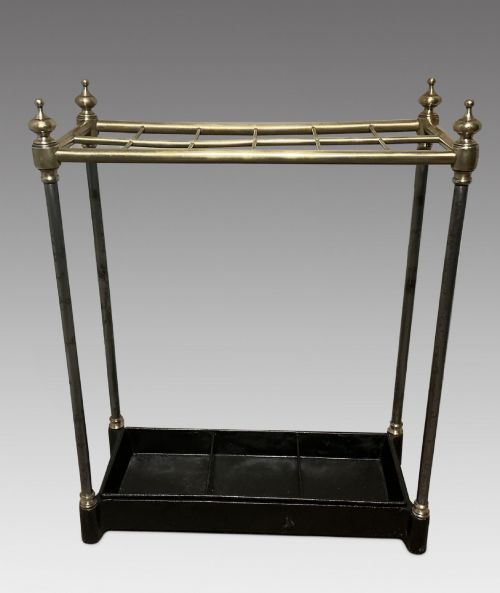
A metal umbrella rack serves the entrance hall by holding wet sticks, canes and parasols off the floor. The examples on this page primarily take the form of heavy cast iron or gleaming brass stands dating from the nineteenth and early twentieth centuries.
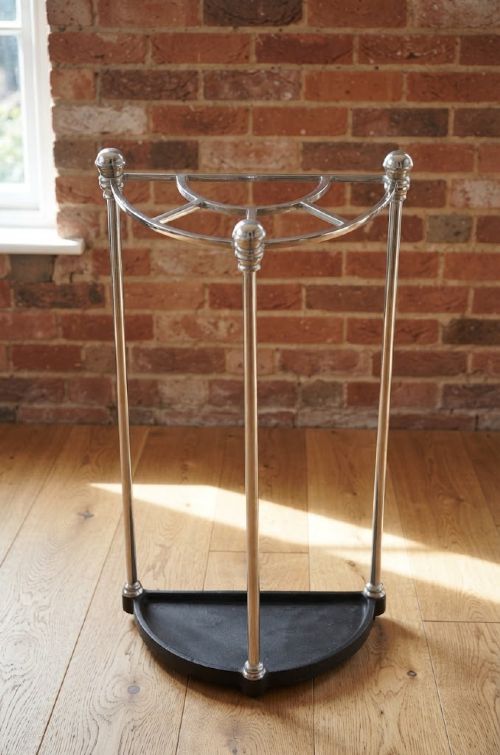
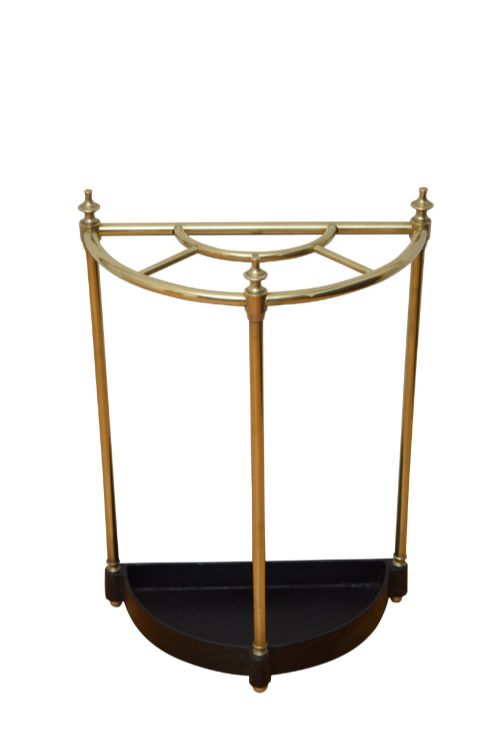
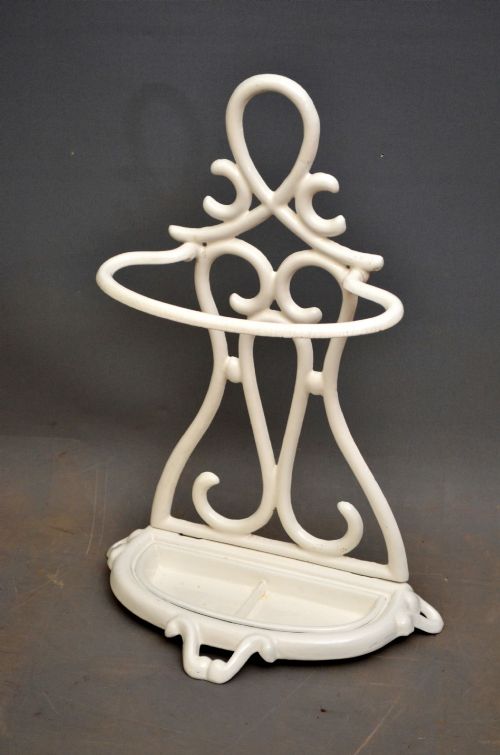
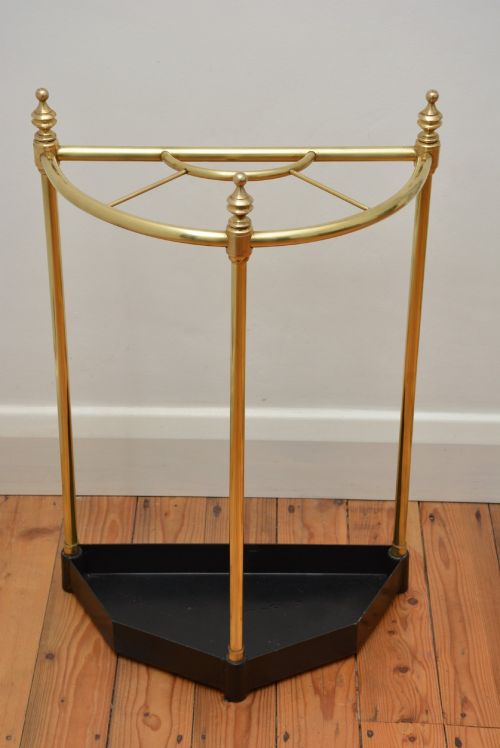
Buyers will frequently encounter the demi-lune or half-moon shape designed to sit flat against a hallway wall, alongside oval and rectangular configurations. These pieces range from simple utilitarian hallway accessories to elaborate Victorian Gothic and sweeping Art Nouveau designs.
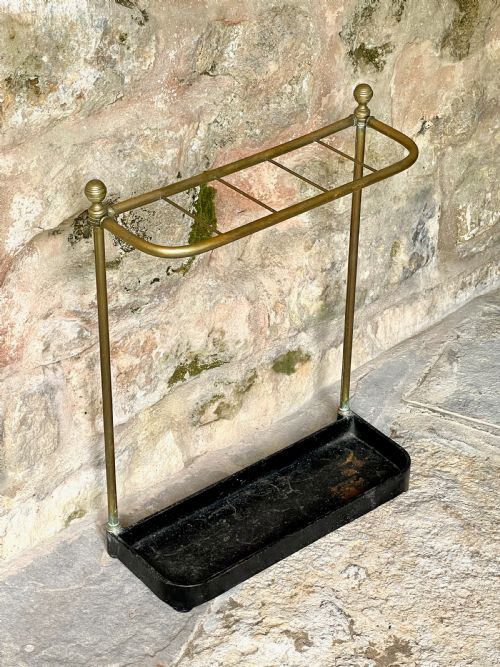
Makers utilised durable metals to withstand constant dampness, often incorporating internal drip trays to protect floorboards. The surviving stock spans the Victorian and Edwardian eras through to the geometric lines of the Art Deco period.
How they were made
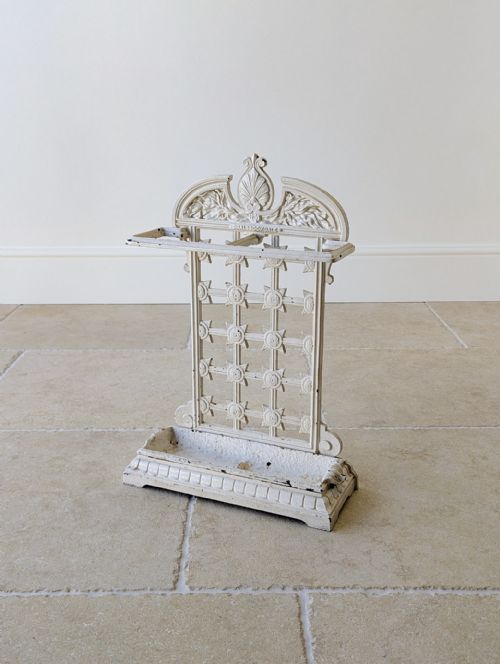
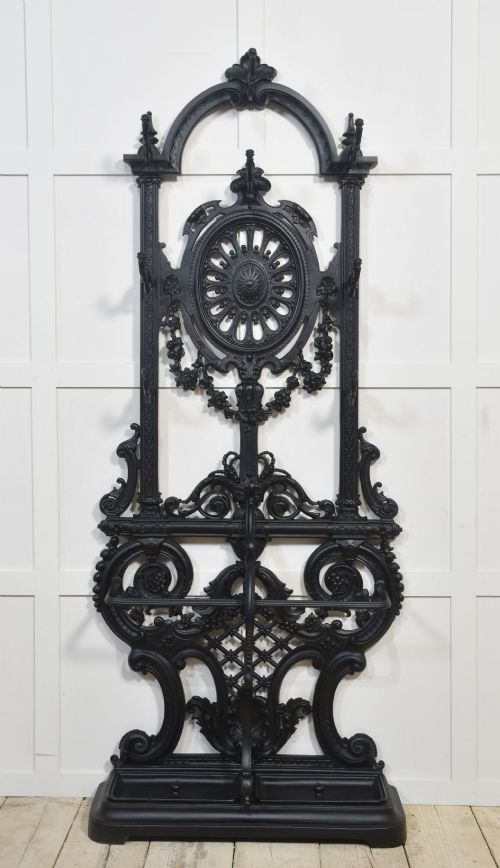
Foundries cast molten iron into intricate patterns of scrolling foliage, gothic tracery or structural loops, painting the finished frames or leaving them in their raw metallic state. Brass components were polished, forged or plated with nickel to provide a bright finish that resisted tarnishing.
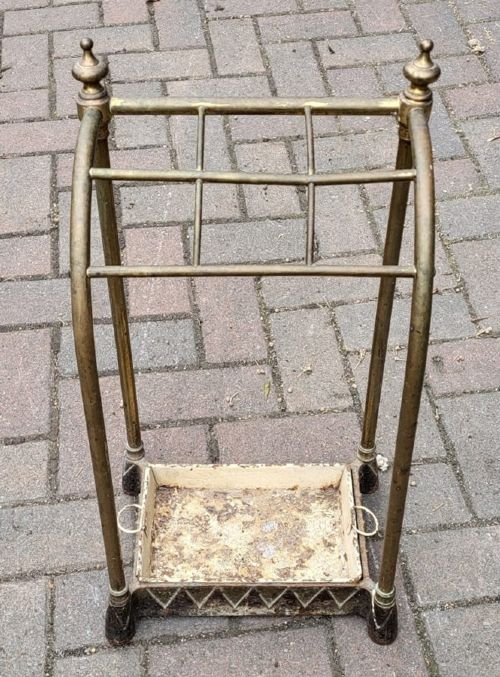
Many designs combined heavy cast iron bases for stability with polished brass rails and uprights. Zinc or painted metal liners were fitted into the base to catch water from wet umbrellas.
What varies in quality
The distinction between ordinary utility items and superior examples lies in the crispness of the casting and the ambition of the design. Foundries like Coalbrookdale and Falkirk produced pieces with sharply defined ornamentation and well-balanced proportions.
Original matching drip pans and intact division rails elevate a piece significantly. The clever integration of mixed metals, such as brass rails set within a heavy iron frame, demonstrates higher manufacturing ambition.
Coalbrookdale·Falkirk Ironworks·Falkirk Foundry·Christopher Dresser
The Metal Umbrella Rack Glossary
- Demi-lune
- A half-moon shape designed to sit flush against a wall. This profile allowed hallways to retain floor space while offering generous storage for sticks.
- Cast iron
- Molten iron poured into a sand mould to create rigid, heavy structures. It forms the solid foundation for most nineteenth-century stands.
- Drip tray
- A removable metal tray fitted at the base to catch rainwater. These liners prevented moisture from rotting wooden hallway floors.
- Stick stand
- A taller domestic furnishing built specifically for walking canes and umbrellas. These items often feature looped upper rings to keep long shafts upright.
Metal Umbrella Rack: Frequently Asked Questions
Where should I place a metal umbrella rack?
These pieces belong in an entrance hall, porch or boot room where wet items are naturally shed upon entry. Their narrow profiles, particularly the demi-lune shapes, allow them to fit snugly against walls without obstructing narrow passages.
Ensure there is adequate ventilation around the stand so that damp umbrellas dry properly without lingering moisture damaging the metal or surrounding walls.
How do I clean a cast iron stand?
Dust the iron framework regularly with a soft dry cloth to prevent grime accumulation in the recessed casting details. Avoid harsh chemical cleaners that can strip painted surfaces or historic patinations.
For brass elements, use a mild metal polish applied sparingly with a cloth, taking care not to stain adjacent painted cast iron sections.
Are original drip pans important?
Original removable drip trays preserve the utility of the stand and add to the historical integrity of the piece. Finding a stand with its matching zinc or painted metal liner is a distinct advantage.
Many surviving pieces lost their liners over decades of use, though replacement trays can catch water just as effectively while the main structure remains antique.
How do I tell Victorian stands from later ones?
Victorian examples frequently lean towards heavy Gothic Revival or ornate floral patterns executed in dense cast iron. They often carry maker marks or design registrations from prominent nineteenth-century foundries.
Later pieces from the twentieth century tend to display simpler geometric arrangements, nickel-plated finishes or the characteristic sweeping curves of Art Nouveau and Art Deco design.